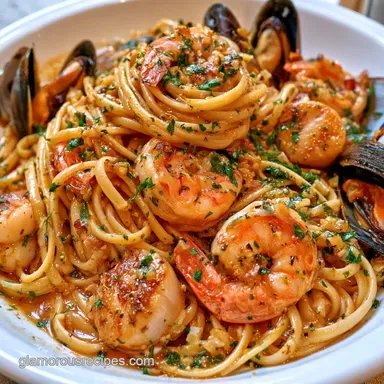
Seafood Linguine Pasta with Shrimp and Scallops

- Time: 20 min active + 20 min cooking
- Flavor & Texture: Zesty, briny, and glossy
- Perfect for: Date night or fancy weeknight dinner
Seafood Linguine Pasta
Picture the sizzle as scallops meet a searing pan, sending a cloud of savory steam your way. The aroma of golden garlic and zesty lemon is the first sign that this meal is a success.
This recipe thrives on variety. Between the firm snap of shrimp, the buttery softness of scallops, and the salty burst of mussels, every bite is dynamic. A rich, velvety sauce binds it all together, coating every inch of the long pasta strands.
You can achieve restaurant-quality results at home. This Seafood Linguine works because we build depth through layers, searing the seafood first and utilizing those caramelized browned bits to enrich the sauce.
Quick Recipe Specs
Staggered Searing: Cooking the seafood in batches stops them from steaming. This ensures you get a brown crust rather than rubbery textures.
Pasta Water: The starch in the reserved water acts like glue. It bonds the olive oil and citrus juice into a sauce that actually sticks to the noodles.
Why These Ingredients Work
| Ingredient | Role | If You Don't Have It |
|---|---|---|
| Linguine | Hearty base | Spaghetti (slightly thinner) |
| White Grape Juice | Acidity and sweetness | Extra lemon juice and a splash of water |
| Pasta Water | Sauce binder | None (essential for texture) |
| Red Pepper Flakes | Subtle heat | A pinch of cayenne |
Gathering Your Essentials
- 1 lb linguine
- 1 tbsp salt Why this? Seasoning the water is the only way to flavor the pasta itself
- ½ lb shrimp, peeled and deveined
- ½ lb sea scallops, patted dry Why this? Dry scallops brown faster and better
- ½ lb mussels or clams, scrubbed
- 2 tbsp extra virgin olive oil (for searing)
- 3 tbsp extra virgin olive oil (for the sauce)
- 4 cloves garlic, thinly sliced
- ½ cup white grape juice Why this? Provides a fruity, non-alcoholic brightness
- 1 tbsp fresh lemon juice
- ½ tsp red pepper flakes
- ¼ cup fresh parsley, chopped
Necessary Gear
You'll need a 12-inch skillet to ensure the seafood has room to sear without crowding. A large pot for the pasta and a colander for draining are standard. I suggest using a pair of tongs to toss the pasta vigorously at the end.
Cooking step by step

Mastering the Pasta Boil
Bring a large pot of water with 1 tbsp salt to a rolling boil. Add the linguine and cook for 1–2 minutes less than the package instructions to achieve a firm, al dente texture. Reserve 1 cup of the starchy pasta water before draining the noodles through a colander.
Searing the Seafood
Warm 2 tbsp olive oil in a 12-inch skillet over medium-high heat. Once hot, add the shrimp and scallops in a single layer. Sear for roughly 2 minutes per side until golden-brown and they reach 145°F (63°C) internally. Move the seafood to a plate.
In the same skillet, add the mussels or clams. Cook until they just open and reach 145°F (63°C) internally, then move them to the plate.
Building the Flavor Base
Reduce the heat to medium. Pour in the remaining 3 tbsp olive oil. Sauté the sliced garlic and red pepper flakes for 1 minute until the garlic is translucent and aromatic, ensuring it does not brown.
Deglaze the pan with the white grape juice and lemon juice, scraping up the browned bits from the seafood with a spatula. Let the liquid reduce by half.
Creating the Final Emulsion
Stir the drained pasta into the skillet along with ½ cup of the reserved pasta water. Toss vigorously over medium heat for 2 minutes until the liquid turns into a velvety, glossy glaze that coats the strands.
Fold the seared seafood and chopped parsley back into the pan just until warmed through.
Troubleshooting
When preparing seafood linguine pasta, the most frequent challenge is the texture of the seafood. If the scallops are pale, the pan lacked sufficient heat; if they are tough, they were cooked for too long.
Sauce consistency is another common mistake. If the mixture remains greasy, you likely didn't toss the pasta energetically enough with the starchy water to form an emulsion.
Troubleshooting Texture Problems
| Problem | Root Cause | Solution |
|---|---|---|
| Rubbery Seafood | Overcrowded pan | Cook in smaller batches |
| Watery Sauce | Insufficient reduction | Simmer liquid longer before adding pasta |
| Burnt Garlic | Excessive heat | Lower heat before adding garlic |
Flavor Tweaks & Swaps
I like adding a handful of halved cherry tomatoes during the deglazing step for a bit of sweetness. For those who want a bold, spicy kick, you can swap the base oil for a Cajun Butter Sauce to change the profile entirely.
| Original Ingredient | Substitute | Why It Works |
|---|---|---|
| Mussels/Clams | Squid rings | Similar briny flavor, though texture is chewier |
| Parsley | Fresh Basil | Adds a peppery, sweeter herbal note |
If you use this seafood linguine pasta recipe with different proteins, just remember to cook them based on their thickness. Scallops and shrimp are fast, but thicker cuts of fish need more time.
Storage & Reheating
Keep leftovers refrigerated for up to 2 days. I suggest storing the pasta and seafood together, but keep in mind that the seafood can easily overcook when reheated. This seafood linguine pasta does not freeze well, as the sauce tends to separate and the seafood becomes rubbery.
Avoid using a microwave to reheat. Instead, warm the pasta in a skillet on medium-low heat, adding a bit of water or a small knob of butter. Toss gently until the pasta and seafood reach 165°F (74°C) internally.
Final Presentation
Serve the pasta in deep bowls, twirling the strands to add some height. Arrange the shrimp and scallops on top so they are clearly visible. Garnish with a sprinkle of fresh parsley and a lemon wedge on the side.
This seafood linguine pasta pairs wonderfully with a crisp, light salad. A homemade Caesar salad provides a creamy balance to the zesty, acidic notes of the dish. Finish with a dash of cracked black pepper for a bit of heat.
Before You Start Cooking
Can this seafood linguine be made creamy?
This version uses a glossy emulsion of pasta water and olive oil instead of cream.
Tip: Toss the pasta vigorously with the reserved water to achieve a velvety texture.
How to prepare this seafood linguine quickly?
Sear the seafood first, then build the sauce in the same skillet.
Tip: This dish pairs well with a classic salad for a complete meal.
Does this recipe use heavy cream?
The recipe relies on olive oil and pasta water for its sauce.
Tip: Ensure the scallops are patted dry before searing to get a better crust.
Is this an Alfredo-style pasta?
This is a Mediterranean-style dish with garlic and lemon rather than a cheese sauce.
Tip: Cook the linguine 1-2 minutes less than the package directions for a firm texture.
Can I add tomatoes to the shrimp linguine?
Yes, adding halved cherry tomatoes during the deglazing step works well.
Tip: Sauté them just until they burst to avoid overcooking.
What is the best way to store leftover seafood pasta?
Keep it in a container in the refrigerator for up to 2 days.
Tip: Reheat in a skillet over medium-low heat with a splash of water until the food reaches 165°F (74°C) internally.
Seafood Linguine Pasta with Shrimp