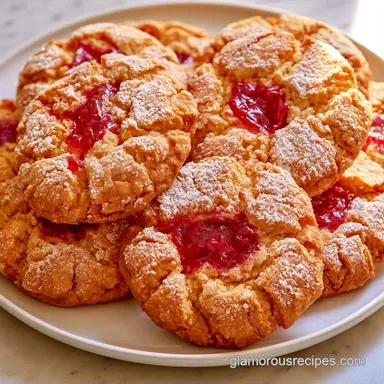
Linzer Cookies: Austrian Style

- Time: 30 min active + 1 hour chilling
- Flavor/Texture Hook: Nutty, sandy crumb with tart fruit acidity
- Perfect for: Artisan holiday platters or high tea service
- Linzer Cookies
- Recipe Specifications
- Precision Techniques for Success
- The Essential Pastry Components
- Required Baking Tools
- The Assembly Process
- Troubleshooting Common Texture Issues
- Preservation and Storage Tips
- Creative Flavor Adaptations
- Artful Plating and Presentation
- Common Pastry Misconceptions
- Recipe FAQs
- 📝 Recipe Card
Linzer Cookies
The scent of warm cinnamon and toasted almond fills the kitchen. Many believe that achieving the sharp, clean edges of traditional Linzer Cookies requires an overnight chill or a professional pastry kitchen. This is a misconception. You can get that crisp, defined heart shape without waiting 24 hours, provided you manage the temperature of your fats with precision.
I once spent an entire afternoon cutting intricate hearts, only to pull a tray of shapeless, merged blobs from the oven. The frustration of seeing expensive almond flour lose its form is real. The issue wasn't the recipe, but the thermal stability of the dough.
This guide focuses on the precision needed to ensure your Linzer Cookies look as refined as they taste. We will focus on the thermal transition from freezer to fridge, which locks in the structure before the heat of the oven hits.
Recipe Specifications
The success of this pastry depends on exact measurements. When working with almond flour, a few grams can change the dough from a pliable paste to a crumbly mess. Using a digital scale is the only way to ensure the sandy texture characteristic of an artisan biscuit.
For those planning a holiday spread, this yield provides 18 sandwich cookies. The total time of 1 hour 40 mins accounts for the necessary stabilization periods.
| Metric | Detail |
|---|---|
| Total Time | 1 hour 40 mins |
| Prep Time | 30 minutes |
| Bake Time | 10 minutes |
| Yield | 18 sandwich cookies |
| Temperature | 175°C (350°F) |
Precision Techniques for Success
The architecture of these Linzer Cookies relies on two specific mechanisms that prevent the common "blobbing" effect seen in home batches.
- The Double Flour Synergy: Almond flour provides a rich, nutty fat content, but lacks the structure to hold a shape. All purpose flour adds just enough gluten to act as a scaffold, keeping the heart shapes distinct.
- The Thermal Transition: Moving the dough from the freezer to the fridge creates a tempered state. This ensures the butter is cold enough to prevent spreading but pliable enough to roll to 6mm without cracking.
| Method | Heat Distribution | Texture | Best For |
|---|---|---|---|
| Conventional Oven | Uniform | Evenly golden | Large batches |
| Dutch Oven | Intense bottom heat | Slightly crispier base | Small, focused batches |
The Essential Pastry Components
The quality of your butter and the fineness of your almond meal dictate the final mouthfeel. Avoid using coarse almond meal, as it will create unsightly bumps in the "window" of the cookie.
| Ingredient | Role | If You Don't Have It |
|---|---|---|
| Unsalted Butter | Provides structure and richness | Salted butter (reduce salt to 0.5g) |
| Almond Flour | Adds nuttiness and tenderness | Extra AP flour (result is less tender) |
| Powdered Sugar | Ensures a smooth, fine crumb | Granulated sugar (result is grainier) |
| Raspberry Preserves | Provides tart, acidic balance | Apricot or Currant jam |
For the Almond Dough
The dough requires 115g of softened unsalted butter and 60g of powdered sugar. For the binding, use 1 large egg and 5ml of vanilla extract. The dry base consists of 95g almond flour, 155g all purpose flour, 2g ground cinnamon, and 1.5g salt.
For the Filling & Finish
You will need 170g of high-quality raspberry or apricot preserves. To finish the presentation, 15g of powdered sugar is used for dusting the window tops.
Required Baking Tools
Precision requires the right tools. A rolling pin and two sheets of parchment paper are non negotiable to avoid adding extra flour, which toughens the pastry.
- Digital Kitchen Scale: For exact gram measurements.
- Heart Shaped Cutters: One large (for the base) and one smaller (for the window).
- Parchment Paper: Prevents sticking and aids in rolling.
- Fine Mesh Sifter: To apply a perfectly even layer of powdered sugar.
The Assembly Process

The goal here is to maintain a cold environment for the dough until the moment it enters the oven.
- Cream the fats. Beat 115g softened butter and 60g powdered sugar until smooth. Add 1 large egg and 5ml vanilla extract and beat until fully emulsified.
- Combine dry ingredients. Whisk 95g almond flour, 155g all purpose flour, 2g cinnamon, and 1.5g salt in a separate bowl.
- Form the dough. Gradually incorporate the dry mixture into the wet ingredients. Mix until a soft dough forms, then stop immediately to avoid overworking the gluten.
- Stabilize the temperature. Divide the dough into two flat discs. Wrap them tightly in plastic and freeze for 30 minutes. Move them to the fridge for another 30 minutes.
- Prepare for cutting. Preheat your oven to 175°C. Roll the dough between two sheets of parchment paper to exactly 6mm thickness.
- Cut the shapes. Cut 18 full hearts and 18 smaller window hearts. Place them on a lined baking sheet with 2cm of space between each.
- Bake the shells. Bake for 8-10 minutes until the edges are barely golden. Let them cool completely on the pan to prevent breakage.
- Apply the finish. Sift 15g powdered sugar over the 18 window cookies.
- Fill and seal. Spread 1 teaspoon of preserves onto the flat side of a solid cookie. Press the sugared window cookie on top.
Chef's Note: If the dough feels too soft during the cutting phase, pop the entire sheet of parchment back into the freezer for 5 minutes. Cold dough holds its edge.
Troubleshooting Common Texture Issues
Even with precision, variables like humidity can affect your Linzer Cookies.
Dough Too Sticky
If the pastry clings to the rolling pin, do not add more flour. Extra flour creates a tough, bread like texture. Instead, chill the dough for 10 minutes. Cold butter is the only solution for stickiness.
Jam Leaks Out
This happens when the preserves are too thin or the filling is too generous. Use a thick jam or simmer your preserves in a small pan for 5 minutes to reduce the water content. For a simpler jam filled treat, you might prefer heart thumbprint cookies.
Window Cookies Crack
Cracks usually occur during the removal from the cutter. Press the cutter straight down and lift it vertically. If the dough is too brittle, let it sit at room temperature for 5 minutes before cutting.
Preservation and Storage Tips
Linzer Cookies stay fresh longer when the jam is fully set. Store the assembled sandwiches in a single layer within a container lined with parchment paper.
Storage Guidelines Keep these cookies in a cool, dry place for up to 7 days. If you prefer a firmer snap, store them in the refrigerator, though this can occasionally soften the sugar dusting.
Freezing Instructions You can freeze the baked, unfilled shells for up to 3 months. Wrap them in foil and place them in a freezer bag. Thaw at room temperature for 20 minutes before adding the jam.
Zero Waste Tip Do not discard the dough scraps. Gather them, roll them into small balls, and bake them as "chef's treats" for a quick taste test of the almond base.
Creative Flavor Adaptations
After mastering the basics, you can easily adjust these flavors to match the season.
Almond Free Alternative
You can prepare Linzer Cookies without almond flour by swapping the 95g of almond meal for a combination of 50g all purpose flour and 45g of finely crushed walnuts. While the flavor becomes more earthy, the texture remains sandy.
Chocolate Hazelnut Variation
Substitute the cinnamon with 2g of cocoa powder and use hazelnut spread instead of raspberry preserves. If you are looking for a different warming profile, my homemade gingerbread cookies are a great alternative.
Citrus Zest Twist
Mix the zest of one lemon into the creamed butter and sugar. For a bright, summery take on these Christmas Linzer Cookies, use apricot preserves.
Pistachio Green
Replace the almond flour with pistachio flour. This creates a vivid green color that contrasts beautifully with the red raspberry jam.
- For a firmer snap
- chill dough 2 hours instead of 1.
- For more tartness
- use blackcurrant jam.
- For a nuttier base
- increase almond flour by 10g.
Artful Plating and Presentation
Because these treats are essentially edible art, your plating should reflect the precision of your baking. Depending on the event, you can vary the level of formality.
Plating Levels
| Level | Method | Detail |
|---|---|---|
| Simple | Platter stack | Piled in a relaxed pyramid on white porcelain |
| Polished | Gift style | Set on individual parchment squares, tied with a red ribbon |
| Restaurant | Gourmet plate | A swipe of raspberry coulis paired with a single fresh mint leaf |
For a formal dinner, offer these as mignardises alongside a small espresso. The coffee's bold profile balances the richness of the almond butter.
Common Pastry Misconceptions
There are a few myths about these cookies that often lead to mistakes.
Room temperature eggs are optional Many skip this, but a cold egg will cause the creamed butter to seize. This creates a broken emulsion, leading to an uneven bake. Always ensure your egg is at room temperature.
More flour prevents spreading Adding extra flour to a sticky dough does not stop the spread. It only makes the cookie tough and removes the "melt in-your mouth" quality of the Linzer Cookies. Temperature control, not flour volume, is the key.
The sugar dusting must go on first Some apply the sugar after the jam. This results in a messy, sticky finish. Always sift the powdered sugar onto the window cookie before assembly for a clean, professional look.
Recipe FAQs
What makes a Linzer Cookie unique?
A buttery almond crust and jam center. These sandwich cookies use a combination of almond and all-purpose flour for a nutty flavor and a signature cutout window.
How to keep the shapes from spreading?
Freeze the dough for 30 minutes and then refrigerate for another 30. Stabilizing the fats ensures the heart shapes remain defined during the 10-minute bake.
Is it true that chilling the dough is optional?
That's a myth. Skipping the freeze and-chill cycle causes the butter to melt too quickly, ruining the crisp edges.
Why is powdered sugar dusted on the windows?
It prevents the jam from sticking to the top cookie. The sugar creates a barrier that keeps the "window" clear and adds a professional finish.
Could I use apricot preserves instead of raspberry?
Yes, either fruit works well. If you prefer a different fruit profile, similar to our strawberry kiss cookies, apricot preserves provide a lovely tart balance.
Which method ensures the cleanest cuts?
Roll the dough between two sheets of parchment paper. This prevents the dough from sticking to the rolling pin, allowing the cutters to press straight down.
Are these cookies best kept at room temperature?
Yes, in a cool, dry spot. Store them in a container where they won't be crushed, but avoid the fridge as it can harden the buttery almond texture.
Traditional Linzer Cookies