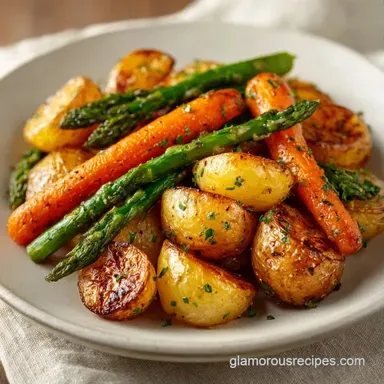
Beltane Celebration Recipe with Spring Vegetables
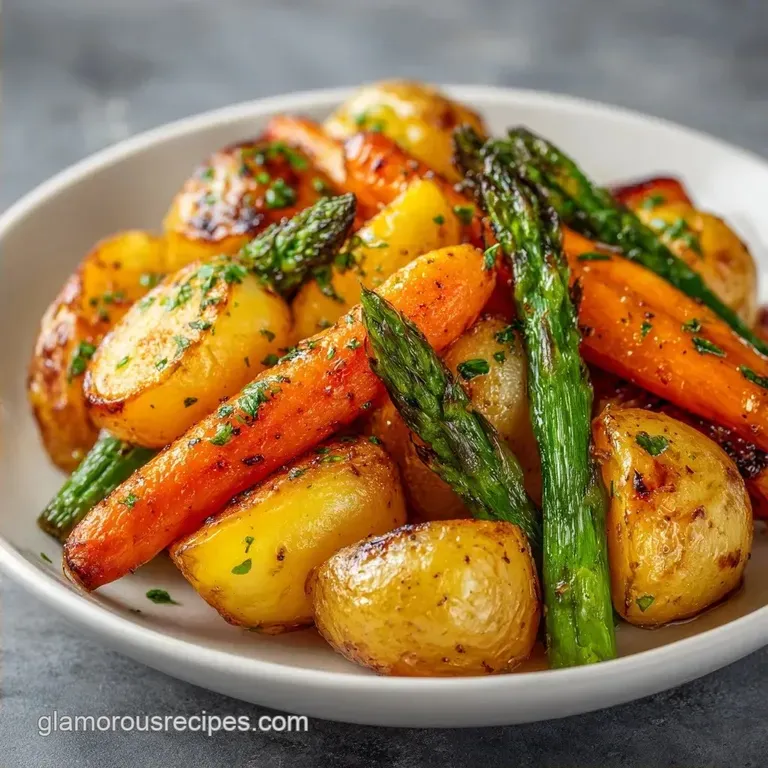
- Time:15 minutes active + 30 minutes roasting
- Flavor/Texture Hook: Golden brown potato crust with a zesty, honey glaze sizzle
- Perfect for: A bright, budget-friendly spring feast or a healthy side dish
- Beltane Celebration Recipe with Spring Vegetables
- The Logic Behind the Roast
- Component Analysis
- Everything You Need
- Tools for the Job
- Step by Step Cooking
- Fixing Common Roast Mishaps
- Adjusting Your Batch Size
- Common Roasting Misconceptions
- Keeping Leftovers Fresh
- Best Ways to Serve
- Recipe FAQs
- 📝 Recipe Card
Beltane Celebration Recipe with Spring Vegetables
The smell of roasting carrots and lemon zest hitting a hot pan is, for me, the official scent of spring. I remember the first time I tried to pull together a seasonal spread for friends, thinking I could just toss every vegetable onto one tray and call it a day. It was a disaster.
The asparagus had basically dissolved into a salty mush, while the baby potatoes were still hard enough to chip a tooth. I spent the rest of the night apologizing for the "deconstructed" texture of my dinner.
That failure taught me everything I need to know about vegetable thermodynamics. You can't treat a parsnip the same way you treat a sugar snap pea. After a few tries, I found the rhythm that actually works, and that's exactly what I'm sharing here.
This Beltane Celebration Recipe with Spring Vegetables isn't about fancy techniques, it's about timing.
We're going for that specific contrast: the earthy, caramelized depth of root vegetables paired with the snap and brightness of spring greens. It's a dish that feels like a celebration of the garden waking up, but it doesn't require a professional kitchen or a huge budget to pull off.
Right then, let's get into the details.
The Logic Behind the Roast
I've spent a lot of time wondering why some roasted vegetables come out soggy while others have that satisfying shatter when you bite into them. It usually comes down to moisture and heat.
When we roast at 400°F (200°C), we're trying to drive out the water from the surface of the veg so the sugars can brown.
Staggered Entry: Root vegetables take significantly longer to break down than greens. By roasting the carrots and potatoes first, we ensure they get a golden crust without incinerating the asparagus.
Acidic Balance: Honey is great for browning, but too much of it can make things cloying. The lemon juice cuts through that sugar, creating a glaze that tastes fresh rather than like a dessert.
Surface Area: Spreading the vegetables in a single layer is the only way to avoid steaming. If the pan is crowded, the vegetables release moisture that stays trapped, leaving you with boiled veg instead of roasted veg.
Oil Distribution: Tossing the roots in oil first creates a conductive layer of heat. This helps the heat penetrate the center of the potato while the outside sizzles.
| Method | Prep Time | Texture | Best For |
|---|---|---|---|
| Staggered Roast | 15 minutes | Crispy roots, snappy greens | Celebration meals |
| All at-once | 10 minutes | Soft roots, mushy greens | Quick weeknight sides |
| Steamed/Sautéed | 12 minutes | Tender, velvety | low-fat requirements |
Component Analysis
I don't think of these ingredients as just a list, but as roles in a play. Each one brings a specific physical property to the tray.
| Ingredient | Science Role | Pro Secret |
|---|---|---|
| Baby Gold Potatoes | Starch Base | Keep them halved for more surface area to brown |
| Honey | Caramelization | Add it late to prevent burning the sugars |
| Lemon Juice | Brightening Agent | Use fresh juice; bottled stuff is too metallic |
| Asparagus | Texture Contrast | Snap the ends by hand to find the natural break |
Everything You Need
For this Beltane Celebration Recipe with Spring Vegetables, we're keeping things simple and budget friendly. You don't need expensive organic produce to make this work, but freshness is key for the greens.
- 1 lb baby carrots, scrubbed Why this? Naturally sweet and hold their shape well (Substitute: Parsnip sticks)
- 1 lb baby gold potatoes, halved Why this? Creamy interior with a great roasting skin (Substitute: Red potatoes)
- 0.5 lb parsnips, sliced into 1/4 inch rounds Why this? Adds a peppery, earthy depth (Substitute: Turnips)
- 3 tbsp extra virgin olive oil Why this? High smoke point and classic flavor (Substitute: Avocado oil)
- 0.5 tsp sea salt Why this? Draws out moisture for a better crust (Substitute: Kosher salt)
- 1 lb asparagus, woody ends trimmed Why this? Classic spring flavor and quick cook time (Substitute: Broccolini)
- 1 cup sugar snap peas Why this? Adds a pop of sweetness and crunch (Substitute: Snow peas)
- 2 tbsp honey Why this? Glazes the veg and adds floral notes (Substitute: Maple syrup)
- 2 tbsp fresh lemon juice Why this? Cuts the richness of the oil (Substitute: Lime juice)
- 3 cloves garlic, minced Why this? Savory base for the glaze (Substitute: Garlic powder)
- 0.5 tsp cracked black pepper Why this? Adds a subtle heat (Substitute: White pepper)
- 0.25 cup fresh mint leaves, torn Why this? Cooling contrast to the roasted heat (Substitute: Fresh basil)
- 0.25 cup fresh flat leaf parsley, chopped Why this? Fresh, grassy finish (Substitute: Cilantro)
- 1 tsp lemon zest Why this? Concentrated citrus oils for aroma (Substitute: Orange zest)
Tools for the Job
You don't need a fancy kitchen for this, but one specific tool is non negotiable.
- Large rimmed baking sheet: A rim is vital so the honey glaze doesn't drip into your oven and start a fire.
- Large mixing bowl: To ensure every root vegetable is coated in oil without bruising them.
- Small whisk or fork: For emulsifying the honey and lemon juice.
- Chef's knife and cutting board: For those precise 1/4 inch parsnip rounds.
Chef's Note: If you have a convection oven, use it! The moving air helps the baby potatoes get a more uniform crust, though you might need to check them 2-3 minutes early.
Step by step Cooking
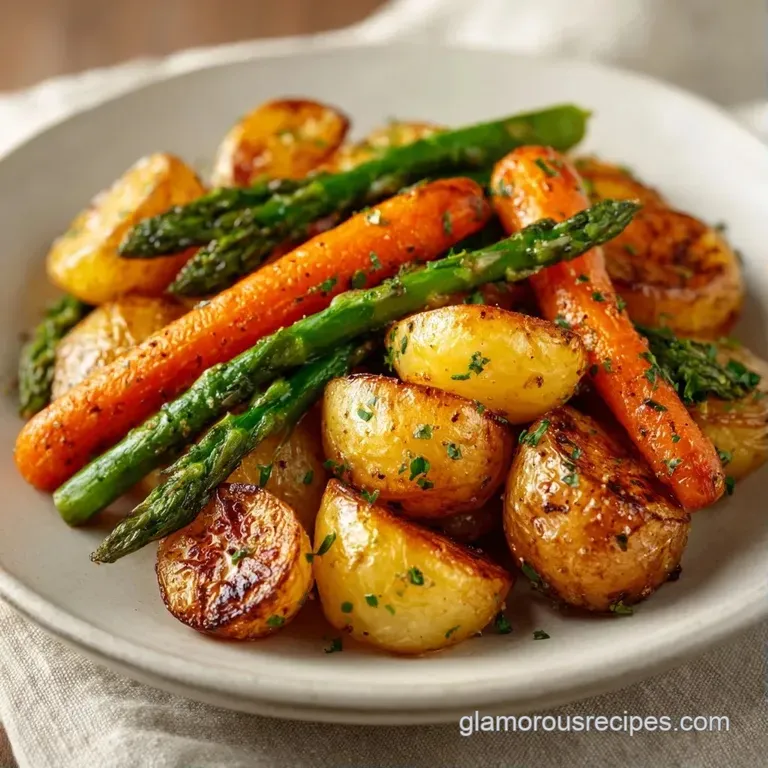
Now we get to the actual work. Remember, the goal here is to manage the heat so nothing gets overcooked.
- Preheat your oven to 400°F (200°C). Note: Let it fully reach temp so the veg sizzles immediately upon contact.
- In a large mixing bowl, toss the baby carrots, halved baby gold potatoes, and sliced parsnips with 2 tablespoons of olive oil and sea salt.
- Spread the root vegetables in a single layer on a large rimmed baking sheet. Note: Give them space; if they touch too much, they'll steam instead of roast.
- Roast the root vegetables in the oven for 20 minutes until the potatoes develop a golden brown crust and carrots soften.
- While the root vegetables are roasting, whisk together the honey, fresh lemon juice, minced garlic, and cracked black pepper in a small bowl.
- Remove the baking sheet from the oven. Push the root vegetables to the sides to create a clearing in the middle.
- Add the trimmed asparagus and sugar snap peas to the center. Drizzle with 1 tablespoon of olive oil and the honey lemon glaze, tossing gently to coat.
- Return the pan to the oven and roast for an additional 10 minutes until the asparagus is tender crisp and the glaze is bubbly.
- Remove from the oven and garnish with fresh torn mint, chopped parsley, and lemon zest before serving.
Fixing Common Roast Mishaps
Even with a plan, things can go sideways. Usually, it's a matter of oven calibration or vegetable size. When making this Beltane Celebration Recipe with Spring Vegetables, the most common issue is the glaze.
The Glaze is Burning
Honey has a low burn point. If your oven runs hot, you might see the glaze turn black instead of golden. This usually happens if the honey is concentrated in one spot or if the oven is over 425°F.
Asparagus is Overcooked
Asparagus varies wildly in thickness. If you're using pencil thin spears, 10 minutes is too long. They'll lose their snap and turn a dull olive green.
Roots are Still Hard
If your potatoes are still firm after 20 minutes, your pan was likely too crowded. This creates a "steam zone" where the temperature stays too low for browning to occur.
| Problem | Root Cause | Solution |
|---|---|---|
| Burnt Honey | Oven too hot or glaze too thick | Add a teaspoon of water to the glaze next time |
| Mushy Greens | Overcooked in the final stage | Remove greens 2-3 mins early |
| Soggy Potatoes | Overcrowded baking sheet | Use two pans instead of one |
Roasting Checklist:
- ✓ Vegetables are patted dry before oiling
- ✓ Root veg are spread in a single layer
- ✓ Asparagus is trimmed to a consistent thickness
- ✓ Oven is fully preheated to 400°F (200°C)
- ✓ Glaze is whisked thoroughly before drizzling
Adjusting Your Batch Size
Whether you're cooking for a solo dinner or a full community feast, scaling this Beltane Celebration Recipe with Spring Vegetables requires a few tweaks to the physics of the pan.
Scaling Down (Half Batch) If you're cutting the recipe in half, don't use the same giant baking sheet. Use a smaller tray to keep the vegetables clustered enough that the oil doesn't just disappear into the metal.
Reduce the roasting time for the root vegetables by about 20%, checking them at the 15 minute mark.
Scaling Up (Double or Triple Batch) This is where most people mess up. Do NOT simply double the ingredients on one tray. You will end up with a vegetable stew. Instead, work in batches or use three separate baking sheets.
When doubling, only increase the salt and black pepper by 1.5x. Spices and salt don't always scale linearly, and it's easier to add more at the end than to fix an overly salty dish. For the honey lemon glaze, you can double it fully, as it's a coating rather than a seasoning.
| If you want... | Do this... | Expected Result |
|---|---|---|
| A quicker cook | Slice roots thinner | Faster browning, less interior creaminess |
| Extra crunch | Add 1 tsp cornstarch | More "shatter" on the potato skins |
| More tang | Double the lemon zest | Brighter, more aromatic finish |
Common Roasting Misconceptions
There are a few things people tell you about roasting vegetables that just aren't true. I've tested these, and here's the reality.
One big myth is that you need to peel baby carrots and parsnips. Honestly, don't even bother. A good scrub with a brush is enough. The skin holds a lot of the flavor and helps the vegetable maintain its structure during the roast.
Another misconception is that searing the vegetables in a pan before roasting "locks in the flavor." It doesn't. It just adds another step and more fat to the dish. The high heat of the oven does all the work you need for the Maillard reaction (the browning process) to occur.
Finally,, some people think you should add the fresh herbs before roasting. Trust me on this: don't. Mint and parsley will burn and turn bitter in a 400°F oven. Adding them at the end keeps them vibrant and the flavor clean.
Keeping Leftovers Fresh
Since this Beltane Celebration Recipe with Spring Vegetables uses a mix of textures, storage can be a bit tricky. You don't want your crispy potatoes turning into sponges.
Fridge Storage Store the roasted vegetables in an airtight glass container. They'll stay good for about 3 to 4 days. Keep in mind that the asparagus and snap peas will lose their "snap" and become softer over time.
Freezing Guidelines I generally don't recommend freezing this dish. The water content in the spring vegetables is too high, and they'll turn to mush upon thawing. However, the root vegetables (carrots, potatoes, parsnips) freeze okay for up to 2 months if you're desperate.
Reheating for Texture Avoid the microwave if you can. To bring back that shatter, put the leftovers on a baking sheet and pop them back in the oven at 350°F (180°C) for about 5-8 minutes. This dries out the surface and restores the crust.
Zero Waste Tips Don't throw away the woody ends of the asparagus or the parsnip peelings! Toss them into a freezer bag. Once the bag is full, simmer them with some water and a bay leaf to make a quick, aromatic vegetable stock.
Also, use any leftover lemon halves by squeezing them into your morning water or using them to rub down a chicken breast for dinner.
Best Ways to Serve
This dish is a powerhouse on its own, but it really shines when it's part of a larger spread. Because it's so bright and zesty, it pairs well with heavier proteins.
If you're looking for a main course, I love serving this alongside a piece of roasted salmon or a grilled halloumi steak for a vegetarian option. The acidity of the lemon glaze cuts through the fat of the fish or cheese beautifully.
For a more complete meal, you could pair this with a grain. A wild rice blend or some fluffy quinoa works well. If you want another vegetable forward side to round out the table, you might try a Succotash side dish for some smoky, sweet contrast.
If you find the dish needs a bit more creaminess, I've found that a dollop of Greek yogurt or a drizzle of a Garlic Sauce on the side adds a velvety dimension that complements the charred edges of the root vegetables. This makes the Beltane Celebration Recipe with Spring Vegetables feel like a full restaurant meal rather than just a side dish.
Whether you're celebrating the traditional May Day festivities or just want to eat more greens, this approach ensures you get the most out of your produce. Just remember: space on the pan is your best friend, and timing is everything. Happy roasting!
Recipe FAQs
What is traditional Beltane food?
Fresh spring produce like greens, eggs, and dairy. This recipe honors the season by using baby carrots, asparagus, and sugar snap peas to mirror the awakening of nature.
Can I roast all the vegetables together at once?
No, because they cook at different speeds. Root vegetables require 20 minutes at 400°F to soften, whereas asparagus and snap peas only need 10 minutes to avoid becoming mushy.
How to store leftovers of these spring vegetables?
Place them in an airtight container in the refrigerator. They remain fresh for 3-5 days and can be easily reheated in the oven or microwave.
Is it true that root vegetables must be roasted for an hour to be tender?
No, this is a common misconception. When using baby gold potatoes and 1/4 inch parsnip rounds, they develop a golden brown crust in just 20 minutes at 400°F.
How to prevent the honey lemon glaze from burning?
Apply the glaze during the final 10 minutes of roasting. Adding honey too early at 400°F can cause the sugars to caramelize too quickly and scorch.
Can I substitute the olive oil for another fat?
Yes, avocado oil is a great alternative. If you enjoy balancing rich flavors, this approach is similar to how we layer taste in our homemade Alfredo sauce.
What happens if I overcook the asparagus and snap peas?
They lose their vibrant green color and become limp. Stick to the 10-minute roasting window to ensure they maintain a slight snap and bright appearance.
Beltane Spring Vegetables in 45 Minutes