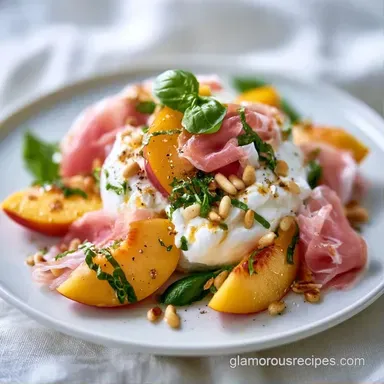
Peach and Burrata Salad with Prosciutto
- Time: 15 min active + 30 min resting
- Flavor/Texture Hook: Creamy, salty, and juicy
- Perfect for: Summer brunch or a light appetizer
The scent of peaches ripening on a sunny windowsill always reminds me of late August. There is something about that specific aroma, heavy and floral, that makes you want to eat everything fresh. Burrata comes from Puglia in Italy, where it was created as a way to use the leftover cream from mozzarella production.
It is a celebration of simple, high-quality ingredients.
I remember the first time I served this at a garden party. I was worried the fruit would make it feel too much like a dessert, but the salty prosciutto pulled everything back into the savory lane. It is a dish that feels fancy but requires almost no actual effort.
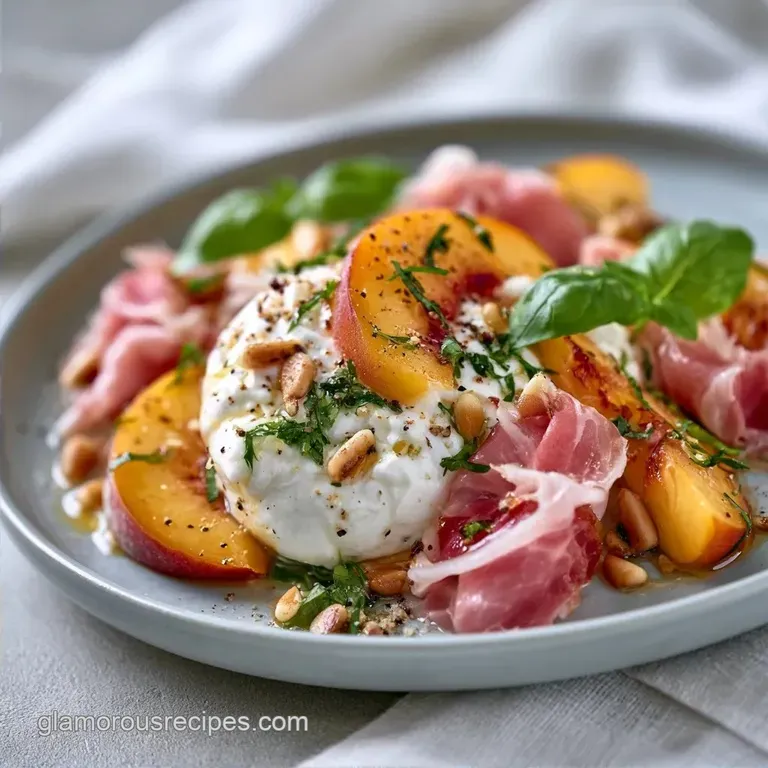
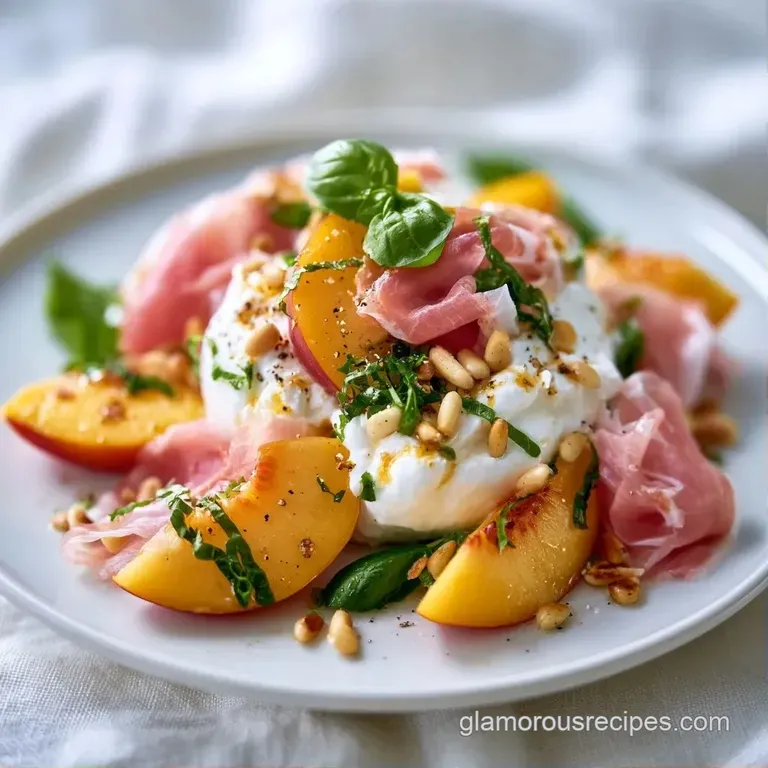
You can expect a plate that looks like a piece of art. The creamy center of the cheese spills over the fruit, creating a natural sauce that ties the whole thing together. This Peach and Burrata Salad is all about the assembly and the quality of your produce.
Why Room Temp Matters
The Cream Center: Chilled burrata stays stiff. Letting it sit at room temperature for 30 minutes softens the fats, so the center flows like heavy cream when you break the shell.
Fruit Aromatics: Cold peaches mute their flavor. Warmer fruit releases more natural sugars and scent, which helps the salad taste more vivid.
Fresh vs Shortcut
| Component | Fresh Version | Shortcut Version | Impact |
|---|---|---|---|
| Peaches | Fresh, ripe wedges | Canned slices | Loss of texture; too sweet |
| Burrata | Fresh ball | Mozzarella pearls | No creamy center; firmer bite |
| Pine Nuts | Toasted in pan | Pre toasted | Less aroma; slightly stale |
Ingredient Deep Dive
| Ingredient | What It Does | Best Swap |
|---|---|---|
| Burrata | Adds creamy richness | Buffalo Mozzarella |
| Peaches | Provides sweet acidity | Nectarines |
| Prosciutto | Brings salty umami | Serrano Ham |
| Balsamic Glaze | Adds tangy contrast | Honey Lemon Vinaigrette |
What You'll Need
- 3 large ripe peaches, sliced into 1/2 inch wedges Why this? Ripe fruit provides the necessary juice.
- 2 balls (8 oz each) burrata cheese Why this? Essential for that creamy core.
- 4 oz prosciutto, torn into ribbons Why this? Salty contrast to the sugar.
- 1 cup fresh basil leaves, torn Why this? Peppery brightness.
- 1/4 cup toasted pine nuts Why this? Earthy crunch.
- 3 tbsp extra virgin olive oil Why this? Binds the flavors together.
- 2 tbsp balsamic glaze Why this? Concentrated tang.
- 1/2 tsp sea salt Why this? Enhances the peach flavor.
- 1/4 tsp black pepper Why this? Adds a subtle bite.
Minimal Tools Required
You don't need a kitchen full of gadgets for this. A sharp chef's knife for the peaches, a wide serving platter, and your hands for tearing the basil and prosciutto are all you need. If you haven't toasted your pine nuts, a small dry skillet will do the trick.
Putting It Together
- Set the burrata cheese on the counter for 30 minutes. Note: This ensures the center is silky and pourable.
- Slice peaches into uniform 1/2 inch wedges.
- Tear the prosciutto into bite sized ribbons.
- Roughly tear the basil leaves by hand. Note: Tearing prevents the leaves from bruising like they do when sliced.
- Arrange the peach wedges in a circle on a wide platter.
- Interweave the prosciutto ribbons between the peach slices.
- Place the burrata balls in the center.
- Break the outer shell of the cheese with a knife until the cream spills out.
- Drizzle olive oil and balsamic glaze in a zig zag motion.
- Scatter pine nuts, basil, salt, and pepper over the top.
Fix Common Problems
If your burrata feels too watery, it usually means it sat in its packing liquid too long. Pat it dry with a paper towel before placing it on the platter. This prevents the salad from becoming a soup.
When the peaches aren't sweet enough, the balance shifts. You can fix this by adding a tiny pinch of sugar to the peaches before plating.
If the dressing pools at the bottom, you likely used too much glaze. Keep the drizzle light and fast.
| Problem | Root Cause | Solution |
|---|---|---|
| Watery Plate | Excess brine | Pat cheese dry |
| Bland Fruit | Underripe peaches | Add pinch of sugar |
| Overpowering Tang | Too much glaze | Use a lighter drizzle |
Easy Ingredient Swaps
If you want a different fruit profile, try this stone fruit salad for more variety. You can also swap the prosciutto for a salty feta if you prefer a vegetarian version.
For those avoiding nuts, toasted sunflower seeds work well. They provide a similar earthiness without the allergen.
Changing the Scale
If you are making this for two people, use 1.5 peaches and one 8 oz burrata ball. Halve all the dressing and garnish amounts.
For a party of eight, double the ingredients but don't double the salt. Use two separate platters instead of one giant one. This keeps the cheese from getting smashed in the middle.
Debunking Salad Myths
Some people think burrata is just fancy mozzarella. It isn't. Burrata is a shell of mozzarella filled with stracciatella and cream, which gives it a completely different mouthfeel.
Another myth is that you must grill the peaches for this to work. While grilling adds a smoky note, raw peaches provide a fresh, juicy contrast that is often better in high heat.
Storage and Waste
This salad is best eaten immediately. If you must store it, keep the components separate. Store sliced peaches in an airtight container for 2 days. Keep the burrata in its liquid until the moment you serve.
Don't throw away the peach pits. You can dry them and use them to infuse a homemade liqueur or simply compost them for your garden. Basil stems can be tossed into a freezer bag and added to your next batch of homemade pesto.
What to Serve
This dish is quite rich, so it pairs well with something acidic. A crisp Prosecco or a chilled Sauvignon Blanc cuts through the creaminess of the cheese.
For a full meal, serve this alongside some toasted sourdough bread rubbed with a garlic clove. If you want another fresh side, a Caesar salad provides a great savory balance to the sweetness of the peaches.
Chef's Tip: Chill your serving platter in the fridge for 10 minutes before plating. It keeps the peaches firm while the cheese stays room temperature, creating a great temperature contrast.
Recipe FAQs
What fruit goes well with burrata?
Ripe peaches provide the ideal balance. Their sweetness and acidity cut through the creamy cheese. If you enjoy the bold taste of peaches in other treats, try these peach ring shots.
How to make Peach and Burrata Salad?
Bring burrata to room temperature for 30 minutes. Slice peaches into 1/2 inch wedges, tear the prosciutto and basil, arrange them on a platter, place the cheese in the center, and drizzle with olive oil and balsamic glaze.
What salad dressing goes with burrata?
A simple blend of extra virgin olive oil and balsamic glaze. This combination enhances the creaminess of the cheese without overpowering the fresh fruit.
What does burrata pair well with besides fruit?
Salty and aromatic elements like prosciutto, toasted pine nuts, and fresh basil. These ingredients provide a contrast in texture and flavor that balances the rich cheese.
Is it true that burrata must be served ice-cold for the best texture?
No, this is a common misconception. Bringing the cheese to room temperature for 30 minutes ensures the center is creamy and fluid.
How to store the leftovers of this salad?
Keep the components separate. Store sliced peaches in an airtight container for up to 2 days and keep the burrata in its liquid until the moment you serve.
How to prepare the toppings for the best flavor?
Toast the pine nuts and tear the basil leaves by hand. Tearing the basil prevents bruising, while toasting the nuts adds a deep, roasted richness.
Peach And Burrata Salad