Cheesecake Brownies: Fudgy Swirl Bars
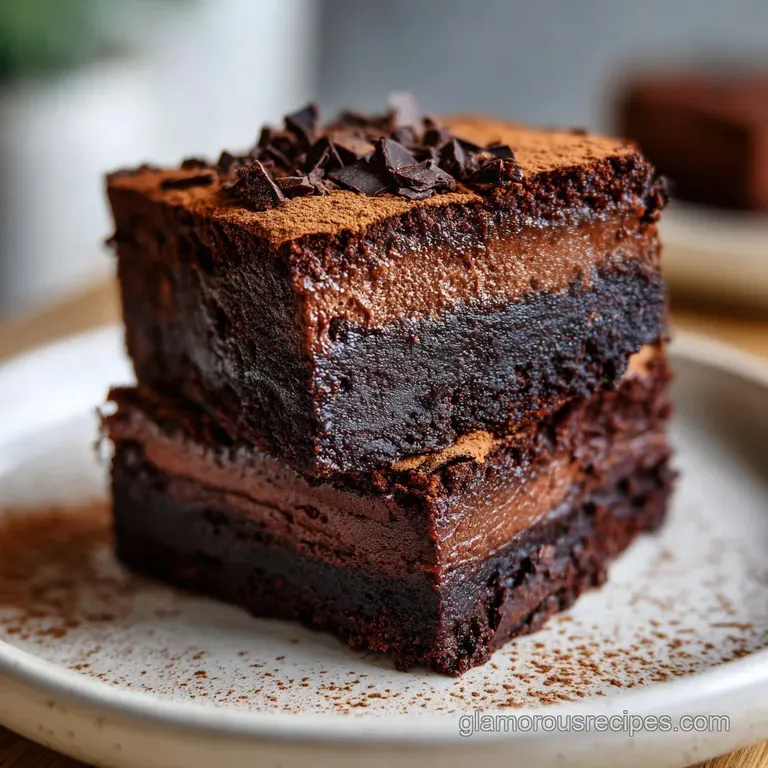
- Time: Active 20 minutes, Passive 35 minutes, Total 55 minutes
- Flavor/Texture Hook: Fudgy chocolate base with a velvety, tangy cheesecake swirl
- Perfect for: Sunday dinners, family gatherings, and comforting dessert prep
- Master the Ultimate Cheesecake Brownies
- The Science of Fudgy Layers
- Selecting Your Preferred Texture
- Component Analysis of Every Layer
- Selecting the Right Ingredients
- The Baking Process Step-by-Step
- Common Baking Pitfalls and Fixes
- Adjusting for Smaller Gatherings
- Debunking Common Baking Beliefs
- Maintaining Freshness and Reducing Waste
- Perfect Pairings for Sunday Dinner
- Recipe FAQs
- 📝 Recipe Card
Master the Ultimate Cheesecake Brownies
The smell of melting butter swirling into dark cocoa is a sacred scent in my kitchen. It reminds me of those long Sunday dinners where the house is full of laughter and the oven is working overtime.
I remember the first time I tried making these; I was so worried about the swirl looking "perfect" that I over mixed it, ending up with a murky brown mess. It still tasted like home, but it wasn't the masterpiece I wanted to share with you.
Since then, I've learned that the secret isn't just in the swirl, but in the patience of the bake. These Cheesecake Brownies are the ultimate comfort food, bridging the gap between a decadent cake and a creamy tart.
We are using real, simple ingredients to create something that feels special every single time it hits the cooling rack. Trust me, the aroma alone will have your neighbors knocking on the door before the timer even goes off.
You'll love how the dense, chocolatey foundation supports the light, airy tang of the cream cheese. It is a timeless combination that never goes out of style. Whether you are baking for a church social or just a quiet night in, this recipe delivers a consistent, soul warming result that has become a staple in my family’s recipe box.
The Science of Fudgy Layers
The Secret to the Swirl: Using room temperature ingredients allows the fat molecules in the cream cheese and butter to bond effectively, creating a stable emulsion. This ensures the cheesecake layer sits on top of the dense brownie base rather than sinking or blending into a singular, muddy texture.
Chef Tip: Whisk a pinch of espresso powder into your dry cocoa; it won't make the brownies taste like coffee, but it will deepen the chocolate notes to a soulful level.
Chef Tip: Grate a small amount of cold cream cheese over the top of the batter before swirling to create "pockets" of intense tanginess that don't fully melt into the batter.
Selecting Your Preferred Texture
Before you start whisking, it is helpful to decide exactly how you want your final dessert to feel. While this recipe is designed for a traditional fudgy result, small adjustments can change the outcome to suit your specific tastes or the occasion.
| Method | Time | Texture | Best For |
|---|---|---|---|
| Standard Bake | 35 minutes | Fudgy with creamy top | Sunday dinners |
| Extended Chill | 12 hours | Dense, truffle like | High end tea parties |
| Slightly Underbaked | 30 minutes | Gooey and molten | Serving with ice cream |
Choosing the right approach ensures your dessert fits the mood of the gathering. If you are looking for more decadent chocolate inspiration, you might enjoy my Homemade German Chocolate recipe which also focuses on those rich, deep flavors.
Component Analysis of Every Layer
Understanding why we use specific ingredients helps you become a more intuitive cook. Every gram of flour and every splash of vanilla serves a purpose in building the final flavor profile.
| Ingredient | Science Role | Pro Secret |
|---|---|---|
| Dutch Cocoa (45g) | Provides deep color and low acidity | Sift it twice to avoid bitter lumps |
| Cream Cheese (225g) | Adds fat and structural tang | Use full fat only for the best mouthfeel |
| Eggs (3 total) | Bind the fats and provide lift | Must be room temperature for smooth mixing |
Balancing the Fat to Sugar Ratios
The relationship between the 170g of melted butter and the 200g of granulated sugar is what defines the brownie's "chew." When the sugar dissolves into the warm butter, it creates that classic crackly, shatter thin top that we all crave in a good brownie.
Mastering the Aeration
We want to avoid over beating the eggs once the flour is added. Too much air will turn these into a "cakey" brownie, which loses that sacred fudgy density. Stir just until the white streaks of the 95g of all purpose flour disappear into the chocolate.
Controlling Moisture Migration
The 225g of cream cheese contains significant moisture. By adding a single egg to the cheesecake layer, we ensure that as the water evaporates during baking, the protein in the egg sets the structure, preventing a soggy middle.
Selecting the Right Ingredients
Gather these components before you begin. Having everything measured out in grams ensures accuracy, especially with baking where precision is a form of love.
- 170g unsalted butter: Melted and cooled slightly. Why this? Provides the essential fat for a tender, fudgy crumb. (Substitute: Salted butter, but omit the extra 1/2 tsp salt).
- 200g granulated sugar: For the brownie base. Why this? Dissolves perfectly to create the shiny top. (Substitute: Caster sugar for a finer texture).
- 2 large eggs: For the base, at room temperature. Why this? Emulsifies the butter and sugar. (Substitute: Flax eggs, though it will be much denser).
- 2 tsp vanilla extract: high-quality is best here.
- 45g Dutch processed cocoa powder: For that dark, rich look. (Substitute: Natural cocoa, but it will be lighter and more acidic).
- 95g all purpose flour: The structure of our dessert. (Substitute: 1:1 gluten-free baking flour).
- 1/2 tsp salt: To balance the sweetness.
- 1/2 cup chocolate chips: For extra texture and pockets of melt.
- 225g full fat cream cheese: Softened completely. Why this? Provides the signature tang and velvety swirl. (Substitute: Mascarpone for a milder, creamier flavor).
- 50g granulated sugar: For the cheesecake layer.
- 1 large egg: For the cheesecake layer.
- 1/2 tsp vanilla extract: For the topping.
The Baking Process step-by-step
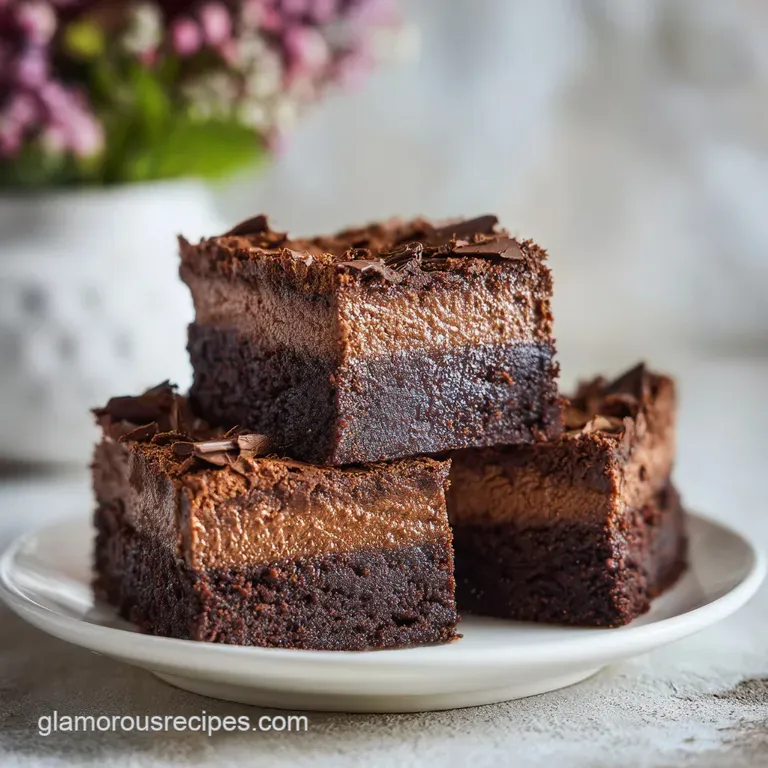
Follow these steps carefully, paying attention to the sensory cues like the aroma of the cocoa and the "jiggle" of the cheesecake.
For the Fudgy Brownie Base
- Preheat your oven to 180°C and grease a 20x20 cm square baking pan.
- Whisk 170g melted butter and 200g sugar until smooth and slightly pale.
- Add 2 eggs and 2 tsp vanilla, beating until the mixture looks velvety.
- Fold in 45g cocoa, 95g flour, and 1/2 tsp salt until no dry streaks remain.
- Stir in 1/2 cup chocolate chips. Note: These add little bursts of intense chocolate.
- Reserve 1/4 cup of the batter and spread the rest into the prepared pan.
For the Tangy Cheesecake Swirl
- Beat 225g softened cream cheese and 50g sugar until completely lump free.
- Add 1 egg and 1/2 tsp vanilla, whisking until the aroma is sweet and creamy.
- Pour the cheesecake mixture over the brownie base and spread it evenly.
- Drop spoonfuls of the reserved brownie batter on top and swirl gently with a knife.
- Bake for 35 minutes until the edges are set and the center has a slight jiggle.
Common Baking Pitfalls and Fixes
Even the most seasoned home cooks face challenges. If your swirl doesn't look like a magazine cover, don't worry it will still taste like a dream. If you are struggling with the base, you might find some crossover tips in my Graham Cracker Crust recipe regarding how to press and set layers.
Avoiding the Lumpy Swirl
If your cream cheese isn't truly at room temperature, it will leave small white beads in your batter. This doesn't ruin the taste, but it affects that velvety mouthfeel we are aiming for. Always pull your dairy out of the fridge at least two hours before you start.
Testing for the Perfect Jiggle
The biggest mistake is overbaking. Because of the cream cheese, these will look "wet" in the middle when they are actually done. If the edges have puffed up and the center moves just a tiny bit like gelatin when shaken, take them out. They will firm up as they cool.
| Problem | Root Cause | Solution |
|---|---|---|
| Greasy texture | Butter was too hot when adding eggs | Let butter cool to lukewarm before mixing |
| Gritty topping | Sugar didn't dissolve in cream cheese | Whisk cream cheese and sugar for 3 mins |
| Dry brownies | Overbaked or too much flour | Use a scale for the 95g flour and check at 30 mins |
Common Mistakes Checklist
- ✓ Ensure all dairy and eggs are at room temperature to prevent curdling.
- ✓ Use Dutch processed cocoa rather than natural for a deeper flavor.
- ✓ Avoid over swirling; three or four passes with the knife is plenty.
- ✓ Let the brownies cool completely in the pan before attempting to slice.
- ✓ Use a hot, damp knife to get those clean, professional looking squares.
Adjusting for Smaller Gatherings
If you are cooking for a smaller household, you can easily scale this recipe down. However, keep in mind that the pan size must change to maintain the correct thickness and texture.
- Cutting the recipe in half: Use a loaf pan instead of a square pan. Reduce the bake time by about 5-8 minutes and monitor the center jiggle closely.
- Doubling for a crowd: Use a 23x33 cm (9x13 inch) pan. You may need to increase the bake time to 40-45 minutes. Do not double the salt use only 3/4 tsp total to keep the flavors balanced.
Baking for a group is one of the most comforting things you can do. If you have leftover cream cheese, consider using it in my Chocolate Orange Cheesecake recipe for another citrusy twist on a classic.
Debunking Common Baking Beliefs
Many people think you need to whisk brownie batter until it is light and fluffy. This is a myth. Over whisking incorporates too much air, which results in a cake like texture rather than the fudgy, dense bite that defines a true brownie. Stir by hand with a spatula for the best results.
Another common belief is that the "toothpick test" works for cheesecake topped items. It doesn't. A toothpick will always come out slightly "messy" because of the cream cheese layer. Instead, rely on the visual cue of the "set" edges and the slight wobble in the very center.
Maintaining Freshness and Reducing Waste
Storage Guidelines: These brownies are actually better on the second day after the flavors have had time to marry. Keep them in an airtight container in the fridge for up to 5 days. For longer storage, wrap individual squares in parchment paper and freeze them for up to 3 months.
Thaw in the fridge overnight for the best texture.
Zero Waste Tips: If you have small scraps or "ugly" edges from trimming your squares, don't throw them away. Crumble them over vanilla bean ice cream or fold them into a batch of chocolate chip cookie dough.
You can even blend them into a milkshake for a decadent "cheesecake brownie" treat that ensures not a single crumb goes to waste.
Perfect Pairings for Sunday Dinner
These brownies are quite rich, so they pair beautifully with something that offers a bit of acidity or a clean finish. A cold glass of whole milk is the traditional choice, but a strong cup of black coffee or a tart raspberry coulis can really make the flavors sing.
If you are serving these as part of a larger dessert spread, they sit perfectly alongside a lighter fruit based dish. I often serve them with a side of fresh berries to cut through the density of the chocolate. It’s all about creating that balance of comfort and elegance that makes a meal memorable.
In our house, dessert isn't just a course; it's the final "thank you" to the people we love. Enjoy the process, enjoy the aroma, and most importantly, enjoy the company.
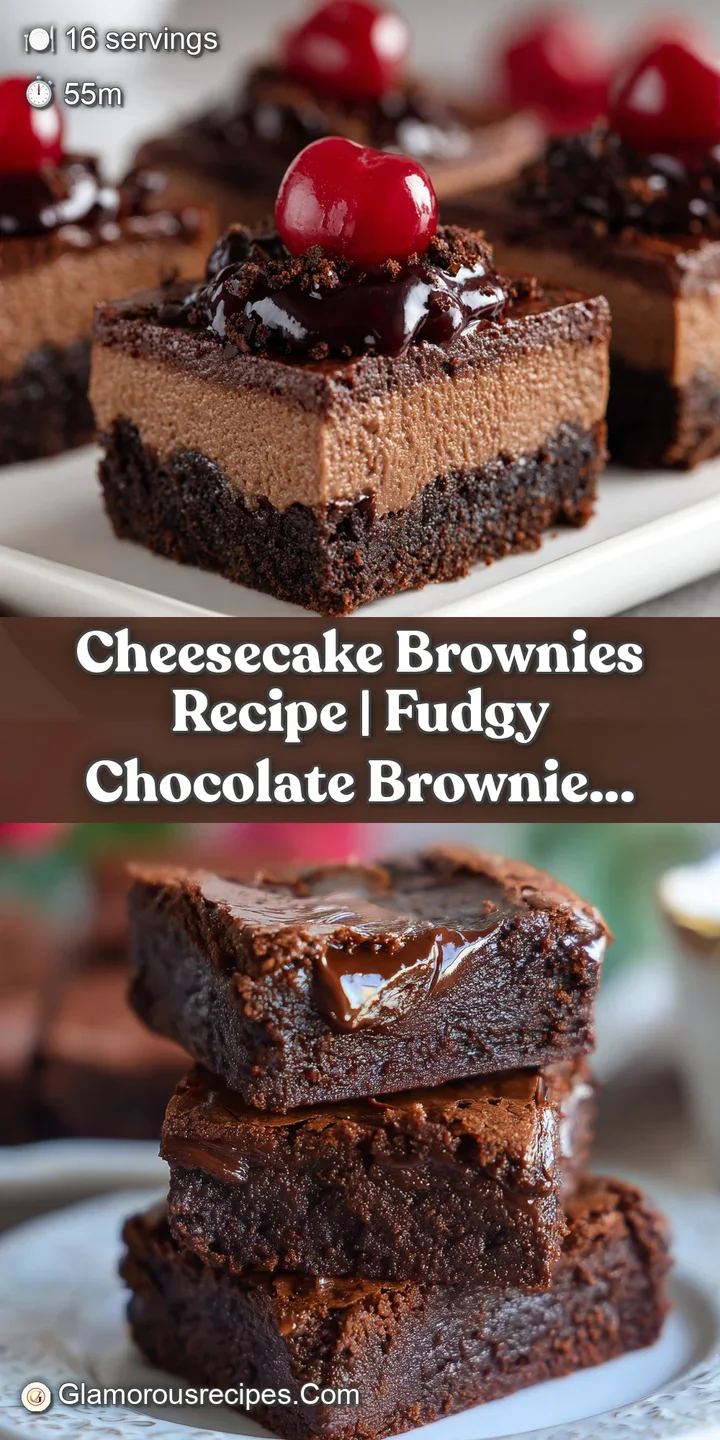
Recipe FAQs
What happens if you add cream cheese to brownie mix?
It creates a cheesecake swirl layer. Adding a separate, sweetened cream cheese mixture on top of the brownie batter allows the two textures to bake side-by-side.
What's the secret to chewy cheesecake brownies?
Use slightly less baking time and ensure the butter/sugar mixture is warm when adding eggs. The high fat content keeps them fudgy, and pulling them out when the center still has a slight jiggle ensures moisture retention for chewiness.
What is the 3 ingredient cheesecake?
This term usually refers to a simplified cheesecake base made from cream cheese, sugar, and eggs. While this recipe uses more components for structure, the core flavor is established by those three elements in the topping layer.
What is the best pan for baking cheesecake brownies?
An 8x8 inch (20x20 cm) metal baking pan yields the ideal thickness. A metal pan conducts heat evenly, promoting that desired dense, fudgy bottom layer.
How do I prevent the cream cheese layer from sinking into the brownie batter?
Pour the cheesecake mixture over the chilled brownie base. The base should be slightly cooler and more set than the topping, which helps maintain the defined swirl during the initial bake.
Is it true you must use room temperature cream cheese for the topping?
Yes, room temperature is critical for a smooth swirl. Cold cream cheese resists blending with the sugar and egg, leading to lumpy patches that won't emulsify properly into the batter.
How to get clean slices when cutting cooled cheesecake brownies?
Chill the entire pan in the refrigerator for at least four hours, or preferably overnight. Run a large, sharp knife under very hot water, wipe it dry immediately, and use a clean, hot blade for each cut.
Cheesecake Brownies Recipe
Ingredients:
Instructions:
Nutrition Facts:
| Calories | 253 kcal |
|---|---|
| Protein | 3.5 g |
| Fat | 16.2 g |
| Carbs | 25.4 g |
| Fiber | 1.4 g |
| Sugar | 19.1 g |
| Sodium | 84 mg |
