Venison Summer Sausage Recipe
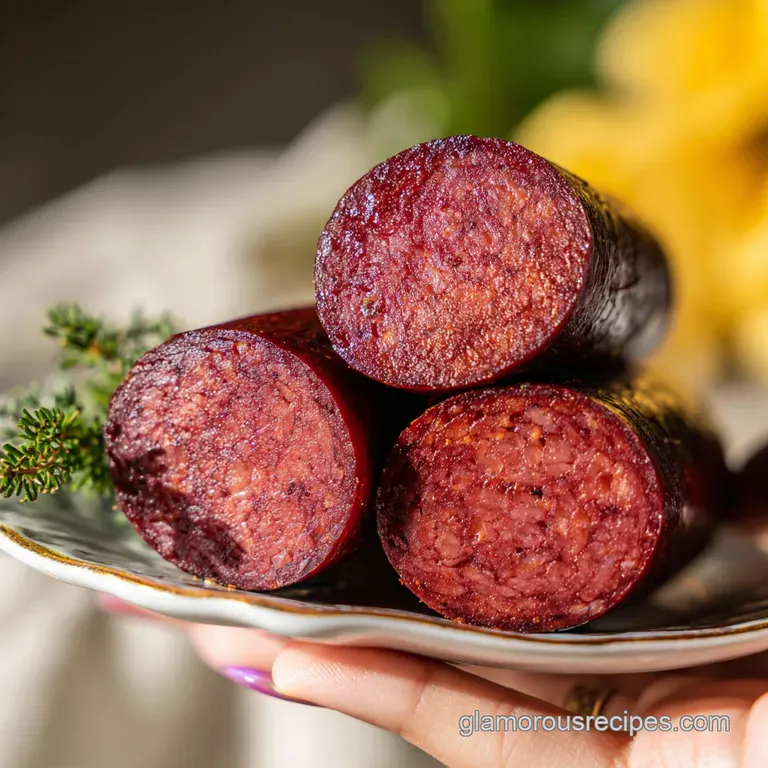
- Time: Active 45 minutes, Passive 6 hours, Total 6 hours 45 mins
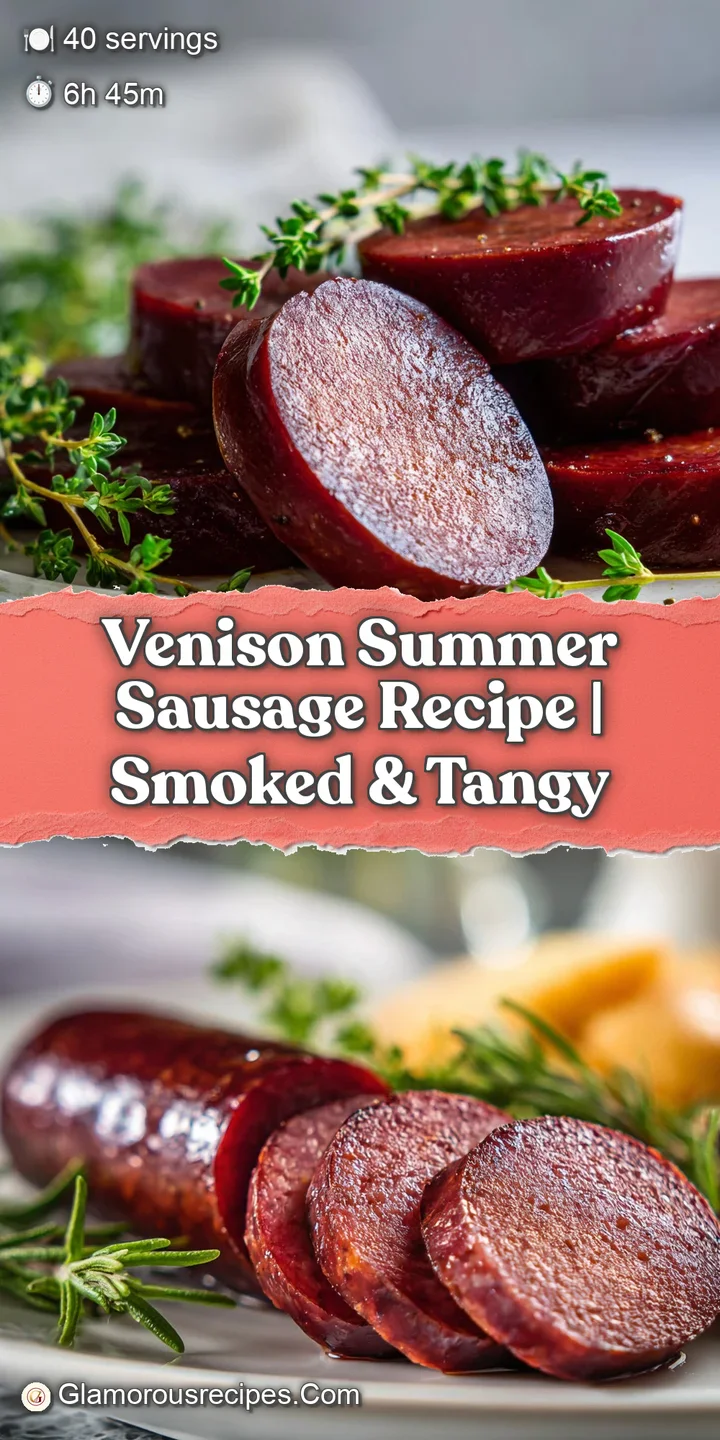
- Flavor/Texture Hook: Snappy casing with a smoky, tangy, and velvety finish
- Perfect for: Holiday gift giving, Sunday football platters, or traditional hunting camp snacks
- Creating a Classic Smoky Venison Summer Sausage at Home
- Key Benchmarks for Your Smoked Cured Meat
- Essential Seasonings and Quality Protein Ratios
- Required Tools for Large Batch Meat Processing
- Six Critical Steps for a Successful Smoke
- Effective Solutions for Texture and Color Issues
- Adapting the Recipe for Specific Dietary Needs
- Precise Scaling for Smaller or Larger Batches
- Debunking Common Meat Curing Traditions
- Safe Storage and Traditional Preservation Methods
- Flavorful Pairings for Your Sunday Meat Board
- High in Sodium
- Recipe FAQs
- 📝 Recipe Card
Close your eyes and imagine the scent of hickory smoke wafting through a crisp autumn afternoon. There is something sacred about the ritual of processing your own harvest, turning lean meat into a heritage snack that brings the whole family together.
This isn't just about preserving meat; it's about honoring the animal and the tradition of Sunday afternoon grazing boards.
I remember the first time I tried making this. I was so worried about the "pink salt" and the long smoke times that I almost talked myself out of it. But once you hear that first casing "snap" and taste the tangy, peppery bite against a sharp piece of cheddar, you'll never go back to the store-bought logs.
It is pure comfort food, rooted in the way our grandparents used to stock the cellar.
We are going to walk through this together, focusing on how we build those layers of flavor from the initial spice blend to the final "bloom" in the ice bath. You don't need a professional smokehouse, just a bit of patience and a love for the craft. Let's get that grinder chilled and start making some memories.
Creating a Classic Smoky Venison Summer Sausage at Home
The beauty of a Venison Summer Sausage lies in the chemistry of the cure and the physics of the bind. We aren't just mixing meat; we are creating a stable emulsion that stays juicy even after hours in the smoker.
The Science of Why it Works Protein extraction occurs when salt and friction dissolve myosin, creating a sticky matrix that traps fat and moisture. This ensures the finished sausage has a firm, resilient texture rather than a crumbly, dry mouthfeel.
Chef's Tip: Put your grinder's throat, tray, and blades in the freezer for 20 minutes before you start. Heat is the enemy of a good sausage; if the fat warms up, it "smears," leaving you with a greasy, grainy texture instead of a velvety bite.
Another trick I learned the hard way: always perform a "fry test." Take a small tablespoon of your mixed meat, fry it in a skillet, and taste it before you stuff the casings. It is the only way to ensure your seasoning levels are exactly where you want them before committing to a 6 hour smoke.
Key Benchmarks for Your Smoked Cured Meat
Precision is what separates a good snack from a professional grade charcuterie. When you are working with wild game, you have to be mindful of the lean to fat ratio and the internal temperatures to ensure food safety and the best possible texture.
| Metric | Target Value | Why It Matters |
|---|---|---|
| Meat Temperature | 32°F - 34°F | Prevents fat from melting during the grinding process |
| Final Internal Temp | 152°F | Ensures food safety while keeping the protein juicy |
| Water Temperature | 33°F (Ice Cold) | Helps the primary bind form without heating the meat |
When you are planning your day, remember that this is a "low and slow" process. You cannot rush the smoke. If you crank the heat to finish faster, the fat will render out of the casings, leaving you with "fat caps" and shriveled meat. If you enjoy this process, you might also find the technique similar to preparing the protein for my Ground Venison Recipes which focus on maintaining moisture in lean game.
Essential Seasonings and Quality Protein Ratios
The foundation of any great summer sausage is the meat to fat ratio. Venison is notoriously lean, almost entirely devoid of the fat needed to carry flavor and provide a tender chew. That is why we lean heavily on pork fat or high fat pork shoulder.
| Ingredient | Science Role | Pro Secret |
|---|---|---|
| 7 lbs Lean Venison | Primary Protein | Remove every bit of silver skin to prevent a "chewy" texture. |
| 1 tsp Prague Powder #1 | Nitrate Cure | Prevents botulism during low temp smoking and provides the pink color. |
| 1/2 cup Fermento | Acidification | Mimics the traditional "tang" of fermented sausages without the weeks of drying. |
| 1 cup Ice Cold Water | Solubilization | Distributes the cure evenly and helps the meat proteins bond together. |
The Meat & Fat
We use 7 lbs of venison and 3 lbs of pork fat. This 70/30 split is the "golden ratio" for wild game. It provides enough lubrication to balance the dense venison fibers without making the sausage feel oily.
If you can't find pure pork fat, a very fatty pork butt works well, but you may need to adjust the weight to ensure you're getting enough actual white fat into the mix.
The Seasoning & Cure
The "kit" components here are the salt, pepper, mustard seeds, and garlic. The 5 tbsp of kosher salt isn't just for flavor; it's the engine that drives the protein extraction. The mustard seeds provide a delightful textural pop that contrasts with the smooth meat, while the 2 tbsp of coarse black pepper gives it that classic Sunday dinner warmth.
Optional Flavor Boosts
We're adding 2 cups of high temperature cheddar and 1/2 cup of dehydrated jalapeño flakes. High temp cheese is vital because it has a higher melting point (around 400°F), meaning it stays in distinct, gooey pockets rather than disappearing into the meat during the smoking process.
Required Tools for Large Batch Meat Processing
You don't need a commercial kitchen, but a few specific tools make this 10 pound batch much more manageable. Trying to mix this much meat by hand in a small bowl will result in uneven curing and very tired arms.
- Electric Meat Grinder: A heavy duty model (at least .5 HP) is best for 10 lbs of meat.
- Sausage Stuffer: Use a dedicated vertical stuffer. Grinder attachments often "smear" the meat because they use an auger to push the mix.
- Fibrous Casings: 2.5 inch diameter mahogany casings are the standard for that "summer sausage" look.
- Meat Thermometer: An instant read or a dual probe leave in thermometer is non negotiable for tracking the internal temp.
- Large Meat Lug: A food grade plastic bin for mixing the meat, fat, and spices thoroughly.
Six Critical Steps for a Successful Smoke
Follow these steps closely. The order of operations is designed to build the flavor layers and ensure the structural integrity of the sausage.
- Chilled Grind. Cut the 7 lbs Venison and 3 lbs Pork Fat into 1 inch cubes. Chill in the freezer until the edges are crunchy (about 45 minutes) then grind through a coarse 8mm plate. Note: This prevents the fat from turning into a paste.
- The Primary Bind. Combine the ground meat with 5 tbsp Kosher Salt, 1 tsp Prague Powder #1, 1/2 cup Fermento, and all other spices. Add 1 cup Ice Cold Water. Mix vigorously for 5-8 minutes until the meat becomes tacky and sticks to your hand.
- The Inclusion Fold. Gently fold in the 2 cups High Temperature Cheddar and 1/2 cup Dehydrated Jalapeño flakes. Note: Don't overmix here or you'll break the cheese cubes.
- Casing Prep. Soak your fibrous casings in warm water for 30 minutes. Stuff the mixture firmly into the casings, ensuring no air pockets remain, and tie the ends tightly with butcher's twine.
- The Overnight Rest. Place the stuffed logs in the refrigerator for at least 12 hours. Wait until the casings feel dry and the meat looks deep red. Note: This allows the cure to work and the flavors to marry.
- The Progressive Smoke. Place in a smoker at 130°F for 1 hour (no smoke). Increase to 150°F and add hickory or oak chips for 2 hours. Finally, raise to 170°F and smoke until the internal temperature hits exactly 152°F.
Once they reach temperature, immediately plunge the sausages into an ice water bath for 20 minutes. This stops the cooking process and prevents the casings from shriveling.
Hang them at room temperature for 1-2 hours to "bloom" this is where that beautiful, mahogany color develops.
Effective Solutions for Texture and Color Issues
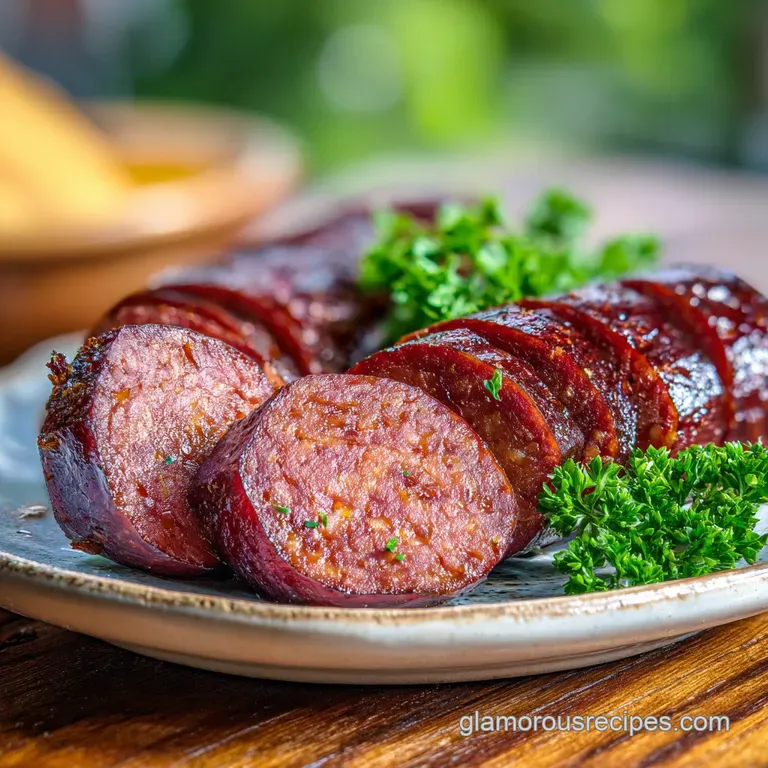
Even the most seasoned home cooks run into a "crumbly" batch or a "gray" center every now and then. Usually, it comes down to temperature control or the timing of the salt.
Why Your Sausage is Crumbly
If your sausage falls apart when you slice it, the protein bind failed. This happens if the meat wasn't mixed long enough with the salt and water, or if the meat got too warm during the grind. The proteins need to "tangle" together to create a solid structure.
| Problem | Root Cause | Solution |
|---|---|---|
| Fat caps under casing | Smoker temp was too high | Keep smoker under 175°F; don't rush the heat. |
| Gray/Dull interior | Cure wasn't distributed | Mix the pink salt into the water before adding to meat. |
| Shriveled skin | No ice bath | Immediately dunk in ice water after the internal temp hits 152°F. |
Why Your Sausage Feels Dry
Venison is thirsty. If you skipped the ice cold water or used meat that was already freezer burned, the result will be dry. The 1 cup of water in this recipe is essential for hydration. If you find your wild game is particularly lean, consider increasing the pork fat slightly in the next batch to 3.5 lbs.
Ensuring Even Smoke Color
If the sausages are touching each other in the smoker, you'll get "white spots" where the smoke couldn't reach. Ensure there is at least two inches of space between each log. I like to rotate them halfway through the 170°F stage to ensure a perfectly even tan.
Adapting the Recipe for Specific Dietary Needs
While this is a classic recipe, you can certainly tweak things to fit your lifestyle. Just be careful not to mess with the salt or the cure, as those are vital for safety.
- For a Keto Friendly Version: This recipe is naturally very low carb (only 2g per serving). Ensure your jalapeño flakes don't have added sugar and use a high-quality cheddar with no fillers.
- For a dairy-free Alternative: Simply omit the high temp cheddar. You can replace it with toasted walnut pieces or whole peppercorns for a different kind of "pop."
- For a Spicier Kick: Double the jalapeño flakes or add a teaspoon of cayenne pepper to the spice mix.
| Original Ingredient | Substitute | Why It Works |
|---|---|---|
| Pork Fat | Beef Tallow (Suet) | High melting point. Note: Gives a more "waxy" mouthfeel than pork fat. |
| Fermento | Citric Acid (1/2 tsp) | Provides instant tang. Note: Add at the very end of mixing to prevent meat texture breakdown. |
| Jalapeño Flakes | Red Pepper Flakes | Adds heat without the green pepper flavor profile. |
If you are looking for other ways to use your sausage, it works beautifully as a protein swap in my Sausage Balls Recipe, giving that pub style favorite a smoky, wild game twist.
Precise Scaling for Smaller or Larger Batches
Scaling a meat recipe requires a bit of math because you can't always just double the spices. Salt and cure levels are based on the weight of the meat to ensure safety and palatability.
- Cutting the Batch in Half: Use exactly 3.5 lbs Venison and 1.5 lbs Pork Fat. Reduce the salt to 2.5 tbsp and the Prague Powder to 1/2 tsp. You can use the same size casings, just fewer of them.
- Doubling for the Season: If you're doing 20 lbs, only increase the spices like garlic and onion powder by 1.5x to start, then do a fry test. Keep the salt and Prague Powder at a strict 2x ratio.
- Baking Option: If you don't have a smoker, you can "smoke" these in a low oven (170°F). Add 2 tsp of high-quality liquid smoke to the water during the mixing phase to mimic the flavor.
Debunking Common Meat Curing Traditions
One common myth is that you can skip the "pink salt" if you're eating it right away. This is dangerous. Because we are smoking at low temperatures (the "danger zone" for bacteria), the Prague Powder #1 is a mandatory safety barrier against botulism.
Another myth is that you should "sear" the sausages before smoking to lock in juices. In reality, searing would tighten the casings and prevent smoke penetration. The moisture is kept inside by the protein bind and the gentle temperature rise, not by a crust.
Safe Storage and Traditional Preservation Methods
Once your sausage has "bloomed" and cooled, it's time to store it. Because this is a semi dry sausage (not a fully dried salami), it still needs refrigeration.
- Fridge: Wrap tightly in butcher paper or vacuum seal. It will stay fresh for up to 14 days.
- Freezer: For long term storage, vacuum sealing is the gold standard. It will keep its velvety texture for 6 to 8 months.
- Zero Waste Tip: Don't toss the ends! The "nubs" of the sausage are packed with the most smoke flavor. Dice them up and throw them into a Beef Breakfast Sausage recipe hash or use them to season a pot of slow cooked beans.
Flavorful Pairings for Your Sunday Meat Board
Serving this sausage is my favorite part. I love to slice it thin on a bias it makes the cheddar and jalapeño inclusions really stand out. It’s the centerpiece of any Sunday dinner spread.
Pair it with a very sharp, aged cheddar and some spicy stone ground mustard. The acidity of the mustard cuts right through the richness of the pork fat. For a crunch, add some pickled okra or bread and butter pickles.
If you want a more substantial meal, these slices are incredible on a cracker with a bit of cream cheese.
I’ve even been known to fry up a few slices for a breakfast sandwich. There is something about the way the high temp cheese gets just a little soft when it hits a hot skillet that is absolutely irresistible.
Whatever way you serve it, you’re sharing a piece of the harvest, and that’s what cooking is all about. Enjoy the snap!
High in Sodium
880 mg mg of sodium per serving (38% % of daily value)
The American Heart Association recommends limiting sodium intake to about 2,300mg per day for overall cardiovascular health.
Tips to Reduce Sodium in Your Venison Sausage
-
Reduce Added Salt-25%
Reduce the amount of kosher salt by 25% (approximately 1.25 tbsp). Taste the mixture before stuffing and adjust minimally if needed. Consider using a salt substitute that doesn't contain sodium.
-
Lower Sodium Cheese-15%
Replace the high temperature cheddar cheese with a lower sodium cheese option. Look for cheeses labeled as 'low sodium' or consider using a smaller amount to reduce the overall sodium content; alternatively, omit the cheese entirely.
-
Reduce Prague Powder-10%
Prague Powder #1 is essential for curing, but minimizing it can reduce sodium. Consult a curing expert to determine the minimum safe amount for your specific recipe. Make sure to research food safe levels. It may not be possible to reduce it.
-
Fresh Jalapeños-10%
Instead of dehydrated jalapeño flakes, use fresh jalapeños! By removing the dehydrated flakes you will lose added sodium that are typically present in dried spices and will also add a fresh taste to your sausage.
-
Boost Flavor with Herbs
Enhance the flavor profile of your sausage by incorporating a variety of fresh or dried herbs and spices. Experiment with herbs such as thyme, rosemary, and sage to create a more complex and flavorful product without adding sodium.
Recipe FAQs
Is venison summer sausage good?
Yes, it's a delicious and savory staple. Venison summer sausage offers a rich, gamey flavor balanced with fat and seasonings, resulting in a satisfying, shelf stable treat.
What to mix with deer meat for summer sausage?
Typically, pork fat is the primary addition. Pork fat (around 20-30% of the total weight) is mixed with venison to provide necessary moisture and a tender texture, preventing the sausage from being too lean and dry.
Does venison summer sausage need to be cooked?
Yes, it must be cooked to a safe internal temperature. While it's "summer sausage" and shelf stable when cured and smoked properly, the smoking process itself cooks it to an internal temperature of 152°F for food safety.
Can you make venison summer sausage without pork?
Yes, but with careful fat management. You can substitute pork fat with beef tallow or other high melt-point fats, or even increase the fat content of the venison if using a fattier cut, to achieve a similar moisture and texture balance.
How long does venison summer sausage last?
Refrigerated, it lasts up to 14 days. Properly cured, smoked, and cooled sausage wrapped tightly or vacuum sealed will remain fresh in the refrigerator for about two weeks.
What is the best fat percentage for venison summer sausage?
A 70/30 venison to fat ratio is ideal. This balance ensures the sausage remains moist and tender, preventing it from becoming dry or crumbly, which is crucial given the lean nature of venison.
Can I use a smoker for venison summer sausage?
Absolutely, smoking is key to its flavor and preservation. Smoking at specific temperatures, like a progressive smoke from 130°F up to 170°F, infuses the sausage with classic smoky notes and cooks it safely.
Venison Summer Sausage
Ingredients:
Instructions:
Nutrition Facts:
| Calories | 320 kcal |
|---|---|
| Protein | 19 g |
| Fat | 26 g |
| Carbs | 2 g |
| Fiber | 0.5 g |
| Sugar | 0 g |
| Sodium | 880 mg |
