Artisan Rosca De Reyes Recipe
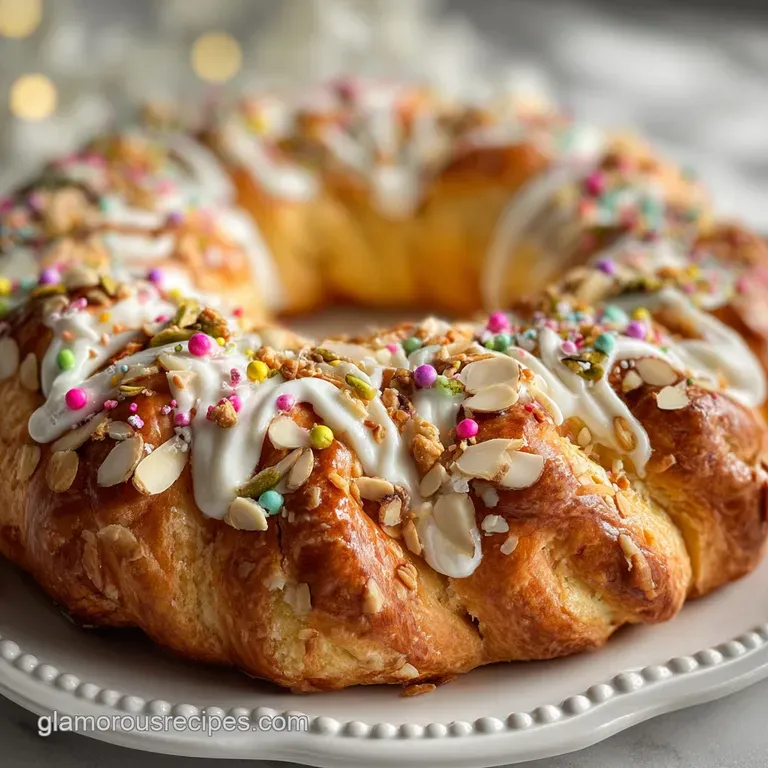
- Time: Active 1 hour, Passive 3 hours 40 mins, Total 4 hours 40 mins
- Flavor/Texture Hook: Buttery, citrus scented crumb with a shattering sugar crust
- Perfect for: Epiphany celebrations, festive brunches, or an ambitious weekend baking project
- Creating the Ideal Crumb through Pastry Science
- Essential Timing and Temperature Specs
- The Alchemy of Selecting Quality Ingredients
- Tools for Professional Pastry Success
- Master the Technique Step by Step
- Solving Common Pastry Roadblocks
- Adjusting the Yield for Any Occasion
- Debunking Traditional Baking Lore
- Storage Strategies and Zero Waste Tips
- Elevating Your Presentation Style
- The Advantage of Homemade Artisan Breads
- Troubleshooting Your Festive Bake
- Rosca de Reyes FAQs
- 📝 Recipe Card
The kitchen smells like a dream right now, and I cannot wait for you to experience it. There is something truly therapeutic about kneading a rich, buttery dough, especially one as storied as the rosca de reyes.
I remember my first attempt at this years ago, I was so impatient that I didn't let the sponge bloom properly, and I ended up with a dense, sad loaf. We are not doing that today.
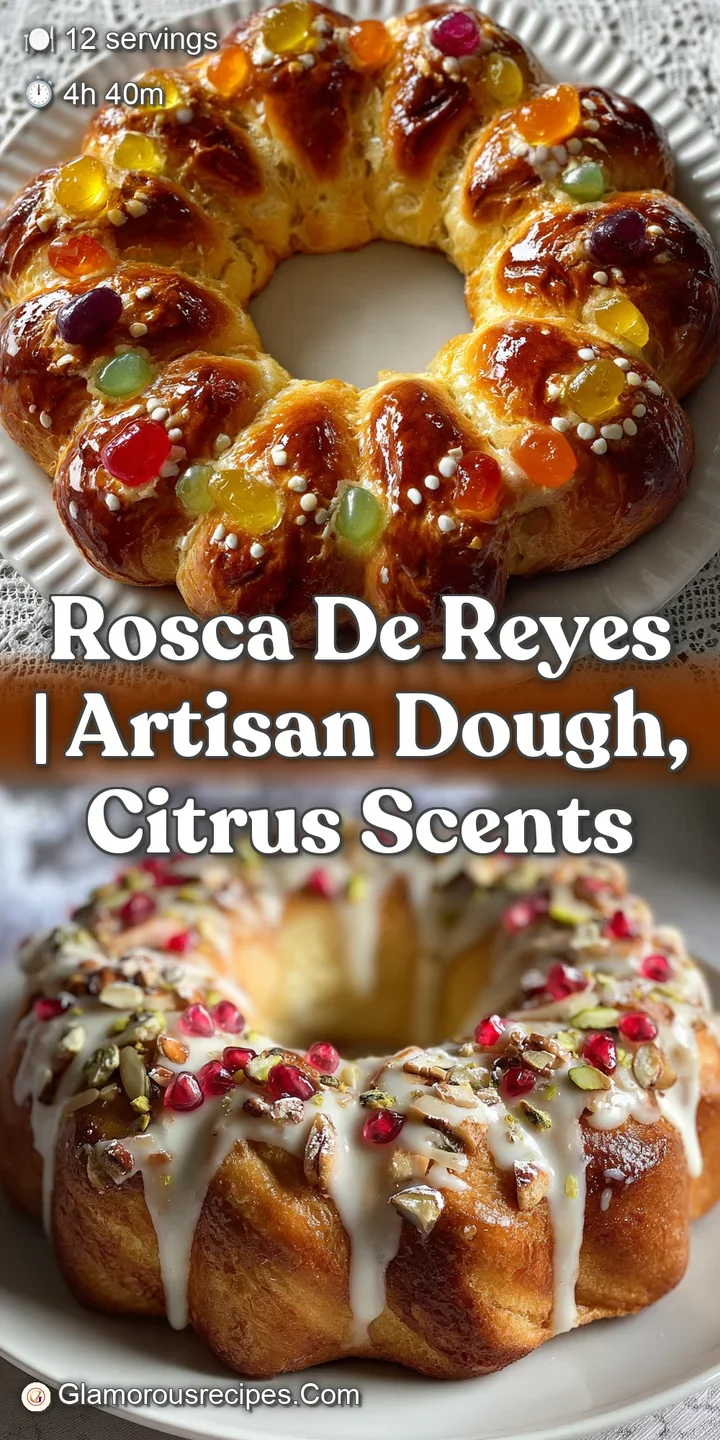
This isn't just a bread, it's a piece of edible art. Between the vibrant candied fruits and those sweet, crunchy sugar patches, it looks like a royal crown. We are going to focus on precision and patience because that is how you get that professional, artisan finish.
We've all seen those dry, flavorless grocery store versions that need a gallon of coffee just to swallow. This recipe is the opposite. It’s light, intensely fragrant with orange blossom, and has that signature pull apart texture. Let's get into the mechanics of why this works so you can nail it on your first go.
Creating the Ideal Crumb through Pastry Science
Understanding the "why" behind your dough makes you a better baker instantly. When we talk about an enriched dough like the one used for rosca de reyes, we are balancing fat, sugar, and protein to create a specific structure.
- Lipid Interference: The high fat content from 125g of butter and 3 eggs coats the flour proteins, which slows down gluten formation to ensure the bread stays tender rather than chewy.
- Enzymatic Activity: Allowing the "sponge" to ferment first breaks down complex starches into simple sugars, giving the yeast a head start and deepening the final flavor.
- Starch Gelatinization: As the dough hits the heat, moisture in the butter and milk turns to steam, pushing against the gluten walls to create that airy, vaulted internal structure.
| Component | Science Role | Pro Secret |
|---|---|---|
| Active Dry Yeast | Leavening agent | Bloom it in 105°F milk to ensure it is alive before mixing. |
| Orange Blossom Water | Aromatic compound | Add it with the liquid to disperse scent evenly through the fats. |
| High Fat Butter | Tenderizer | Use room temp cubes; cold butter won't emulsify into the dough properly. |
The magic happens when the sugar crust meets the heat of the oven. While the bread rises and softens, the vegetable shortening in the topping creates a shortbread like barrier that doesn't melt away. Instead, it sets into a crisp, sweet contrast against the soft bread.
Essential Timing and Temperature Specs
Precision is the difference between a good bake and a masterpiece. Use these metrics to guide your progress.
- Liquid Temp: 105°F to 110°F (Too hot kills yeast; too cold stalls it).
- Internal Temp: 190°F (The "golden zone" for finished enriched bread).
- Proofing Environment: 75°F to 80°F (A draft free spot is non negotiable).
- Butter Texture: 65°F (Soft enough to leave an indent, but not greasy).
The Alchemy of Selecting Quality Ingredients
You only need a handful of items for a rosca de reyes, but the quality of your citrus and fats will dictate the entire experience.
- 7g active dry yeast: Why this? Provides a reliable, steady rise for heavy, enriched doughs.
- 120ml whole milk: Why this? The fat and lactose contribute to a softer, more browned crust. (Sub: Oat milk for a slightly nuttier profile)
- 615g all purpose flour: Why this? Offers enough protein for structure without being too tough. (Sub: Bread flour for more height and chew)
- 155g granulated sugar: Why this? Feeds the yeast and provides the perfect level of sweetness.
- 5g fine sea salt: Why this? Tightens gluten and balances the floral orange notes.
- 125g unsalted butter: Why this? Adds richness and that signature buttery mouthfeel. (Sub: high-quality margarine, though the flavor will be flatter)
- 4 large eggs: Why this? Provides structure, color, and leavening power.
- 15ml orange blossom water: Why this? The essential floral backbone of a traditional rosca.
- 2 tbsp fresh orange zest: Why this? Adds bright, citrus oils that cut through the heavy fats.
- 100g powdered sugar: (For the sugar paste topping)
- 100g vegetable shortening: (Sub: Lard for a very traditional, savory sweet finish)
- 1 egg yolk: (For the sugar paste binding)
- 100g candied fruit strips: (Citron, orange, or cherries)
- 30g sliced almonds: (Adds a much needed toasted crunch)
Tools for Professional Pastry Success
You don't need a professional bakery setup, but a few specific tools will make the process much smoother.
- Stand Mixer: Using a KitchenAid with a dough hook is a lifesaver for this sticky dough.
- Digital Scale: Flour is notoriously hard to measure by volume; 615g is much more accurate than "about 5 cups."
- Bench Scraper: Perfect for handling the dough during shaping without adding too much extra flour.
- Pastry Brush: Essential for a thin, even egg wash that doesn't pool in the crevices.
- Large Baking Sheet: A standard half sheet pan gives the ring enough room to expand.
Master the Technique step-by-step
Let's crack on. This process takes time, but most of it is just waiting for the yeast to do its thing.
To Build a Strong Foundation
- Bloom the yeast. Warm 60ml of the milk to 105°F and stir in the 7g of yeast with a pinch of the sugar. Wait 10 minutes until it is foamy and smelling like fresh bread.
- Make the sponge. Mix 100g of the flour into the yeast mixture. Cover and let it sit in a warm spot for 30 minutes until doubled and bubbly.
To Create the Enriched Dough
- Combine the basics. In your mixer bowl, add the remaining flour, sugar, salt, and orange zest. Use the dough hook to stir them briefly.
- Incorporate liquids. Pour in the sponge, the remaining 60ml of milk, 3 eggs, and the orange blossom water. Mix on low for 5 minutes until a shaggy dough forms.
- Add the butter. Drop in the 125g of room temp butter cubes one at a time. Continue mixing for 10-12 minutes until the dough is silky, elastic, and pulls away from the sides.
To Shape the Royal Crown
- First proof. Place the dough in a greased bowl, cover with a damp cloth, and let it rise for 2 hours until it has doubled in size.
- Form the ring. Punch the dough down and shape it into a long log. Join the ends together on a parchment lined baking sheet to form an oval "crown." Ensure the seam is pinched tight.
- Second proof. Cover the ring loosely and let it rise again for 45 minutes to 1 hour until puffy.
To Decorate and Bake
- Prepare the paste. Mix the 100g powdered sugar, 100g shortening, 100g of the flour, and 1 egg yolk until it forms a smooth paste. Flatten into strips.
- Final assembly. Brush the dough with the remaining beaten egg wash. Arrange the sugar strips and 100g of candied fruit on top. Bake at 350°F for 30 minutes until deep golden brown and the sugar crust is set.
| Stovetop Milk Prep | Oven Proofing | Why the Difference? |
|---|---|---|
| Faster for blooming yeast. | Slower, more controlled rise. | Heat is direct on stove; oven is ambient. |
| Risk of scalding milk. | Safe for dough structure. | Scorched milk can kill yeast instantly. |
Solving Common Pastry Roadblocks
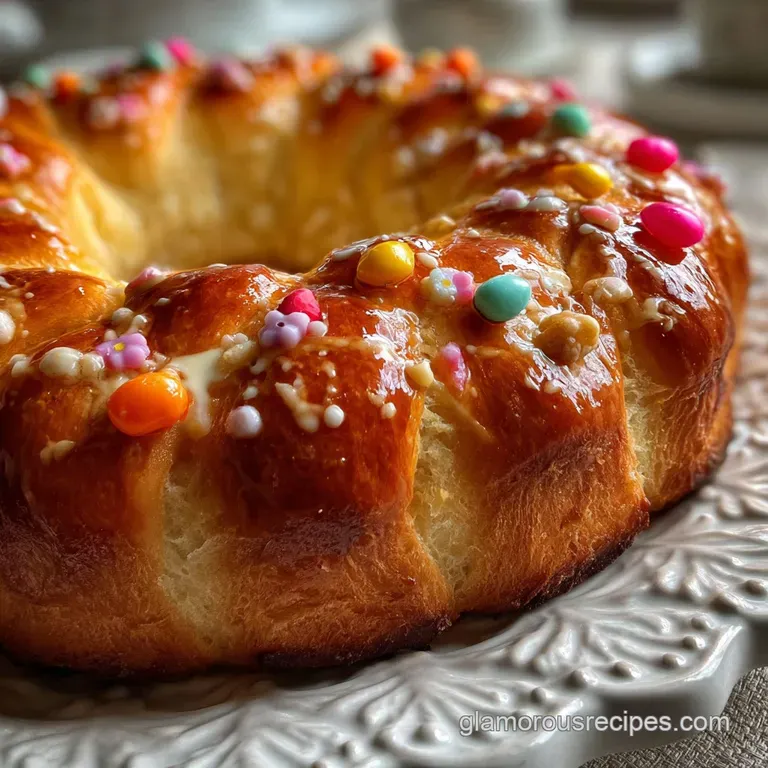
Even with the best intentions, things can go sideways. But don't panic, most issues are an easy fix if you know what to look for.
Why Your Bread Is Dense
Usually, this is a temperature issue. If your milk was too hot, you killed the yeast. If it was too cold, the yeast is just "sleeping." Also, ensure you aren't adding too much extra flour while shaping. The dough should be slightly tacky.
Why the Topping Melted
If the sugar paste slides off, the oven might not have been preheated properly, or the paste had too much moisture. Make sure your shortening is at room temperature but not melted when you mix the paste.
| Problem | Root Cause | Solution |
|---|---|---|
| Dough won't rise | Dead yeast or cold room | Move to a warmer spot or restart sponge. |
| Burnt bottom | Dark pan or low rack | Use a light colored sheet or double stack pans. |
| Dry crumb | Overbaking | Pull at 190°F internal temp exactly. |
Adjusting the Yield for Any Occasion
Scaling a yeast bread isn't as simple as doubling everything, but it's totally doable with these tweaks.
For a Half Recipe (Small Gathering) If you only need 6 servings, halve the ingredients. Use a smaller bowl for proofing so the dough doesn't dry out. When it comes to the eggs, beat one egg in a small cup and use half of it by weight for the dough.
Reduce baking time by about 5-8 minutes.
For a Double Recipe (Large Party) When doubling, do not double the yeast exactly; use 1.5x the amount (about 10-11g) to prevent an overly "yeasty" flavor. You will likely need to work the dough in two separate batches unless you have a commercial sized mixer.
Bake on separate racks and rotate halfway through.
Debunking Traditional Baking Lore
One myth I hear constantly is that you must knead this dough by hand for "authenticity." Honestly, don't bother. A stand mixer develops the gluten more efficiently and keeps the dough cooler, which is better for the butter.
Another one is that salt kills yeast on contact. While salt is a yeast inhibitor, it won't instantly destroy it unless they are sitting together in a dry pile for a long time. Mixing them into the flour together is perfectly safe and necessary for flavor.
Storage Strategies and Zero Waste Tips
Once the rosca de reyes is cooled, you want to keep it as fresh as possible. Because this is an enriched bread, it dries out faster than a sourdough.
- Storage: Keep at room temperature in an airtight container for up to 3 days. For longer storage, wrap slices in plastic wrap and freeze for up to 2 months.
- Reheating: A quick 10 second zap in the microwave or a few minutes in a 300°F oven will revive that buttery softness.
- Zero Waste: If the bread does go stale, do not toss it! It makes the most incredible French toast or bread pudding you've ever had. The orange blossom notes are stunning when soaked in a custard. You can also dry out leftover candied fruit to use in granola or scones.
Elevating Your Presentation Style
The way you serve this bread changes the whole vibe of the meal. Depending on the effort you want to put in, you can go from "rustic family" to "high end patisserie."
Plating Levels for the Modern Host
- Simple (The Family Board): Place the whole ring on a large wooden cutting board. Provide a sharp serrated knife and let everyone hack off a piece. Serve with big mugs of Mexican hot chocolate.
- Polished (The Afternoon Tea): Slice the rosca into uniform 2 inch wedges. Arrange them in a starburst pattern on a white ceramic platter. Dust the entire plate lightly with a fresh coat of powdered sugar right before serving.
- Restaurant (The Plated Dessert): Place a single thick slice in the center of a dark plate. Add a dollop of orange scented whipped cream to the side and a few fresh orange segments. Garnish with a sprig of mint or an edible pansy for a pop of color.
| Level | Key Tweak | Impact |
|---|---|---|
| Simple | Thick, uneven slices | Cozy, rustic, approachable feel. |
| Polished | Symmetrical fruit placement | Looks professional and intentional. |
| Restaurant | Added textures (cream/fruit) | Transforms bread into a complete dessert. |
The Advantage of Homemade Artisan Breads
Why spend $40 at a bakery when you can make a superior version at home? When you bake it yourself, you control the quality of the butter and the freshness of the zest. Most commercial versions use artificial orange flavoring and cheap fats that leave a film on the roof of your mouth.
There is also the "hidden baby" tradition. When you bake it yourself, you can ensure the little figurine is tucked safely inside (warn your guests!) without the risk of it being lost in a factory line. It’s a labor of love that tastes like nothing you can buy in a box.
Troubleshooting Your Festive Bake
Since we are texting, I know you'll have questions when you're elbow deep in flour. Here are the big ones.
Dough is too sticky to handle
Enriched doughs are naturally wetter. Resist the urge to dump in more flour! Instead, use a bench scraper and keep your hands lightly oiled. The stickiness is what ensures a light, airy crumb. If it's truly unmanageable, pop the dough in the fridge for 20 minutes to firm up the butter.
Sugar crust didn't get crunchy
This usually happens if the oven temperature is too low. The shortening needs that initial hit of heat to "set" the structure before the sugar can caramelize. Use an oven thermometer to verify you are actually at 350°F.
Bottom of the bread is too dark
Sugar and eggs in the dough cause it to brown very quickly. If you notice the bottom getting dark before the top is golden, slide a second baking sheet directly under the first one. This creates an air gap that insulates the bottom of your rosca de reyes from the direct heat.
For a Nut Free Celebration
If you have allergies, simply omit the 30g of sliced almonds. You can replace them with toasted pumpkin seeds or just leave them off entirely. The candied fruit and sugar crust provide more than enough visual interest and texture.
For a dairy-free Royal Crown
You can swap the 120ml of milk for a full fat coconut milk or almond milk. For the butter, use a high-quality plant based butter stick (not the tub kind). Note that the flavor will be slightly different, but the orange blossom water will still carry that traditional aroma beautifully.
Trust your instincts on this one. If the dough feels like it needs another 10 minutes to rise because your house is chilly, give it that time. The rewards of a perfectly executed rosca de reyes are well worth every second of patience. Happy baking!
Rosca de Reyes FAQs
What is the Rosca de Reyes tradition?
It's a holiday celebration. Rosca de Reyes, or King Cake, is a sweet bread traditionally eaten on Epiphany (January 6th) to celebrate the arrival of the Three Wise Men in Bethlehem. It's often decorated with candied fruits and sugar toppings, resembling a crown.
What day do you cut the Rosca?
January 6th is the main day. While it's typically enjoyed on Epiphany, the tradition of sharing Rosca de Reyes can extend into the days following the holiday, often served at family gatherings and brunches.
What happens when you get baby Jesus in the Rosca?
You are responsible for the next celebration. Traditionally, the person who finds the hidden plastic figurine of baby Jesus inside their slice is expected to host a gathering and provide tamales on Candlemas Day (February 2nd).
Is Rosca de Reyes a Catholic tradition?
Yes, it is deeply rooted in Catholic culture. The tradition commemorates the adoration of the Magi to the infant Jesus and is widely celebrated in countries with significant Catholic populations, particularly in Mexico and Spain.
How do you get the characteristic chewy texture?
Use a high hydration, enriched dough and precise fermentation. The recipe's balance of butter, eggs, and sugar slows gluten development, creating a tender crumb, while proper proofing ensures a light, airy interior.
What is the significance of the dried beans or plastic figurines inside?
It's a playful tradition for the finder. Historically, a fava bean was hidden, signifying a future marriage or good fortune. Today, small plastic baby Jesus figurines are more common, with the finder taking on the responsibility of hosting the next celebration.
How should Rosca de Reyes be stored to maintain freshness?
Store at room temperature in an airtight container. For up to 3 days, it will remain fresh. For longer storage, wrap individual slices tightly and freeze for up to 2 months; reheating briefly in the oven or microwave will revive its soft texture.
Rosca De Reyes
Ingredients:
Instructions:
Nutrition Facts:
| Calories | 489 kcal |
|---|---|
| Protein | 7.8 g |
| Fat | 19.8 g |
| Carbs | 66.8 g |
| Fiber | 1.9 g |
| Sugar | 21.4 g |
| Sodium | 183 mg |
