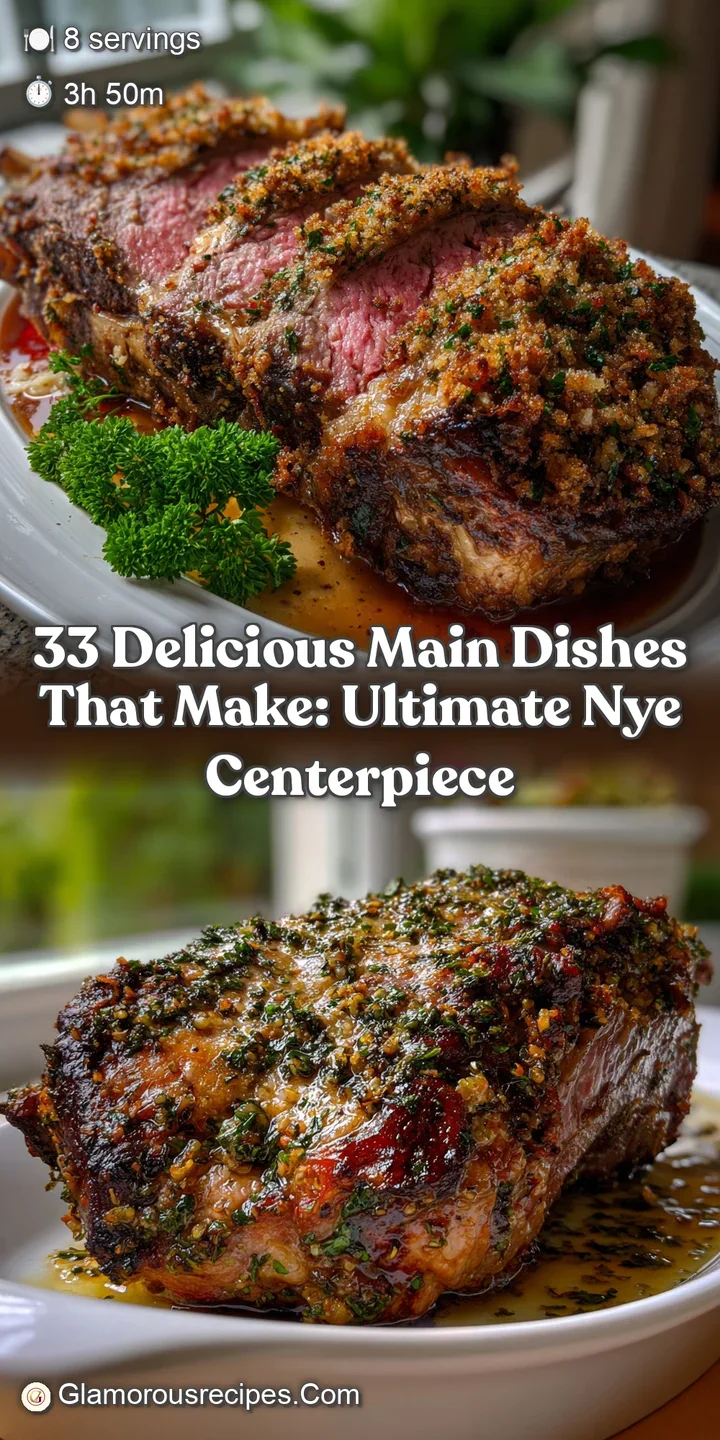
33 Delicious Main Dishes That Make: Ultimate Herb-Crusted Roast
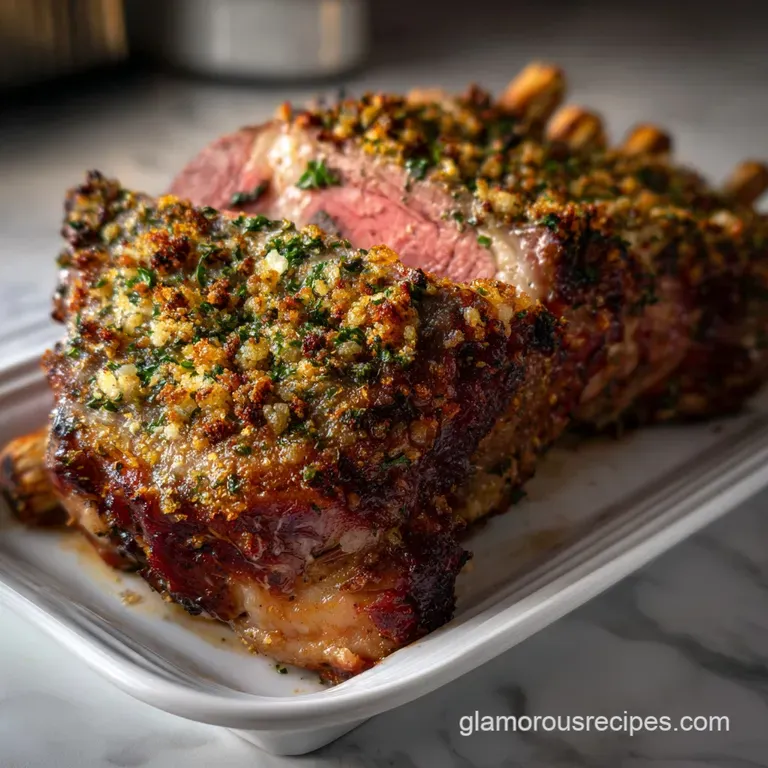
- Effort/Time: Low-active effort; 3 hours 50 minutes total.
- Flavor Hook: Rich, beefy depth amplified by a garlic-rosemary compound butter and red wine reduction.
- Perfect for: High-stakes holiday gatherings and elegant-hosting milestones.
- Master the Ultimate 33 Delicious Main Dishes That Make
- Thermal Mass and Moisture Retention: Why These Dishes That Make Work
- Planning Your Prep for New Years Eve Dinner a Celebration
- The Alchemy of Fat and Herbs: Selecting Your Elements
- Thermal Precision Tools for New Years Eve Dinner a Celebration
- The Low and Slow Protocol for Precision Temperature Control
- Resolving Structural Failures and Thermal Irregularities in Your Roast
- Flavor Architecture: Creative Variations on This Festive Centerpiece
- ⚗️ The Scaling Lab: The Physics of Quantity
- Common Myths About Prime Rib
- Preserving Texture and Flavor: Storage and Zero Waste Protocol
- Final Assembly and Plating for Your Festive Main Dishes
- Recipe FAQs
- 📝 Recipe Card
Master the Ultimate 33 Delicious Main Dishes That Make
There is nothing more gut-wrenching than pulling a 9 pound, $150 standing rib roast out of the oven only to find it gray, rubbery, and dry as cardboard. When you invest in a four bone roast, the stakes are high, and the emotional cost of a technical failure is even higher.
I’ve seen hosts nearly moved to tears because they relied on a "minutes per-pound" chart that completely ignored the physics of thermal mass and heat transfer.
I’ll be the first to admit I’ve messed this up; years ago, I pulled a roast too late, forgetting that a massive 8 9 lb hunk of meat carries enough thermal energy to keep cooking for 20 minutes on the counter.
I ended up with a well done outer ring that felt like shoe leather, losing that velvety, melt-in-your mouth texture we all crave. It was a humbling lesson in thermodynamics that changed how I approach every single one of my 33 Delicious Main Dishes That Make New Years Eve Dinner a Celebration.
This is why mastering 33 Delicious Main Dishes That Make begins with understanding thermal physics.
The secret to success isn't a "magic" oven temperature; it’s the science of protein denaturation and the Maillard reaction. By starting low and slow, we allow enzymes to tenderize the meat while the moisture stays locked within the muscle fibers, rather than being squeezed out by rapid heat.
The result is a mahogany colored crust that crackles under the knife, revealing a perfectly uniform, rosy interior that makes New Years Eve Dinner a Celebration truly unforgettable. The success of 33 Delicious Main Dishes That Make hinges on this precise execution.
Thermal Mass and Moisture Retention: Why These Dishes That Make Work
- Reverse Sear Physics: Cooking at a low ambient temperature prevents the "gray ring" by ensuring the exterior doesn't overshoot 135°F while the center is still cold.
- Enzymatic Tenderization: Maintaining a low temperature for an extended period allows naturally occurring cathepsins to break down tough connective tissues before they reach the temperature where they contract and toughen.
- Surface Dehydration: Air-drying the roast with a salt rub creates a pellicle, which is a dry surface layer that undergoes the Maillard reaction faster and more efficiently during the over high heat finish.
- Carryover Cooking Energy: The large volume of an 8 9 lb roast acts as a heat battery; pulling the meat 10°F below your target ensures the final resting temperature hits the bullseye without further moisture loss.
Planning Your Prep for New Years Eve Dinner a Celebration
When preparing 33 Delicious Main Dishes That Make New Years Eve Dinner a Celebration, timing is everything. This recipe yields 8 servings, providing a generous 1 lb portion (raw weight) per person.
You need to account for a 20 minute prep time and a 3 hour 30 minute cook time, but the most critical factor is the rest period. Never skip the rest; it allows the muscle fibers to reabsorb the juices, preventing a "bloodbath" on your carving board.
This roast is one of the most Main Dishes That Make New Years Eve Dinner a Celebration because it manages its own heat once it leaves the oven. Successfully executing 33 Delicious Main Dishes That Make requires diligent adherence to the resting schedule.
| Specification | Detail |
|---|---|
| Yield | 8 Servings |
| Active Prep | 20 minutes |
| Cook Time | 3 hours 30 mins |
| Resting Time | 30 45 minutes |
| Internal Target | 125°F (Medium Rare) |
The Alchemy of Fat and Herbs: Selecting Your Elements
Selecting the right components is the first step in ensuring your New Years Eve Dinner a Celebration is a success. Each ingredient in this list serves a specific chemical purpose, from breaking down proteins to creating a complex flavor profile in the jus.
This preparation method is key to the flavor profile of 33 Delicious Main Dishes That Make.
Ingredient Chemistry Breakdown
| Ingredient | Chemical/Physical Role (Science) | The Pro Secret (Why This Matters) |
|---|---|---|
| Standing Rib Roast | Intramuscular fat (marbling) lubrication | Bone-in acts as an insulator, slowing heat transfer to the most delicate meat. |
| Coarse Kosher Salt | Osmotic pressure and protein denaturing | Salt draws moisture out, dissolves into a brine, and is reabsorbed, seasoning the interior. |
| Dry Red Wine | Acidity for deglazing and tannin structure | High tannins in Cabernet or Syrah bind with meat proteins, softening the "gamey" notes of beef. |
- 1 (4 bone) Standing Rib Roast (8 9 lbs): Look for Prime or Choice grade with heavy marbling. Why this? Fat equals flavor and moisture; marbling melts during the slow roast to baste the fibers from within.
- 2 tbsp Diamond Crystal Kosher Salt: This specific salt has larger flakes that won't over salt the meat as easily as table salt.
- 1 tbsp Freshly Cracked Black Peppercorns: Use a Peugeot Pepper Mill for a coarse grind.
- 1 cup Unsalted Butter: Softened to room temperature. Why this? Fat-soluble flavor compounds in herbs need a lipid carrier to penetrate the meat's surface.
- 6 cloves Garlic: Minced into a fine paste.
- 2 tbsp Fresh Rosemary & Thyme: Finely chopped. These hardy herbs withstand the long cook time without turning bitter.
- 1 tbsp Maille Dijon Mustard: Acts as an emulsifier for the butter rub.
- 2 cups Beef Bone Broth: Use a high gelatin brand like Kettle & Fire.
- 1 cup Dry Red Wine: A bold Cabernet Sauvignon or Merlot works best.
- 2 tbsp Cold Butter: For the final whisk into the sauce to create a glossy emulsion.
Thermal Precision Tools for New Years Eve Dinner a Celebration
To execute Main Dishes That Make New Years Eve Dinner a Celebration at a professional level, you need more than just an oven. Precision is the difference between a masterpiece and a mistake. For any of the 33 Delicious Main Dishes That Make to succeed, the right tools are essential.
- Lodge Cast Iron Roasting Pan: Or a heavy duty stainless steel roasting pan. Avoid thin aluminum, which causes the drippings to scorch.
- ThermoWorks ChefAlarm: A probe thermometer is non-negotiable. You need to monitor the internal temperature in real time without opening the oven door.
- KitchenAid Hand Mixer: (Optional) if you want to whip the compound butter into an ultra light aeration for easier spreading.
- Victorinox 12 inch Slicing Knife: A long, scalloped blade allows for single stroke slices, preventing the meat from tearing.
The Low and Slow Protocol for Precision Temperature Control
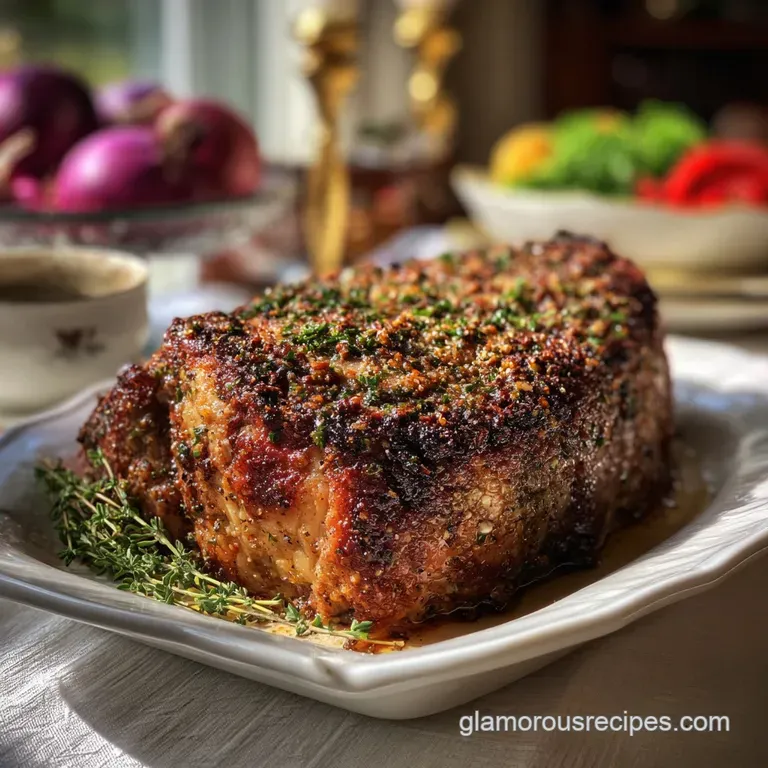
Following these steps ensures that your 33 Delicious Main Dishes That Make turn out perfect every single time. We are focusing on steady heat and a controlled finish.
1. Preparation and Dry Brine
Pat the 8 9 lbs roast bone-in dry with paper towels until the surface feels tacky and matte. Rub the 2 tbsp Coarse Kosher Salt and 1 tbsp Black Peppercorns over every inch of the meat. Note: This creates a dry brine that seasons the meat deeply and helps the crust form.
2. The Compound Butter Application
In a small bowl, combine 1 cup Unsalted Butter, 6 cloves Garlic, 2 tbsp Rosemary, 2 tbsp Thyme, and 1 tbsp Dijon Mustard until a smooth, fragrant paste forms. Slather this mixture over the top fat cap of the roast. This provides a sacrificial layer of fat that bastes the meat as it renders.
3. The Low-Slow Roast
Place the roast in a Lodge Roasting Pan and insert a probe thermometer into the thickest part of the meat, away from the bone. Set your oven to 250°F (120°C) and roast until the internal temperature hits 115°F (46°C).
This will take roughly 3 to 3.5 hours. The aroma will shift from raw and herbal to a deep, caramelized fragrance.
4. The Thermal Rest
Remove the roast from the oven. Tent it loosely with foil and let it rest for 30 minutes. During this time, the internal temperature will rise to approximately 120°F-122°F. This rest is vital for the muscle fibers to relax. This technique is as essential here as it is when making a Creamy Southern Black recipe, where resting allows flavors to fully meld.
5. The over High heat Finish
Crank your oven to its highest setting (usually 500°F or Broil). Return the rested roast to the oven for 6 10 minutes until the exterior is mahogany brown and sizzles violently.
This is the Maillard reaction in overdrive, creating the "crust" without overcooking the center.
6. Crafting the Red Wine Jus
While the meat rests for the final time, place the roasting pan over two stove burners. Add 1 cup Dry Red Wine and deglaze, scraping the brown bits (fond) until the liquid reduces by half.
7. Fortifying the Sauce
Pour in 2 cups Beef Bone Broth and simmer until the sauce coats the back of a spoon. This reduction concentrates the umami.
8. The Emulsion Finish
Whisk in 2 tbsp Cold Butter until the sauce becomes glossy and velvety. This is a classic French technique called "monter au beurre," which stabilizes the sauce.
9. The Final Slice
Carve the roast by running your knife along the bones to remove the entire eye of the rib, then slice into 1 inch thick pieces. The interior should be a uniform pink.
Resolving Structural Failures and Thermal Irregularities in Your Roast
Why Your Roast Is Gray and Dry
If you see a thick gray band around the edges of your meat, the ambient temperature was too high. This causes the exterior protein to denature and expel moisture before the center even begins to warm.
It's a common issue when people rush Delicious Main Dishes That Make New Years Eve Dinner a Celebration.
| Problem | Root Cause | The Fix | Pro Protocol |
|---|---|---|---|
| Soggy Crust | Excess surface moisture | Pat dry and salt 24h early | Leave uncovered in the fridge for 24 hours (Dry Aging). |
| Tough Meat | Skipping the rest | Rest for at least 30 mins | Use a warm, draft free spot; don't wrap too tightly with foil or it will steam. |
| Burnt Jus | Pan was too thin | Add 1/2 cup water to pan | If drippings look dark, add a splash of water to the pan mid-roast to prevent scorching. |
Flavor Architecture: Creative Variations on This Festive Centerpiece
While the classic herb butter is timeless, you can adapt these Delicious Main Dishes For Celebration to suit different palates. The adaptability demonstrated here is what makes 33 Delicious Main Dishes That Make so versatile.
- Horseradish Crust Twist: Fold 3 tbsp of prepared horseradish into the butter mixture. The heat of the horseradish mellows during the roast, leaving a piquant, earthy undertone that cuts through the rich fat.
- dairy-free Option: Swap the butter for a high-quality tallow or a neutral oil like avocado oil mixed with the herbs. The science remains the same: the fat protects the meat and carries the aromatics.
- Smoky Fusion: Add 1 tsp of smoked paprika and a pinch of cumin to the rub. This pairs exceptionally well if you are serving the roast alongside our How to Make recipe for a smoky, sweet finish.
- Porcini Rub: Pulverize dried porcini mushrooms into a powder and add to the salt rub. This creates an "umami bomb" that mimics the flavor of dry-aged beef.
⚗️ The Scaling Lab: The Physics of Quantity
When you double this recipe for a massive crowd (e.g., two 4 bone roasts), you cannot simply double the time. Mastering this scaling factor is essential for high volume successes among 33 Delicious Main Dishes That Make.
- Thermal Interference: Two roasts in one oven create a higher moisture environment. Space them at least 4 inches apart to allow for proper air convection, or the "reverse sear" will turn into a "reverse steam."
- The Surface Area Rule: Because a larger mass of meat holds more energy, the carryover cooking will be more aggressive. Pull the roasts at 112°F rather than 115°F.
- Jus Reduction: If you double the liquid for the sauce, use a wider pan (like a large skillet) to maintain the surface area-to-volume ratio, or the reduction will take twice as long and lose its fresh flavor profile.
- Salt Saturation: Do not double the salt if you are dry-brining for more than 24 hours. The salt has more time to penetrate, and a 1.5x scale is usually sufficient to avoid over seasoning.
Common Myths About Prime Rib
Myth: Searing the meat first "locks in the juices." Truth: Searing actually creates a barrier that can prevent even heat distribution. Scientific testing shows that roasts seared at the end (reverse sear) lose 10 15% less moisture than those seared at the beginning.
This physics underpins why 33 Delicious Main Dishes That Make are superior when cooked low and slow.
Myth: You should bring the meat to room temperature for 4 hours before cooking. Truth: Meat is a poor conductor of heat. In 4 hours, the center of an 8 9 lb roast will only rise a few degrees, while the surface enters the bacterial "danger zone." Cook it straight from the fridge or after just 30 minutes of tempering.
Preserving Texture and Flavor: Storage and Zero Waste Protocol
Storage: Store leftovers in an airtight container in the fridge for up to 4 days. To reheat without losing the medium rare center, place slices in a baking dish with a splash of beef broth, cover with foil, and warm at 250°F until just heated through (about 15 minutes).
Freezing: You can freeze cooked slices for up to 2 months. Wrap tightly in plastic wrap, then foil, and place in a freezer bag. Thaw overnight in the fridge before reheating.
- The Bones
- Don't discard the ribs! Transform: Simmer them with onion, carrot, and celery for 6 hours to create a bone-in stock. Science: The marrow and connective tissue release gelatin, creating a silky mouthfeel for future soups.
- Fat Trimmings
- Save the rendered beef fat (tallow). Transform: Use it to roast potatoes for your next meal. Science: Tallow has a high smoke point (400°F) and provides a much crispier texture than vegetable oil.
- Leftover Meat
- Transform: Thinly slice for French Dip sandwiches or a stellar steak salad. If you're looking for another holiday tradition to pair with leftovers, consider our 10 Black Eyed recipe for a classic Southern New Year's Day meal.
Final Assembly and Plating for Your Festive Main Dishes
Presenting 33 Delicious Main Dishes That Make an impact requires a bit of theater. Place the whole roast on a large wooden board decorated with fresh rosemary sprigs and pomegranates for a pop of color.
Carve at the table to let the guests experience the "shatter" of the crust and the release of the herbal aroma.
Pour the red wine jus into a warmed gravy boat. If you find the sauce is too thin, whisk in a teaspoon of cornstarch slurried with cold water, but the "monter au beurre" method usually provides enough body. For an after dinner digestivo that matches the elegance of this meal, I highly recommend serving a chilled glass of our Limoncello Recipe to cleanse the palate after the richness of the beef. This roast isn't just a meal; it's the anchor for 33 Delicious Main Dishes That Make your celebration truly world class.
Recipe FAQs
What is the precise internal temperature to pull the roast?
Pull at 115°F (46°C) for medium rare finish. Carryover cooking energy dictates a pull temperature 10°F below the desired final result. This prevents moisture loss from overshooting the thermal peak.
Why is my crust soggy instead of mahogany brown?
Surface moisture inhibits the Maillard reaction. Water vapor must evaporate before sugars and amino acids can react to form complex brown flavors.
- Ensure roast is patted completely dry
- Salt cure uncovered overnight
- Cook at 500°F for the final searing blast
Should I sear the roast before or after the slow cook?
After the slow cook provides superior texture. Searing first creates a heat barrier that resists even cooking, often leading to a pronounced gray band beneath the crust. The reverse sear maximizes the rosy interior uniformity.
Is salting the meat 24 hours early overkill?
No; this allows for deep seasoning and pellicle formation. The salt draws out moisture, dissolves, and is reabsorbed as a flavorful brine, improving texture long before the high heat is introduced.
Myth: Searing the meat first locks in the juices.
Myth: Searing the meat first locks in the juices. Reality: Searing actually creates a barrier that resists even heat distribution. Scientific testing shows that roasts seared at the end lose 10-15% less moisture.
Why must the cold butter be whisked into the finished jus?
Cold butter emulsifies to create a glossy, stable sauce. This process, monter au beurre, incorporates the fat solids without breaking the reduction, resulting in a velvety mouthfeel unlike simply melting butter in.
Should I use bone-in or boneless roast for this technique?
Bone-in provides crucial thermal insulation. The bone acts as an insulator, slowing heat transfer to the meat fibers closest to it, resulting in a more even cook from edge to center.
Rib Roast Masterpiece Nye Dinner
Ingredients:
Instructions:
Nutrition Facts:
| Calories | 1145 calories |
|---|---|
| Protein | 74g |
| Fat | 91g |
| Carbs | 4g |
| Fiber | 1g |
| Sugar | 1g |
| Sodium | 1480mg |
