Overnight Oats Recipe
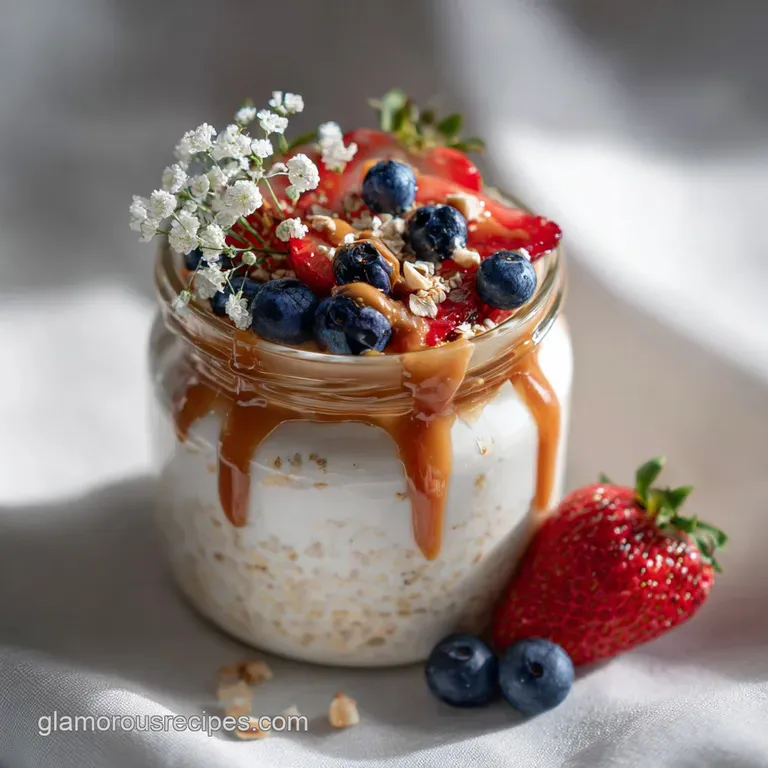
- Time: Active 5 minutes, Passive 6 hours, Total 6 hours 5 mins
- Flavor/Texture Hook: Creamy, chewy, and naturally sweetened
- Perfect for: Busy weekday mornings and budget conscious meal prepping
- Creamy Homemade Overnight Oats Recipe
- Science of The Cold Soak
- Recipe Specs and Expectations
- Analyzing The Key Ingredients
- Tools For Batch Prepping
- Steps For Creamy Results
- Fixing Common Oat Textures
- Customizing Your Breakfast Jars
- Storage And Leftover Tips
- Best Toppings and Pairings
- Truths About Soaking Oats
- Recipe FAQs
- 📝 Recipe Card
Creamy Homemade Overnight Oats Recipe
Imagine waking up, opening the fridge, and finding a finished breakfast waiting for you. No pans to scrub, no burnt milk on the stove, and zero frantic rushing before your first coffee. I used to think cold oats sounded unappealing until I realized I was just doing it wrong.
Most people end up with a soggy mess because they ignore the golden ratio of liquid to grain.
We've all been there, staring at a bowl of gray, watery mush and wondering why people on social media look so happy eating it. The secret isn't just the toppings; it's the chemistry happening while you sleep.
This overnight oats recipe is designed for the real world, using pantry staples that won't break your weekly budget. It's about working smarter, not harder, in the kitchen.
As a nutritionist who prioritizes real food, I need my breakfast to actually sustain me. This isn't just a jar of carbs. It is a calculated balance of slow digesting fiber and healthy fats.
We're going to use simple ingredients to achieve a decadent result that feels like eating dessert for breakfast, but without the sugar crash.
Science of The Cold Soak
Starch Gelatinization: In cold liquid, oat starches undergo a slow hydration process where they swell and soften without the heat induced breakdown that makes stovetop oatmeal gummy.
Mucilaginous Suspension: Chia seeds release a natural gel when soaked, which acts as a structural binder to create a thick, custodially rich consistency.
Acid Denaturation: The lactic acid in Greek yogurt begins to break down the phytic acid in the oats, making the nutrients more bioavailable and the texture softer.
While we often think of cooking as applying heat, this recipe relies on time as the primary "cook." When you let 1/2 cup (45g) old-fashioned rolled oats sit in 1/2 cup (120ml) unsweetened almond milk, the liquid penetrates the cell walls of the grain. This makes them tender but keeps the "bite" that instant oats lack. If you enjoy a hearty breakfast but want something savory on the side, these oats pair brilliantly with my Beef Breakfast Sausage recipe for a full protein boost.
| Component | Science Role | Pro Secret |
|---|---|---|
| Rolled Oats | Complex Carbohydrate | Use "Old Fashioned" for a chewy, non mushy structure |
| Chia Seeds | Hydrophilic Binder | Stir twice in the first 10 minutes to prevent clumping |
| Greek Yogurt | Protein & Acidity | Full fat versions create a much silkier mouthfeel |
| Sea Salt | Flavor Enhancer | A tiny pinch suppresses oat bitterness and boosts sweetness |
Recipe Specs and Expectations
When we talk about healthy overnight oats, we are looking for a specific nutritional profile. This recipe yields one serving, making it the ultimate tool for portion control. It’s also incredibly cheap to scale.
A large bag of oats costs pennies per serving, and even with the addition of chia seeds, you're looking at a breakfast that costs less than a single fast food hashbrown.
I've found that using the right vessel matters just as much as the ingredients. A wide mouth pint jar is the gold standard here. It leaves enough "headspace" at the top so you can shake or stir in your fresh fruit or nuts in the morning without spilling over the sides.
The 1/4 cup (60g) non fat Greek yogurt is the heavy hitter here, providing nearly 15 grams of protein to keep you satisfied.
If you are looking for other high protein options to rotate into your morning routine, you might also like my Mounjarofriendly meal preparation recipe which focuses on lean gains and easy digestion. Keeping your fridge stocked with these ready to eat options is the only way I've managed to stay consistent with my health goals during the hectic school year.
Analyzing The Key Ingredients
- 1/2 cup (45g) old-fashioned rolled oats: The heart of the jar. Why this? Rolled oats absorb liquid perfectly without losing their distinct, pleasant shape.
- 1/2 cup (120ml) unsweetened almond milk: Our primary hydrating agent. Why this? Neutral flavor and low calorie count compared to dairy milk.
- 1/4 cup (60g) non fat Greek yogurt: Adds thickness and tang. Why this? Provides the creamy base that makes this feel like a pudding.
- 1 tablespoon (12g) chia seeds: The secret to the "set." Why this? Absorbs 10x its weight in liquid to thicken the oats.
- 1.5 teaspoons (10g) maple syrup: A touch of natural sweetness. Why this? Liquid sweetener blends easier than granulated sugar in cold liquids.
- 1/2 teaspoon vanilla extract: Pure aromatic depth. Why this? Mimics sweetness so you can use less actual sugar.
- 1 pinch (0.5g) sea salt: The essential balancer. Why this? Sharpens all the other flavors and prevents a flat taste.
| Original Ingredient | Substitute | Why It Works |
|---|---|---|
| Almond Milk | Soy Milk | Higher protein content and very creamy texture. |
| Greek Yogurt | Silken Tofu | Great vegan swap; creates a similar velvety thickness. |
| Maple Syrup | Mashed Banana | Adds natural sweetness and extra potassium. Note: Shortens shelf life. |
Finding the right overnight oats ratio is the difference between a liquid soup and a brick. The standard 1:1 ratio of oats to liquid is a good starting point, but once you add the yogurt and chia, you need that extra bit of moisture to keep things supple.
Don't be afraid to experiment with different liquids like oat milk or even coconut water if you want a tropical twist.
Tools For Batch Prepping
You don't need fancy equipment, but a few basics make the process much smoother. I prefer glass jars over plastic containers because glass doesn't retain odors from previous meals. There is nothing worse than oats that faint smell like yesterday's onions.
Chef's Note: If you're making a week's worth of oats, buy a set of silicone lids. They create a better seal than the standard metal canning lids, which can rust over time in the humid environment of the fridge.
The assembly line method is your best friend here. Line up five jars, do all your dry ingredients first, then follow with the wet. This ensures every jar has the exact same overnight oats protein count and flavor profile.
It takes me less than 10 minutes on a Sunday night to prep my entire work week of breakfasts.
Steps For Creamy Results
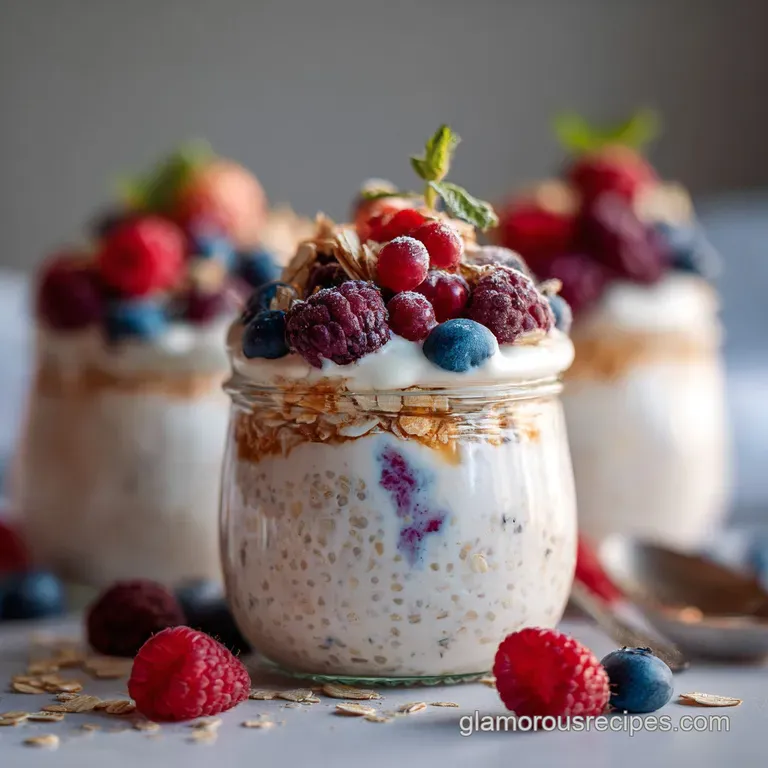
- Combine dry ingredients. Place 1/2 cup (45g) old-fashioned rolled oats, 1 tablespoon (12g) chia seeds, and a pinch of sea salt into your jar. Note: Mixing dry first prevents the chia from clumping at the bottom.
- Add the creamy base. Spoon in 1/4 cup (60g) non fat Greek yogurt. Note: The yogurt acts as an emulsifier for the liquid and fats.
- Pour the liquid. Add 1/2 cup (120ml) unsweetened almond milk over the top. Watch the liquid seep through the grains.
- Sweeten and scent. Drizzle in 1.5 teaspoons (10g) maple syrup and 1/2 teaspoon vanilla extract.
- Agitate the mixture. Use a long spoon to stir vigorously until no dry pockets of oats remain.
- The "Settling" Rest. Let the jar sit on the counter for 5 minutes. Notice the chia seeds starting to swell.
- Second Stir. Give it one more quick mix. Note: This is the secret step that ensures a perfectly smooth texture.
- Seal the jar. Screw the lid on tight to prevent the oats from absorbing "fridge smells."
- The Cold Cure. Place in the refrigerator for at least 6 hours. Wait until the mixture looks thick and opaque.
- Morning Finish. Stir once more before eating. Add a splash of milk if it's too thick.
Fixing Common Oat Textures
Sometimes things go wrong, even with an easy overnight oats recipe. Temperature, the age of your oats, and even the brand of yogurt can change the outcome. If your oats are too thin, it usually means the chia seeds didn't have enough time to hydrate, or you accidentally skipped the salt, which helps the starches tighten.
If you find yourself with a texture that is too dense, don't throw it out. You can easily save it by folding in a tablespoon of milk or a bit of applesauce. For those who prefer a warm meal on cold mornings, you can actually heat these up! Just pop the glass jar (without the lid) into the microwave for 60 seconds.
It will be even creamier than traditional stovetop porridge.
Why Your Oats Are Gritty
This usually happens if you use steel cut oats instead of rolled oats. Steel cut grains have a much tougher outer bran and require significantly more liquid and time (at least 12 hours) to soften.
If you're stuck with a gritty jar, try blending the whole thing into a smoothie; it adds great thickness and fiber without the texture issues.
| Problem | Root Cause | Solution |
|---|---|---|
| Liquid on top | Under stirred chia seeds | Stir again and wait 30 more minutes. |
| Hard centers | Insufficient soak time | Ensure a minimum 6 hour soak in the fridge. |
| Bland flavor | Missing the salt pinch | Add salt and a squeeze of lemon or lime. |
Another common hurdle is the "Oat Brick" phenomenon. This is when the oats absorb every drop of moisture, leaving you with a solid mass. This often happens when using protein powder. If you're adding powder, you must increase the milk by at least 2 tablespoons to compensate for the extra dry matter.
Customizing Your Breakfast Jars
One of the best things about an overnight oats recipe jar is the versatility. Once you have the base down, the variations are endless. I love to think about flavors in terms of "textures." You want something crunchy, something fresh, and something fatty to make the meal feel complete.
The PB&J Classic
Swirl in a tablespoon of natural peanut butter and a handful of smashed raspberries. The saltiness of the butter cuts through the sweet berries perfectly. This is a childhood favorite that feels much more sophisticated in a glass jar.
Low Sugar "Apple Pie" Swap
Use unsweetened applesauce instead of some of the yogurt and add a heavy sprinkle of cinnamon. It tastes like dessert but stays within a healthy calorie range. If you have extra apples, you can dice them and sauté them for 2 minutes for a warm topping.
High Protein Powerhouse
If you need extra fuel, add a scoop of collagen peptides or whey protein. Just remember my tip about adding extra liquid! This version is perfect for post workout recovery when you don't feel like drinking a thin shake. If you're in the mood for a different kind of "comfort" meal that's still easy on the dishes, check out my Chicken Pot Pie recipe for a simple one pan dinner.
Storage And Leftover Tips
Overnight oats are the king of storage. You can keep a prepared jar in the fridge for up to 4 days. After day four, the oats start to lose their structure and become a bit too soft for most people's liking. I usually prep on Sunday and Thursday to keep things fresh.
Freezing: Yes, you can freeze them! If you make a big batch, freeze them in individual portions. Thaw the jar in the fridge overnight. Note that the texture will be slightly softer after thawing, but it's still delicious.
Zero Waste: Don't toss those almost empty nut butter jars! Mix your oats directly in the nearly empty peanut butter or almond butter jar. The oats will pick up all those last bits of nutty goodness from the sides, and you have one less dish to wash.
Also, if your fruit is looking a bit sad and soft, that’s actually the best time to mash it into your oats.
Best Toppings and Pairings
Toppings should be added right before serving to maintain their texture. If you add nuts overnight, they will lose their crunch and become soft. For the best experience, keep a small container of "crunchies" in your pantry to grab on the way out the door.
- Nuts and Seeds: Toasted walnuts, slivered almonds, or pumpkin seeds.
- Fresh Fruit: Blueberries, sliced strawberries, or pomegranate arils.
- Crunchy Bits: Cacao nibs, toasted coconut flakes, or a sprinkle of granola.
If you are looking for a savory dinner to balance out your sweet breakfast, this Chile Relleno Soup recipe is a fantastic way to use up leftover Greek yogurt as a cooling topping. It’s all about using your ingredients across multiple meals to save money and reduce waste.
Truths About Soaking Oats
Myth: You must use expensive milk. Truth: Water actually works in a pinch! It won't be as creamy, but the oats will still hydrate. If using water, I recommend adding an extra dollop of yogurt to provide the necessary fat and protein for satiety.
Myth: Raw oats are hard to digest. Truth: The soaking process acts similarly to cooking by breaking down starches and neutralizing phytic acid. Most people find soaked oats much easier on the stomach than traditional cooked oatmeal because the process is so gentle.
Myth: Steel cut oats work exactly the same. Truth: As mentioned earlier, steel cut oats are a different beast. They require a different ratio and much more time. If you try to swap them 1:1 in this recipe, you will be chewing on birdseed in the morning. Stick to rolled oats for this specific method!
Making Your Morning Easy
If you want a thicker texture, use less milk. If you want a drinkable oat "shake," add an extra 1/4 cup of liquid. The beauty is in the customization. Start with this base, and once you find your perfect texture, you'll never go back to the instant packets again.
It’s real food, made simple, for people who actually have things to do.

Recipe FAQs
Is oats overnight actually healthy?
Yes, generally. Overnight oats are a healthy breakfast option due to their fiber content from oats and seeds, and protein from dairy or plant based additions. They provide sustained energy and can be customized with nutritious toppings. If you're looking for other high protein options to rotate into your morning routine, you might also like my Mounjarofriendly meal preparation recipe which focuses on lean gains and easy digestion.
What is the basic formula for overnight oats?
A 1:1 ratio of oats to liquid is a good start. Combine old-fashioned rolled oats with a liquid like almond milk, then add a thickener like Greek yogurt or chia seeds. This foundation creates a creamy texture that can be adjusted with sweeteners and flavorings.
What if I eat overnight oats every day?
It can be a very healthy habit if varied. Eating overnight oats daily provides consistent fiber and nutrients, supporting digestion and energy levels. To prevent boredom and ensure a wider range of nutrients, rotate your toppings and liquid bases.
What is the overnight oats?
It's a no-cook breakfast made by soaking oats in liquid. Oats and other ingredients are combined and left in the refrigerator overnight, allowing the oats to soften and absorb the liquid, creating a pudding like consistency.
Can I use steel cut oats for overnight oats?
No, not without significant adjustments. Steel cut oats are much harder and require a different ratio of liquid and much longer soaking times (at least 12 hours). For this recipe, stick to old-fashioned rolled oats for the best texture; if you find yourself with a gritty jar of steel cut oats, try blending the whole thing into a smoothie.
How do I fix thin overnight oats?
Add more thickener and let them sit. If your oats are too thin, it often means the chia seeds haven't fully hydrated or there wasn't enough thickener used. Stir in another tablespoon of chia seeds or a bit more Greek yogurt and let them sit for another 30 minutes to an hour.
Can I make overnight oats savory?
Yes, with a few tweaks to the base. Omit the sweet ingredients like maple syrup and vanilla. Instead, use a savory liquid base like broth or unsweetened plant milk, and add ingredients like nutritional yeast, herbs, spices, and even a fried egg. If you enjoy a hearty breakfast but want something savory on the side, these oats pair brilliantly with my Beef Breakfast Sausage recipe for a full protein boost.
Overnight Oats Recipe
Ingredients:
Instructions:
Nutrition Facts:
| Calories | 311 kcal |
|---|---|
| Protein | 14.8g |
| Fat | 8.1g |
| Carbs | 45.8g |
| Fiber | 9.2g |
| Sugar | 10.6g |
| Sodium | 152mg |
