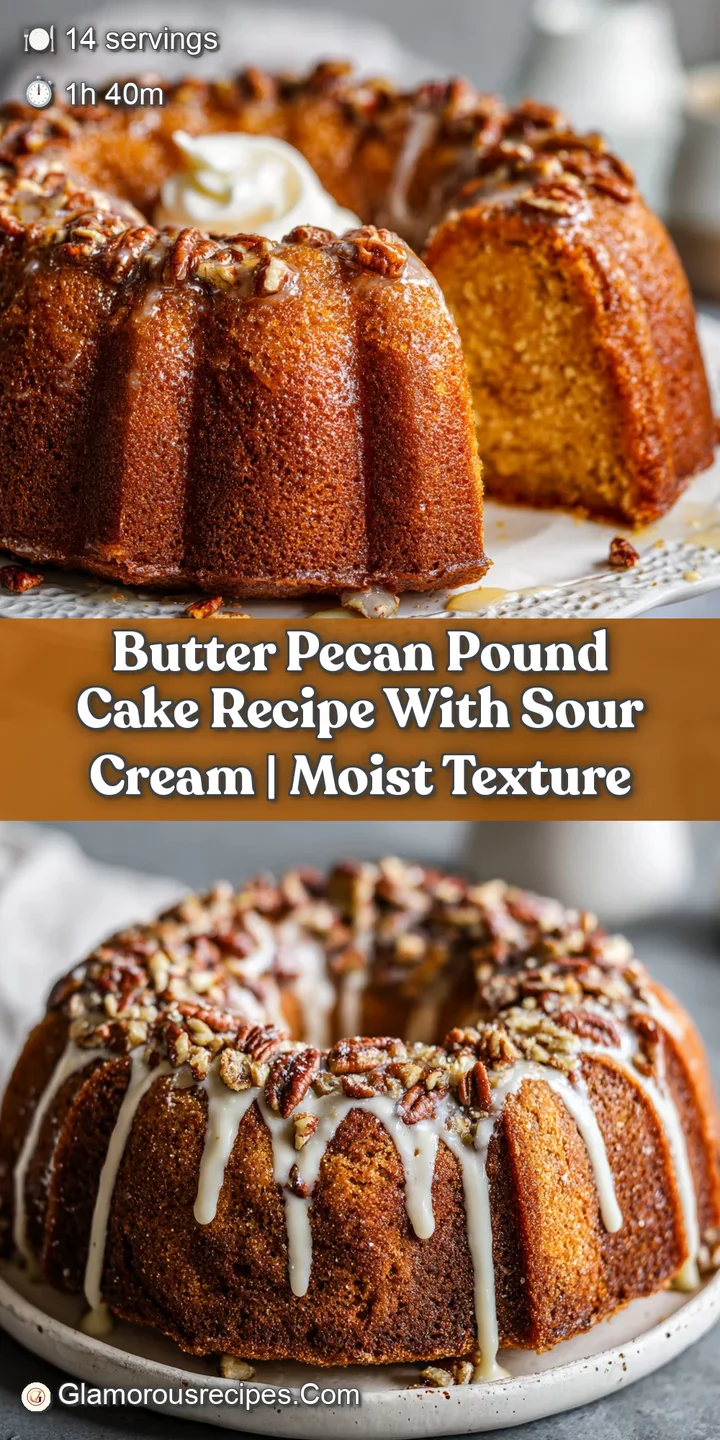
Butter Pecan Pound Cake: Velvety & Nutty
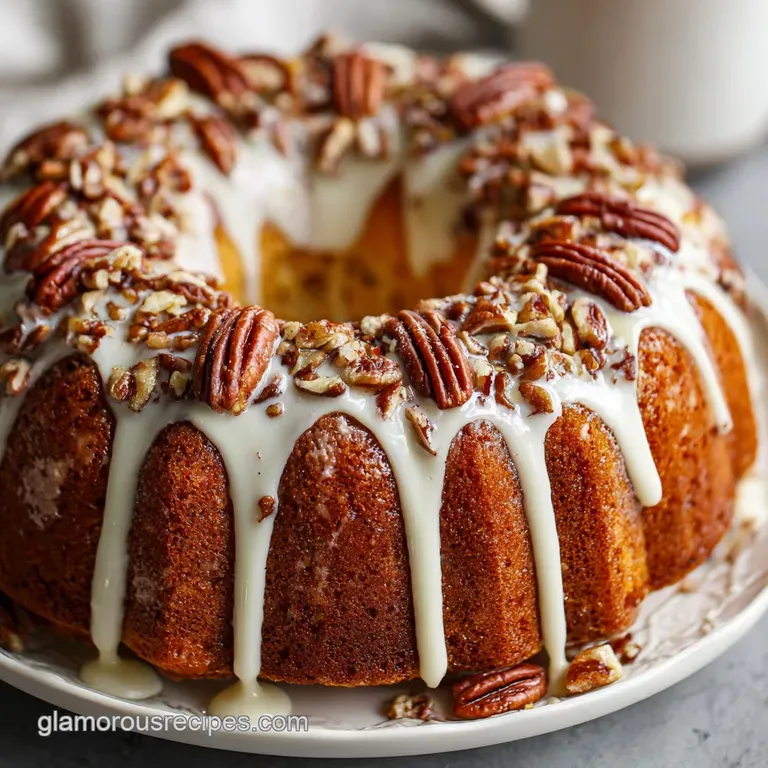
- Time: Active 25 mins, Passive 1 hours 15 mins, Total 1 hours 40 mins
- Flavor/Texture Hook: Buttery, nutty crunch meeting a silky, dense crumb
- Perfect for: Sacred Sunday dinners and holiday gatherings
- Mastering the Authentic Southern Butter Pecan Pound Cake
- The Physics of the Velvet Crumb
- Essential Milestones for Success
- Choosing the Right Baking Elements
- Essential Kitchen Tools and Gear
- Executing the Perfect Golden Bake
- Solving Common Baking Structural Issues
- Flavor Variations and Pan Options
- Myths Regarding Pound Cakes
- Preserving Every Single Buttery Slice
- Traditional Southern Sunday Side Pairings
- Recipe FAQs
- 📝 Recipe Card
Mastering the Authentic Southern Butter Pecan Pound Cake
I still remember the first time I tried to make a pound cake from scratch. It was a complete disaster, a literal brick that could have doubled as a doorstop. I followed the recipe exactly, but it was dry, flavorless, and missing that soul warming richness we crave.
That failure started my obsession with getting the texture right, especially when it comes to a Southern classic like this one.
When you toast those pecans in the butter and salt, the kitchen fills with a scent so heady it's practically a spiritual experience. It’s that deep, toasted aroma that lets you know you’re about to create something special.
This isn't just another dessert; it's the kind of cake that brings everyone to the table, quiet and focused on every single buttery bite.
We’ve all had those store-bought versions that taste like artificial flavoring and chemicals. Trust me, once you taste the real thing, there's no going back. This version is dense but not heavy, sweet but balanced by the salt, and features a crumb that feels like velvet against your fork.
The Physics of the Velvet Crumb
Emulsification Stability: Mixing eggs one-by-one ensures the fat and liquid don't separate, creating a structural web that holds air.
Hygroscopic Moisture: Brown sugar attracts and holds onto water molecules, ensuring the cake remains tender instead of turning into a crumbly mess.
Maillard Magic: Toasting the pecans in butter before folding them in creates new flavor compounds that raw nuts simply can't provide.
Acidic Tenderizing: The lactic acid in sour cream breaks down gluten strands, resulting in a velvety texture that practically melts on the tongue.
| Method | Time | Texture | Best For |
|---|---|---|---|
| Stovetop Toasting | 5 mins | Uniformly golden | Maximum control and butter infusion |
| Oven Roasting | 10 mins | Earthy and deep | Hands off prep for large batches |
Getting the pecans right is the first step toward greatness. While the oven is great for big batches, I always prefer the stovetop method for this Butter Pecan Pound Cake because you can smell the exact moment the butter turns nutty and the pecans start to sizzle and "shatter" in the heat.
Essential Milestones for Success
| Ingredient | Science Role | Pro Secret |
|---|---|---|
| Light Brown Sugar | Moisture & Depth | Pack it tight to ensure the correct molasses to fat ratio. |
| Full fat Sour Cream | Crumb Tenderizer | Never use low-fat; the fat content prevents the "gluey streak" in the middle. |
| Large Eggs | Structural Binder | Use room temp eggs to avoid curdling the creamed butter. |
Choosing the right ingredients is half the battle when you're aiming for that Sunday dinner quality. If you find yourself short on pecans but craving that same comforting texture, you might find inspiration in my Sweet Potato Pecan recipe which uses similar flavor profiles.
Choosing the Right Baking Elements
For the toasted pecans: 2 cups (225g) Pecan halves, roughly chopped 2 tbsp (30g) Unsalted butter 1/4 tsp Fine sea salt
For the cake batter: 3 cups (375g) All purpose flour 1/2 tsp Baking powder 1/2 tsp Salt 1 1/2 cups (340g) Unsalted butter, softened to 18°C (65°F) 1 cup (200g) Granulated sugar 1 cup (200g) Light brown sugar, packed 5 Large eggs, room temperature 1 tbsp Vanilla extract 1 tsp
Pecan extract 1/2 cup (120g) Full fat sour cream, room temperature
For the caramel glaze: 1/2 cup (115g) Unsalted butter 1/2 cup (100g) Light brown sugar 2 tbsp Heavy cream 1/2 tsp Vanilla extract 1 pinch Flaky sea salt
| Original Ingredient | Substitute | Why It Works |
|---|---|---|
| Full fat Sour Cream | Greek Yogurt (Full fat) | Similar acidity and fat. Note: Resulting crumb is slightly tangier. |
| Pecan Extract | Maple Extract | Provides a complementary woody sweetness. |
| Light Brown Sugar | Dark Brown Sugar | Adds more moisture and a deeper molasses flavor. |
Essential Kitchen Tools and Gear
You don't need a professional bakery setup, but a few specific tools make this process much smoother. I highly recommend using a heavy duty stand mixer (such as a KitchenAid) because creaming the butter and sugar for the full five minutes is what creates that airy lift.
A 10 cup (2.4 liter) Bundt pan is the standard here. Make sure it's a non stick version, but don't rely on that alone. I’ve had many a cake "heartbreak" where half the top stayed in the pan.
Use a baking spray that contains flour, or go old school with a thick coating of softened butter followed by a dusting of flour.
Chef Tip: Freeze your butter for 10 minutes before creaming if your kitchen is running hot. This keeps the fat from melting too early, ensuring better aeration.
Executing the Perfect Golden Bake
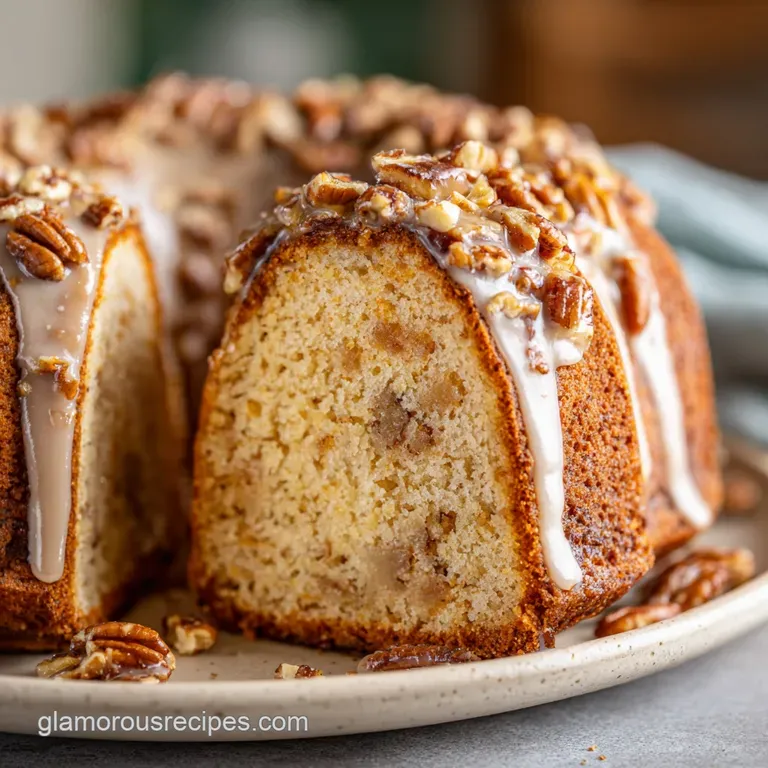
Mastering the Pecan Toast
- Sizzle 30g butter in a large skillet over medium heat.
- Toss in 225g chopped pecans and 1/4 tsp sea salt.
- Cook for 5 minutes until the aroma is intensely nutty and pecans are dark gold. Note: This prevents the nuts from becoming soggy inside the cake. Set aside to cool completely.
Achieving the Perfect Creaming
- Preheat your oven to 180°C (350°F).
- Beat 340g softened butter with 200g granulated sugar and 200g brown sugar.
- Mix for 5-7 minutes until the mixture looks pale, fluffy, and nearly doubled in volume.
Incorporating Eggs with Precision
- Add 5 eggs, one at a time, beating well after each addition.
- Scrape the bowl often to ensure no "slugs" of unmixed butter remain.
- Stir in 1 tbsp vanilla, 1 tsp pecan extract, and 120g sour cream until the batter is silky and uniform.
Folding the Dry and Wet Ingredients
- Whisk 375g flour, 1/2 tsp baking powder, and 1/2 tsp salt in a separate bowl.
- Turn the mixer to the lowest setting and add the flour gradually. Note: Overmixing here creates a tough, bread like texture.
- Fold in the cooled pecans by hand using a spatula.
Assessing the Golden Finish
- Pour into your prepared pan and smooth the top.
- Bake for 1 hour 15 mins until a wooden skewer comes out with only a few moist crumbs. Note: If the top browns too fast, tent it loosely with foil at the 45 minute mark.
- Cool in the pan for 20 minutes before inverting onto a wire rack.
Finalizing the Caramel Glaze
- Melt 115g butter with 100g brown sugar and 2 tbsp heavy cream in a small saucepan.
- Boil for 2 minutes until the glaze coats the back of a spoon.
- Stir in vanilla and sea salt, then pour over the warm cake.
Solving Common Baking Structural Issues
Why Your Cake Sank
A sunken center usually happens for two reasons: underbaking or opening the oven door too early. When the structure hasn't set, a rush of cool air causes the air pockets created during creaming to collapse. Always wait until at least 50 minutes have passed before checking for doneness.
Fixing a Dry Crumb
If your cake feels like sawdust, you likely overmeasured the flour or overbaked it. Using a kitchen scale for the 375g of flour is a total lifesaver. If it’s already baked and dry, don't panic the caramel glaze will soak in and provide a much needed moisture boost.
| Problem | Root Cause | Solution |
|---|---|---|
| Dense/Heavy Texture | Poor creaming | Beat butter/sugar for at least 5 full minutes. |
| Cake Stuck in Pan | Cold pan inversion | Invert while the pan is still warm (but not hot) to the touch. |
| Rubbery Top | Overmixing flour | Use a spatula to fold in the final 10% of flour by hand. |
Common Mistakes Checklist
- ✓ Ensure all refrigerated items (eggs, butter, sour cream) are room temperature.
- ✓ Don't skip the pecan toasting; raw nuts lack the necessary "shatter" texture.
- ✓ Measure your flour by weight (375g) rather than volume to avoid a dry cake.
- ✓ Grease every single nook and cranny of the Bundt pan with flour based spray.
- ✓ Let the cake rest in the pan for exactly 20 minutes no more, no less.
Flavor Variations and Pan Options
If you don't have a Bundt pan, you can easily turn this into a loaf. Divide the batter into two standard 9x5 inch loaf pans. You'll need to reduce the baking time to about 45-55 minutes.
Keep an eye on the internal temperature; you're looking for 99°C (210°F) for a perfect finish.
For those who want a bit more of a kick, adding a tablespoon of bourbon to the caramel glaze creates a "Tipsy Pecan" version that is absolutely incredible for holiday parties. It pairs beautifully with the same deep flavors found in my Peanut Butter Cookies recipe.
Myths Regarding Pound Cakes
One of the biggest myths is that you must use a cold oven start for pound cakes. While some old-fashioned recipes swear by it, a preheated oven provides a more consistent rise and a better "shatter" on the exterior crust. The initial burst of heat activates the baking powder immediately.
Another common misconception is that more leavening equals a fluffier cake. In a pound cake, we rely primarily on the air whipped into the butter and sugar. Adding too much baking powder will cause the cake to rise rapidly and then collapse, creating that dreaded gummy layer at the bottom.
Preserving Every Single Buttery Slice
Storage: This cake actually tastes better on day two! Keep it in an airtight container at room temperature for up to 4 days. The moisture from the glaze will slowly seep into the crumb, making it even more velvety.
Freezing: You can freeze the unglazed cake for up to 3 months. Wrap it tightly in plastic wrap, then a layer of foil. Thaw overnight on the counter before adding the fresh glaze.
Zero Waste: If you have leftover slices that are starting to get a bit stale, don't throw them out! Cut them into cubes, toast them slightly, and use them as a decadent base for a bread pudding or as a "crouton" for a fruit salad.
Traditional Southern Sunday Side Pairings
This Butter Pecan Pound Cake is a titan on its own, but it truly shines when served alongside a scoop of high-quality vanilla bean ice cream. The cold creaminess cuts through the dense, buttery crumb in a way that is nothing short of sacred.
For a mid afternoon treat, try a slice with a cup of strong, chicory laced coffee. The bitterness of the coffee balances the deep caramel notes of the glaze. If you're serving this as part of a larger spread, it fits perfectly alongside other classics like a Valentine's Day Brunch recipe for a truly indulgent weekend celebration.
Recipe FAQs
What's the secret to a moist pound cake?
Using high fat dairy and brown sugar. Sour cream provides acid to tenderize gluten, resulting in a velvety crumb, while brown sugar actively attracts and holds moisture from the air.
What are some common mistakes to avoid when making pound cake?
Overmixing the flour and underbaking the center. Overmixing develops tough gluten strands, and pulling the cake out too soon guarantees a sunken, gummy middle.
What is the most delicious cake in the world?
Subjective, but this Butter Pecan Pound Cake is a top contender. Its density, combined with the depth of toasted nuts and buttery glaze, often elevates it above lighter options, similar to the rich texture we aim for in our [Chocolate Raspberry Truffle recipe].
What is the best flavor frosting for butter pecan cake?
A Brown Sugar Caramel Glaze is best. The caramel flavor deepens the nuttiness of the pecans and offers a sticky, tender counterpoint to the dense cake structure.
How do I ensure the pecans are crunchy and not soggy inside the cake?
Toast the pecans in butter first until they are deeply golden. This crucial step cooks out excess moisture and concentrates the nutty flavor, preventing them from absorbing water from the batter.
Is it true I must use a room temperature Bundt pan for easy release?
No, this is a common misconception. The pan should be heavily greased with a flour based spray or butter/flour, but the cake should be inverted only after it has cooled for 20 minutes in the pan.
Can I substitute full fat sour cream with regular milk?
No, substituting the sour cream severely impacts texture. Milk lacks the necessary fat and acid needed to tenderize the crumb; if you need a substitute, use full fat Greek yogurt for similar results in our [Dessert Fruit Pizza Recipe].
Moist Butter Pecan Pound Cake
Ingredients:
Instructions:
Nutrition Facts:
| Calories | 646 kcal |
|---|---|
| Protein | 6.8 g |
| Fat | 43.4 g |
| Carbs | 59.2 g |
| Fiber | 2.1 g |
| Sugar | 37.5 g |
| Sodium | 252 mg |
