Herb-Infused Roasted Turkey for Christmas Dinner
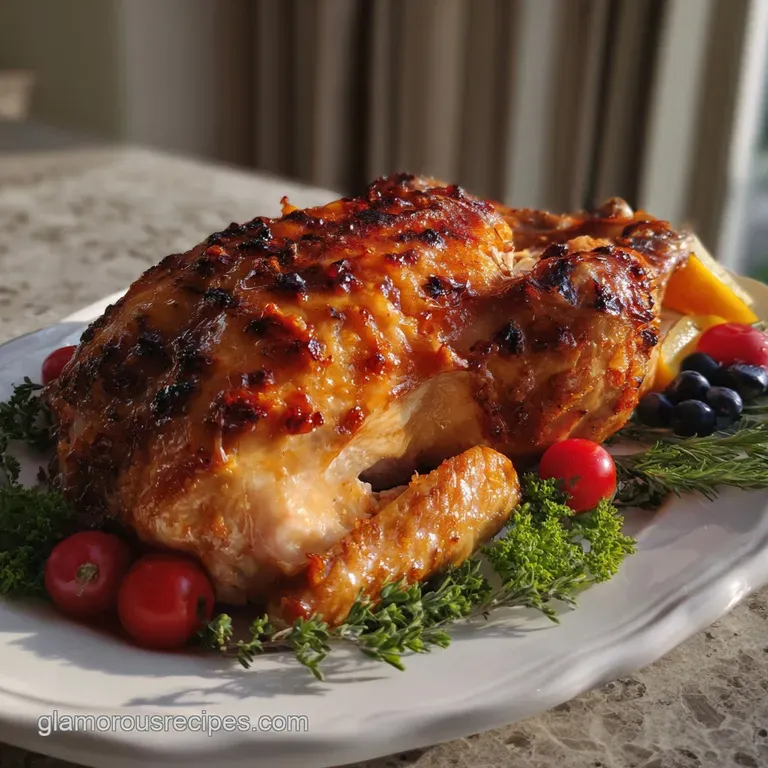
- Effort/Time: 3 hours 45 mins total (Active: 45 minutes)
- Flavor Hook: Herbaceous sage and rosemary paired with velvety, garlic-infused butter.
- Perfect for: A sacred family gathering where comfort food takes center stage.
- The Science Behind Your Christmas Dinner Recipe Idea for a Memorable Holiday Feast
- Precision Metrics for Your Christmas Dinner Recipe Idea for a Memorable Holiday Feast
- The Essentials: Ingredients for This Memorable Holiday Feast
- Professional Tools for a Sacred Sunday Dinner
- Phase-by-Phase Instructions for This Christmas Dinner Recipe Idea for a Memorable Holiday Feast
- Avoiding Common Pitfalls with Your Holiday Roast
- Flavor Architecture: Variations for Your Dinner Recipe Idea
- ⚗️ The Scaling Lab
- Preservation and Reheating for Zero-Waste Success
- Curating the Table: Serving Your Holiday Feast
- Recipe FAQs
- 📝 Recipe Card
There is nothing more heart wrenching than presenting a massive, expensive bird to your family only to realize the breast meat has reached the texture of sawdust. I’ve seen the disappointment when a beautiful roast looks glorious but lacks any seasoning deeper than the skin, leaving the meat bland and uninspiring.
A centerpiece turkey is a financial and emotional investment, and a technical failure here feels like a betrayal of the holiday spirit.
I’ll be the first to admit I once rushed a bird straight from the fridge to a screaming hot oven, skipping the tempering and brining process entirely. The result was a charred exterior and a center that was dangerously underdone a mistake that forced us to pivot to sandwiches while the bird went back into the oven for an hour.
It was a humbling lesson in the physics of thermal mass and why patience is the most critical ingredient for a Christmas Dinner Recipe Idea for a Memorable Holiday Feast.
The secret to this success isn’t a fancy gadget; it’s the science of osmotic pressure and protein denaturation. By dry-brining the bird, we allow Diamond Crystal Kosher Salt to penetrate the muscle fibers, breaking down the tightly wound proteins so they can’t squeeze out moisture during the roast.
This recipe offers a delicious Christmas dinner idea featuring a show stopping roasted turkey for an unforgettable holiday feast that yields a velvety texture and a savory depth.
The Science Behind Your Christmas Dinner Recipe Idea for a Memorable Holiday Feast
- Osmotic Diffusion: Salt initially draws moisture out of the meat, dissolves into a concentrated brine, and is then reabsorbed deep into the muscle tissues to season from within.
- Lipid Heat Transfer: The high fat content in the herb butter acts as a conductor, distributing heat evenly across the skin while protecting the delicate breast meat from drying out.
- The Maillard Reaction: Amino acids and reducing sugars react under the heat of the oven to create that signature mahogany crust and complex, savory aroma.
- Protein Denaturation Control: Starting at a high temperature and then lowering it allows the exterior to set firm while the interior reaches its safety checkpoint without over tightening the protein strands.
| Ingredient | Chemical/Physical Role (Science) | The Pro Secret (Why This Matters) |
|---|---|---|
| Kosher Salt | Denatures proteins via ion exchange | Prevents muscle fibers from contracting and expelling moisture |
| Unsalted Butter | Facilitates heat transfer and browning | Creates a barrier that mimics the bird's natural fats for crisper skin |
| Lemon Zest | Citric acid breaks down surface connective tissue | Brightens the heavy fats and helps the herb oils penetrate the skin |
| Fresh Sage/Thyme | Volatile oil release at high temperatures | Infuses the fat-soluble flavors directly into the subcutaneous fat |
Precision Metrics for Your Christmas Dinner Recipe Idea for a Memorable Holiday Feast
- Yield: 12 servings
- Prep Time: 45 minutes
- Cook Time: 3 hours
- Total Time: 3 hours 45 mins
- Turkey Weight Checkpoint: 5.9 kg (13 lbs)
- Final Internal Temperature: 74°C (165°F) in the thickest part of the thigh.
The Essentials: Ingredients for This Memorable Holiday Feast
To execute this Recipe Idea for a Memorable Holiday Feast with Roasted Turkey, you need high-quality elements that honor the Southern roots of this comfort food.
- 1 whole turkey (5.9 kg / 13 lbs): Thawed completely. Why this? A 13 lb bird provides the optimal ratio of meat to bone for even heat distribution.
- 54 g (3 tbsp) Diamond Crystal Kosher Salt: Why this? The large crystal size allows for controlled seasoning without over salting.
- 7 g (1 tbsp) Black pepper: Freshly cracked for maximum potency.
- 225 g (1 cup) Unsalted butter: Softened to room temperature. Why this? Unsalted allows you to control the sodium levels during the dry-brine phase.
- 8 g (2 tbsp) Fresh sage: Minced.
- 8 g (2 tbsp) Fresh rosemary: Minced.
- 8 g (2 tbsp) Fresh thyme: Minced.
- 4 cloves Garlic: Grated using a Microplane.
- 6 g (1 tbsp) Lemon zest: Freshly rasped.
- 1 large Yellow onion: Quartered.
- 1 head Garlic: Halved crosswise to expose the cloves.
- 1 Lemon: Halved.
- 1 bunch Fresh herbs: Parsley, Sage, Rosemary, Thyme for the cavity.
| Original Ingredient | Substitute | Why It Works |
|---|---|---|
| Unsalted Butter | Duck Fat | Higher smoke point and incredible richness; alters flavor to be more gamey |
| Fresh Sage/Rosemary | Dried Poultry Seasoning | Use 1/3 the amount; provides a concentrated, classic "stuffing" flavor |
| Yellow Onion | Shallots | Adds a subtle sweetness and more refined onion profile to the pan drippings |
Professional Tools for a Sacred Sunday Dinner
- Heavy Duty Roasting Pan: A thick bottomed pan prevents drippings from scorching before you can make gravy.
- V-Shaped Roasting Rack: Elevates the bird to allow 360 degree air circulation for even skin browning.
- Microplane Grater: Essential for grating the garlic into a paste so it integrates seamlessly into the butter.
- Instant Read Digital Thermometer: The only way to ensure the meat is safe without being overcooked.
- Kitchen Twine: For trussing the legs to ensure the cavity doesn't over ventilate and dry the interior.
Phase-by-Phase Instructions for This Christmas Dinner Recipe Idea for a Memorable Holiday Feast
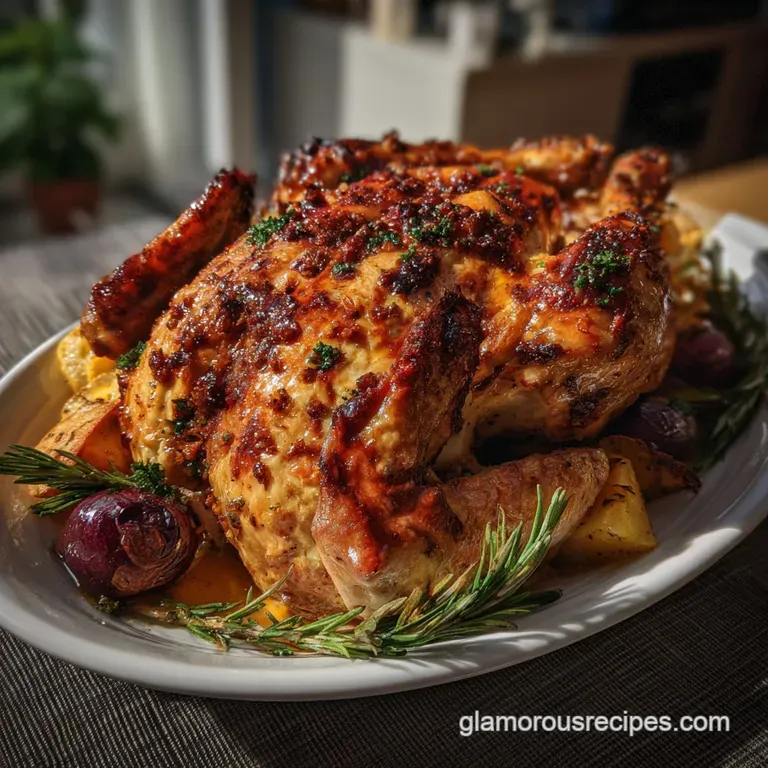
- Pat the 5.9 kg turkey completely dry with paper towels until the skin feels tacky and no moisture remains.
- Rub 54 g Kosher salt and 7 g black pepper inside the cavity and over the skin until every surface is evenly coated in a fine white frost.
- Mix 225 g softened butter with minced sage, rosemary, thyme, grated garlic, and lemon zest until the compound butter is a uniform pale green.
- Separate the skin from the breast meat gently using your hand until you create a pocket that reaches the back of the bird.
- Stuff half of the herb butter under the skin and rub the remaining half over the exterior until the bird is fully encased in a thick, buttery layer.
- Place the quartered onion, halved lemon, halved garlic head, and the bunch of fresh herbs inside the cavity until it is loosely filled but not packed tight.
- Truss the legs with kitchen twine and tuck the wing tips under the body until the bird forms a compact, aerodynamic shape.
- Roast at 220°C for 30 minutes until the skin begins to sizzle and turns a light golden hue.
- Reduce heat to 165°C and continue roasting for approximately 2 hours 30 mins until the internal thigh temperature reaches 74°C and juices run clear.
- Rest the turkey on a carving board for at least 30 minutes until the internal juices redistribute and the sizzle subsides.
Chef's Tip: Freeze your butter for 10 minutes before grating it into the herbs if your kitchen is warm. This prevents the butter from melting too quickly as you work it under the turkey skin, ensuring a thicker protective layer for the meat.
Avoiding Common Pitfalls with Your Holiday Roast
If you find the breast meat is reaching the target temperature long before the thighs, you are dealing with a classic thermodynamic imbalance. Because the breast is leaner, it denatures faster than the fat-rich thighs.
Why Your Turkey Skin is Flaccid
This is caused by excess moisture trapped under the skin or a lack of surface salt. If the skin doesn't dehydrate during the initial blast of heat, the collagen won't convert into a crisp, translucent layer.
| Problem | Root Cause | The Fix | Pro Protocol |
|---|---|---|---|
| Rubbery Skin | Steam trapped in the pan | Remove any liquid from the bottom of the roasting pan for the first hour | Ensure the bird is elevated on a rack |
| Dry Breast Meat | Overcooking | Cover the breast with foil once it hits 65°C while the thighs finish | Pull the bird at 71°C and rely on carryover cooking |
| Burnt Herbs | Butter melted too fast | Apply the herb butter under the skin rather than just on top | Mix herbs with a tiny bit of oil before adding to butter |
Flavor Architecture: Variations for Your Dinner Recipe Idea
For a Memorable Holiday Feast with Roasted Turkey, you can adjust the profile to suit your family's palate. While this recipe is rooted in the Southern tradition of Sunday dinners, small tweaks can change the mood.
- Citrus Forward: Double the lemon zest and add orange slices to the cavity for a bright, acidic lift that cuts through the fat.
- Smoky Maple: Brush the skin with a mix of maple syrup and smoked paprika during the last 20 minutes of roasting for a deep, autumnal glaze.
- Southern Heat: Incorporate a spoonful of my Homemade Red Pepper recipe into the pan drippings for a spicy sweet gravy finish.
| Feature | Fast Method (High Heat) | Classic Method (Slow Roast) |
|---|---|---|
| Skin Texture | Shattering but prone to burning | Evenly browned and leathery |
| Meat Moisture | High risk of dry exterior | Maximum juice retention |
| Gravy Potential | Dark, caramelized drippings | Abundant, light colored juices |
⚗️ The Scaling Lab
Scaling a Christmas Dinner Recipe Idea for a Memorable Holiday Feast requires an understanding of the square cube law. As the turkey size increases, the volume grows faster than the surface area, meaning the center will take significantly longer to reach temperature.
- Flavor Saturation: If you decide to roast two 6 kg birds instead of one, scale the salt and herbs to 1.5x, not 2x. Concentrated flavors can become overwhelming in large batches.
- Pan Crowding: Never put two large turkeys in one oven unless there is at least 10 cm of space between them. Crowding drops the ambient temperature, causing the meat to steam instead of sear.
- Thermal Mass Recovery: A larger mass of meat holds heat longer. When roasting a bird over 7 kg, pull it from the oven when the thermometer reads 68°C, as carryover cooking will easily bridge the gap to 74°C during the rest.
Preservation and Reheating for Zero Waste Success
Properly stored, this Memorable Holiday Feast with Roasted Turkey remains safe and flavorful for several days.
- Fridge: Store carved meat in airtight containers for up to 4 days.
- Freeze: Turkey can be frozen for 3 months. Wrap tightly in plastic wrap, then foil, to prevent freezer burn.
- Reheating: Place sliced meat in a shallow dish with a splash of broth. Cover with foil and heat at 150°C for 15 minutes to prevent drying out.
💡 ZERO WASTE PHILOSOPHY: Don't discard the carcass or herb stems. Transform: Simmer the bones and stems for 4 hours to create a collagen rich stock.
Science: Gelatin extracted from the connective tissue creates a silky mouthfeel and acts as a natural thickener for future soups.
Curating the Table: Serving Your Holiday Feast
A Dinner Recipe Idea for a Memorable Holiday Feast with Roasted Turkey isn't complete without the right accompaniments. The richness of the bird needs contrast acid from cranberry sauce or the crunch of fresh greens.
- Classic Pairing: Serve with a buttery mash and a side of sourdough stuffing to soak up the herb heavy drippings.
- Festive Dessert: Follow this savory centerpiece with a platter of cookies using my Sugar Cookie Recipe for a traditional holiday finish.
- Decision Shortcut:
- If you want crispy skin, do not baste the bird during roasting.
- If you want maximum moisture, rest the turkey breast side down for the first 15 minutes of the resting period.
- If you want darker gravy, add a teaspoon of balsamic vinegar to the pan drippings.
Myth: Basting keeps the turkey moist. Truth: Basting only affects the skin texture. Because moisture moves from the center outward, pouring liquid on the skin won't penetrate the meat; it actually prevents the skin from becoming crispy.
Myth: You must wash the turkey before cooking. Truth: This is a safety hazard. Washing the bird splashes bacteria around your sink and counters. The heat of the oven is what kills any surface pathogens.
This Christmas Dinner Recipe Idea for a Memorable Holiday Feast is more than just a meal; it is an act of love for your family. By respecting the science of the roast and the integrity of the ingredients, you create a memory that lingers long after the table is cleared.
Trust the process, watch your temperatures, and let the aroma of fresh sage fill your home this season.
Recipe FAQs
What is the single most critical step for guaranteed juicy turkey?
Dry-brining with Diamond Crystal Kosher Salt. Osmotic diffusion pulls salt deep into the muscle fibers, enabling them to retain moisture during cooking. This technique prevents the proteins from seizing up too tightly when heated.
Should I baste the turkey every 30 minutes?
No. Basting only crisps the skin. Pouring liquid onto the exterior prevents dehydration, which is necessary for achieving the Maillard reaction for a mahogany crust. If you enjoyed mastering the sensory doneness cues here, apply them to our [Roast Chicken Recipe] for perfect results.
Why is my butter mixture splitting when I try to spread it?
The compound butter was too cold when mixing began. Temperature shock causes the solid fat matrix to shatter rather than emulsify smoothly with the herb oils. If you nailed the stable emulsion in this dressing, use the same whisking method in our [ChickfilA Sauce: The Easy Homemade Copycat Dipping Sauce Recipe].
- Soften butter completely, not partially
- Incorporate zest first to temper the fat
- Use a rubber spatula, not a whisk
Is using Kosher Salt the same as table salt for the dry brine?
No. Kosher salt is preferred for texture control. Table salt contains anti caking agents and is far denser by volume, leading to unpredictable seasoning penetration. Kosher salt's larger, flakier structure provides a superior, slower osmotic action.
Can I use an electric roaster instead of a conventional oven?
No. Electric roasters create an uneven cooking environment. Roasters rely on trapped steam circulation, which results in pale, chewy skin that never achieves the necessary crispness. Stick to a conventional oven to maximize Maillard browning.
Myth: Resting the turkey is just to keep it warm.
Myth: Resting the turkey is just to keep it warm. Reality: Resting allows contracted muscle fibers to relax, reabsorbing the juices forced to the center during cooking. This redistribution ensures flavor is present in every slice.
Should I stuff the cavity with vegetables or aromatics?
Aromatics only are recommended for safety. Packing the cavity with dense stuffing insulates the center, dramatically slowing heat transfer and potentially resulting in undercooked meat near the bone.
Use loose aromatics like onions and herbs instead, similar to the structure used in our [Rum Punch: The Admirals Classic Balanced Pitcher Recipe].
Memorable Holiday Turkey Feast
Ingredients:
Instructions:
Nutrition Facts:
| Calories | 648 kcal |
|---|---|
| Protein | 56 g |
| Fat | 37 g |
| Carbs | 2 g |
| Fiber | 0.5 g |
| Sugar | 0.2 g |
| Sodium | 925 mg |
