Icing Sugar Without Powdered Sugar
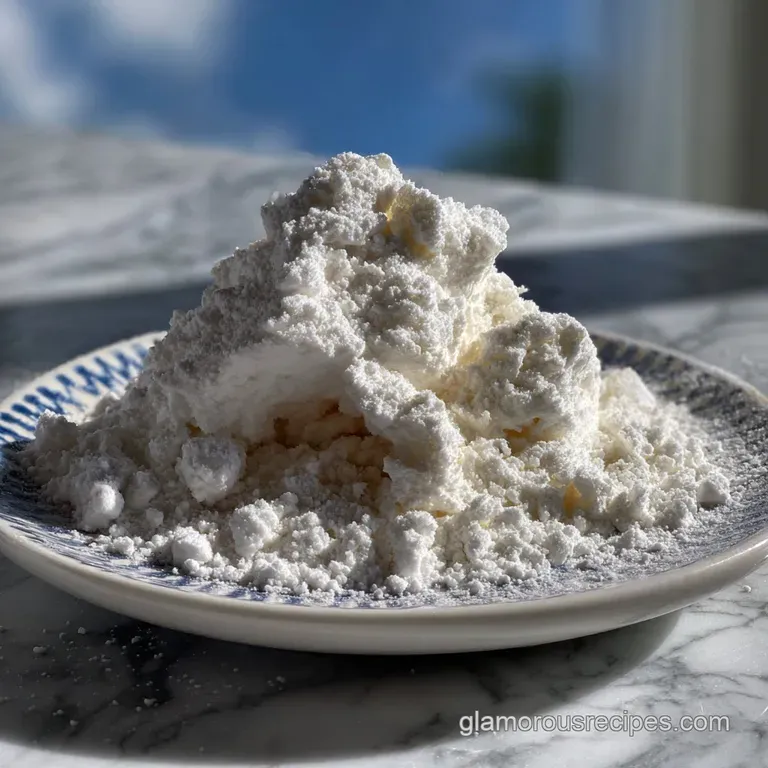
- Time: Active 5 minutes, Passive 0 minutes, Total 5 minutes
- Flavor/Texture Hook: Velvety, feather light, and instantly dissolving
- Perfect for: Last minute decorating, pantry emergencies, or artisan precision
- Elegant Icing Sugar Without Powdered Sugar
- Component Analysis
- Pure Artisan Ingredients
- Precision Equipment
- Step-By-Step Milling Guide
- Solving Common Problems
- Comparison of Preparation Methods
- Artisan Flavor Profiles
- Storage And Care
- Perfect Pastry Pairings
- Technical Clarifications
- Frequently Asked Questions
- Recipe FAQs
- 📝 Recipe Card
You have been there before, right in the middle of a delicate bake, reaching into the pantry only to find an empty crinkled bag where your confectioners' sugar should be. It is a moment of pure frustration that usually leads to a frantic store run, but I have found that a bit of kitchen alchemy can save the day.
Honestly, the results from a high speed blender are often fresher and less "chalky" than the bags that have been sitting on a supermarket shelf for months.
Making your own icing sugar without powdered sugar is about more than just convenience, it is about controlling the purity of your ingredients. Commercial brands often add significant amounts of anti caking agents that can leave a slightly metallic or starchy aftertaste in a light buttercream.
By milling it yourself, you ensure a clean, sweet profile that lets your high-quality butter or vanilla bean paste really shine.
This technique is a staple in my kitchen because it transforms the most basic pantry items into an artisan tool. We are going to take standard granulated crystals and shatter them into a fine mist that mimics the texture of silk.
It is a quick, five minute fix that will change how you approach your pastry work, and frankly, you might never go back to the store-bought stuff once you see how easy this is.
Elegant Icing Sugar Without Powdered Sugar
When we talk about the science of texture, we are really talking about particle size and stability. Standard granulated sugar has large, jagged crystals that feel gritty on the tongue and refuse to incorporate into fat based frostings without heat.
By using mechanical force, we change the physical state of the ingredient entirely.
- Mechanical Pulverization: High speed blades strike the sucrose crystals at thousands of revolutions per minute, shattering the lattice structure into a fine dust.
- Starch Barrier: Adding Argo Cornstarch serves as a desiccant, absorbing microscopic amounts of moisture that would otherwise cause the fine dust to clump back into a solid mass.
- Surface Area Expansion: The increased surface area of the smaller particles allows them to dissolve almost instantly in liquids or fats, creating that characteristic velvety mouthfeel.
- Frictional Heat Management: Short bursts of blending prevent the sugar from reaching its melting point, which would otherwise result in a sticky, caramelized mess rather than a dry powder.
Component Analysis
| Ingredient | Science Role | Pro Secret |
|---|---|---|
| Domino White Granulated Sugar | Structural Base | Use high-quality pure cane sugar for the cleanest flavor profile and best "shatter." |
| Argo Cornstarch | Moisture Absorber | Prevents the pulverized particles from re bonding in humid environments. |
| Pinch of Salt (Optional) | Flavor Enhancer | A tiny amount of fine sea salt cuts the cloying sweetness and adds depth to the icing. |
Pure Artisan Ingredients
To achieve a professional result, precision in your measurements is non negotiable. I recommend using a digital scale to ensure the ratio of stabilizer to sweetener is exact.
- 200g Domino White Granulated SugarWhy this? It provides the clean, neutral sweetness required for a versatile icing base.
- Substitute: 200g Organic Cane Sugar (Note: Will result in a slightly off white, ivory toned powder).
- 8g Argo CornstarchWhy this? This prevents clumping and ensures the sugar stays flowable and light.
- Substitute: 8g Arrowroot Powder (Note: Best for those avoiding corn based products; slightly more translucent).
If you are looking for a base to use this on, my Sugar Cookie Recipe is the perfect canvas for your homemade creations.
Precision Equipment
You cannot achieve a professional grade sugar without powdered sugar with a standard food processor. The RPMs simply aren't high enough to get that "store-bought" fineness.
- Vitamix High Speed Blender: This is the gold standard for milling. The blades need to move fast enough to create a vortex that pulls every crystal through the cutting zone.
- OXO Fine Mesh Sieve: Even with a powerful blender, a few stray crystals might escape. Sifting is the "secret" that separates home cooks from pastry chefs.
- Airtight Glass Jar: Sugar is hygroscopic (it loves to suck water out of the air), so a sealed container is vital for storage.
Chef's Tip: Freeze your granulated sugar for 10 minutes before blending. The cold crystals are more brittle and shatter more easily, and the lower starting temperature prevents the friction from the blades from melting the sugar.
step-by-step Milling Guide
- Clean your Vitamix container thoroughly. Any moisture left behind will turn your sugar into a paste instantly.
- Weight out 200g of Domino Granulated Sugar.
- Add 8g of Argo Cornstarch directly into the blender carafe.
- Secure the lid tightly. I like to hold a kitchen towel over the top just in case any fine dust tries to escape the seal.
- Start the blender on its lowest speed and quickly ramp up to the highest setting.
- Pulse or run continuously for 45 to 60 seconds. You will see a cloud of "smoke" inside the jar, which is actually the fine sugar dust.
- Stop the motor and let the dust settle for at least 30 seconds before opening the lid. If you open it too soon, your kitchen will be covered in a fine white film.
- Sift the mixture through an OXO Fine Mesh Sieve into a bowl.
- Regrind any large crystals that remain in the sieve for another 20 seconds.
- Store immediately in a glass jar to maintain the powdery texture.
Solving Common Problems
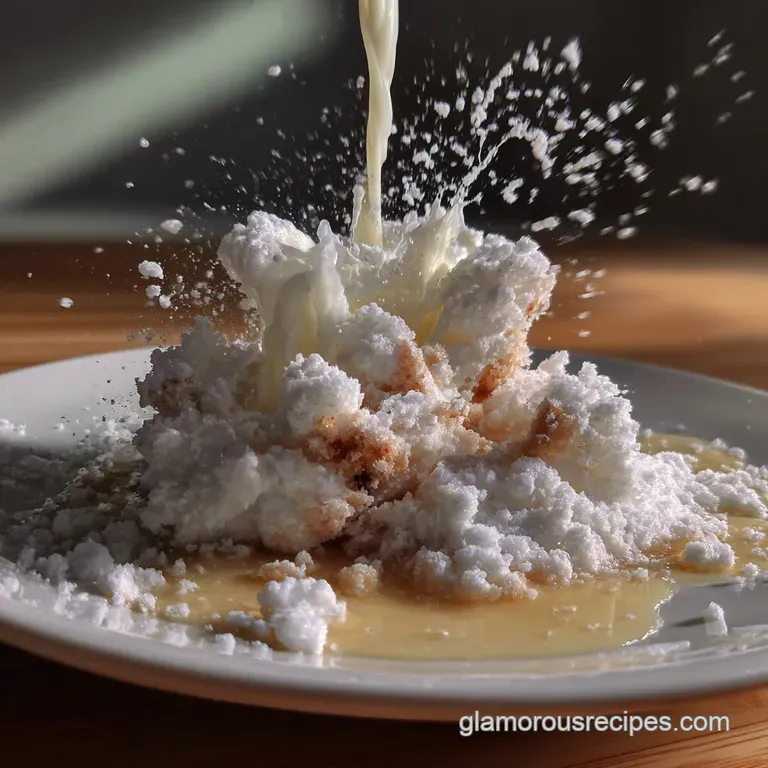
Creating sugar without powdered sugar is simple, but variables like humidity and motor speed can throw a wrench in the works. If your texture feels more like fine sand than flour, you probably just need more time or a higher speed.
Gritty or Sandy Texture
If the icing feels crunchy between your teeth, the crystals haven't been broken down enough. This usually happens in lower powered blenders or if the carafe was too full.
Clumping After Storage
Sugar that was once fine but now has hard lumps has likely been exposed to moisture. This is especially common in humid climates.
| Problem | Cause | Fix | Pro Tip |
|---|---|---|---|
| Yellowish Tint | Overheating | Blend in shorter bursts | Use the pulse function instead of a continuous run. |
| Gritty Icing | Poor Sifting | Use a finer mesh sieve | Double sift the powder before adding to your butter. |
| Metallic Taste | Low quality starch | Switch to Argo or Tapioca | Always taste your cornstarch before adding to ensure it's fresh. |
Comparison of Preparation Methods
| Feature | Stovetop Method (Ermine) | Oven/Dry Method (Blender) |
|---|---|---|
| Texture | Custard like and silky | Light, airy, and fluffy |
| Stability | Moderate (can weep) | High (crusts over) |
| Speed | 15 minutes + cooling | 5 minutes total |
Artisan Flavor Profiles
Once you have mastered the base, you can start to get creative. Since you are starting with granulated sugar, you can actually infuse flavors during the milling process.
Brown Sugar Icing Without Powdered Sugar
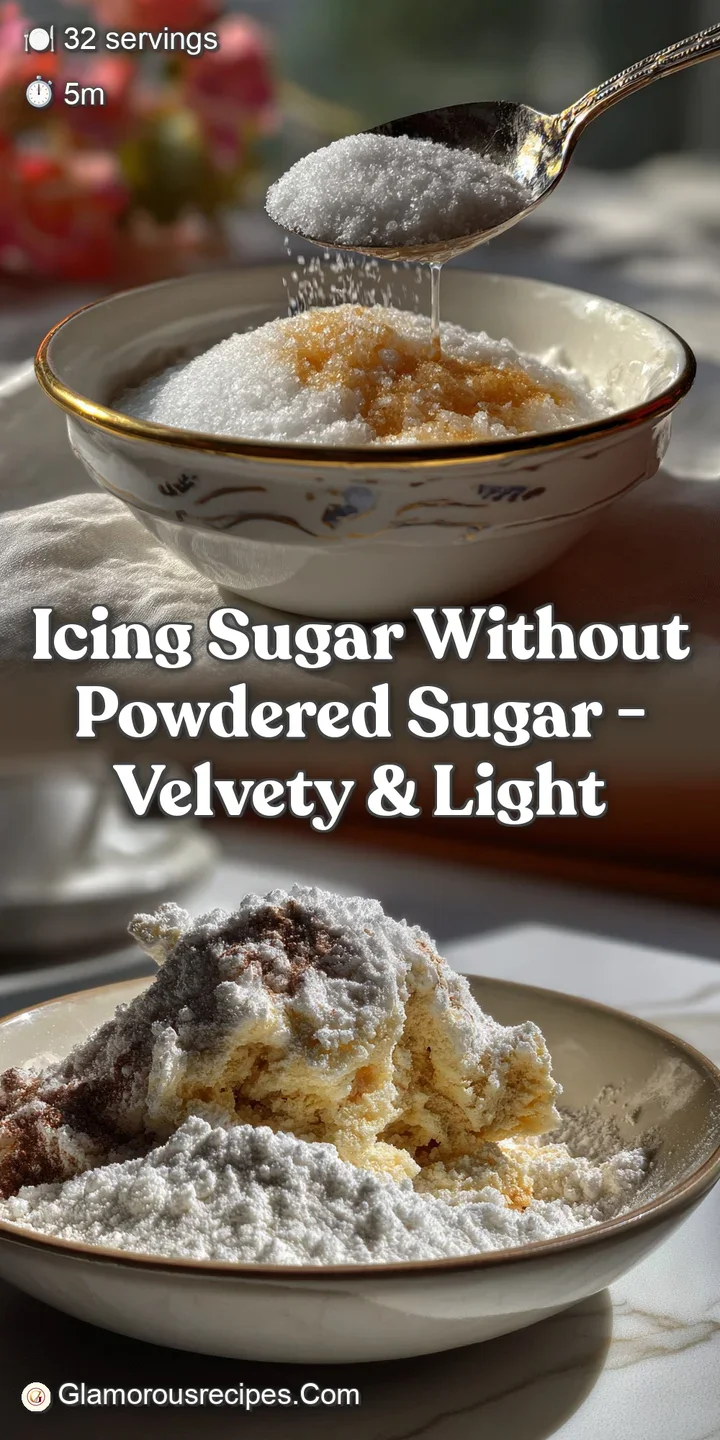
You can actually make a brown sugar icing without powdered sugar by using the same technique with light brown sugar. However, because brown sugar has more moisture (molasses), you should increase the cornstarch to 12g per 200g of sugar.
It creates a deep, caramel noted icing that is incredible on spice cakes.
A Floral Infusion
Add a teaspoon of dried culinary lavender to the blender with your sugar. The lavender will be pulverized along with the sugar, creating a naturally purple flecked without powdered sugar mixture that smells like a French garden. This is a beautiful addition to a Festive Holiday Cookie recipe where a subtle floral note adds an artisan touch.
Storage And Care
If you keep your homemade icing sugar recipe no powdered sugar in a cool, dry place, it will last as long as the store-bought version. I find that glass Mason jars are superior to plastic bags because they provide a better vapor barrier.
- Storage: Up to 1 year in a sealed jar.
- Zero Waste: If your homemade sugar does get clumpy, don't throw it away. You can simply throw it back into the blender for 10 seconds to "refresh" the texture and break up those moisture bonds.
For those who enjoy a warm breakfast, this fine sugar also makes a beautiful dusting for a French Toast Without Vanilla recipe, providing that snow like aesthetic without the need for a store run.
Perfect Pastry Pairings
This homemade substitute performs beautifully in almost any application, but there are a few places where its freshness really stands out.
- Glazes: Because there are no extra preservatives, the glaze will be more translucent and shiny.
- Buttercreams: It whips into butter much faster than store-bought sugar, which can sometimes be densely packed.
- Dusting: Use it for "snow" on top of tarts or brownies.
- 1. Green
- Fresh mint leaves placed off center.
- 2. Pink
- A light dusting of freeze dried raspberry powder over the white icing.
- 3. Gold
- A tiny speck of edible gold leaf to catch the light.
Technical Clarifications
Blender vs Food Processor
A food processor is great for chopping, but a high speed blender is essential for milling. The processor blades are too far from the bottom of the bowl, allowing crystals to dance around without being hit.
Cornstarch Substitutes
If you don't have cornstarch, you can use potato starch or tapioca starch. I don't recommend using flour, as raw flour has a distinct "cereal" taste and can harbor bacteria if not heat treated first.
Better Than store-bought
Store brands often use "3% cornstarch" but also include anti caking agents like calcium phosphate. By making your own without powdered sugar, you avoid these additives, which leads to a much cleaner melt on the palate.
Decision Shortcut: If you want a pure white icing, use standard Domino granulated sugar. If you want a richer flavor, try the brown sugar icing without powdered sugar variation.
If you are short on time, skip the sifting but expect a slightly more rustic, textured finish.
Making this no powdered sugar icing recipe at home isn't just a backup plan; it's a way to ensure your pastry work is handled with the precision and care it deserves. By controlling the milling process, you are essentially becoming the artisan of your own ingredients.
Trust me on this, once you hear that high velocity sizzle of crystals turning into dust, you will feel like a true master of the kitchen.
Frequently Asked Questions
High Velocity Milling Results
When you use a high speed blender, you are essentially performing a industrial process at home. The heat generated can be a concern, but as long as you keep your blending sessions under a minute, the sugar will remain dry and powdery rather than turning into a syrup.
The Sifting Secret
I cannot emphasize the sifting step enough. Even the best Vitamix might miss three or four tiny crystals. In a delicate glaze, those few crystals will look like sand and ruin the "glass" finish you are looking for. Always sift.
Prepping The Icing
You can make the dry powder months in advance, but once you mix it with liquid to make the actual icing, you should use it within 2 to 3 days. Because it lacks the heavy preservatives of commercial brands, it won't stay stable forever once hydrated.
Puffier Homemade Version
You might notice your homemade version looks a bit "puffier" or more voluminous than the store-bought bag. This is because you have incorporated a lot of air during the blending process. When measuring for a recipe, I suggest weighing the sugar (in grams) rather than using measuring cups to ensure accuracy.
1 cup of store-bought sugar weighs differently than 1 cup of freshly milled "puffy" sugar.
Recipe FAQs
how to make icing sugar without powdered sugar?
Yes, using a high speed blender. Place 200g of granulated sugar and 8g of cornstarch into a powerful blender, secure the lid, and process on high speed for 45 to 60 seconds until it transforms into a fine powder.
how to make icing with sugar no powdered sugar?
Absolutely, you must mill the sugar first. Standard granulated sugar crystals are too large to dissolve properly into a smooth icing base, resulting in a gritty texture.
how to make icing for sugar cookies without powdered sugar?
Yes, by mechanically reducing the crystal size. After milling your granulated sugar with a small amount of cornstarch, you can use this fine powder exactly as you would commercial confectioners' sugar in your cookie glaze.
how to make icing with granulated sugar no powdered sugar?
Yes, always add a stabilizer like cornstarch. For every 200g of granulated sugar you mill, add about 8g of cornstarch to absorb micro moisture and prevent the newly formed fine powder from clumping back together.
how to make icing with regular sugar no powdered sugar?
Yes, high speed blending is the key technique. Pulse the regular sugar in short, powerful bursts no longer than one minute to prevent frictional heat from melting the sucrose into syrup.
Can I use a food processor instead of a high speed blender?
No, a food processor is generally insufficient. Food processor blades do not achieve the necessary revolutions per minute to shatter the crystals fine enough, often leaving you with coarse sand rather than a true powder.
What should I do if my homemade icing sugar clumps after storage?
Return the sugar to the blender for a quick refresh. Clumping indicates exposure to humidity, and a 10-second pulse in the dry blender will break those moisture bonds and restore its flowable texture.
Homemade Icing Sugar Substitute
Ingredients:
Instructions:
Nutrition Facts:
| Calories | 25 calories |
|---|---|
| Protein | 0 g |
| Fat | 0 g |
| Carbs | 6.5 g |
| Fiber | 0 g |
| Sugar | 6.3 g |
| Sodium | 0 mg |
