Homemade German Chocolate Cake: Silky and Rich
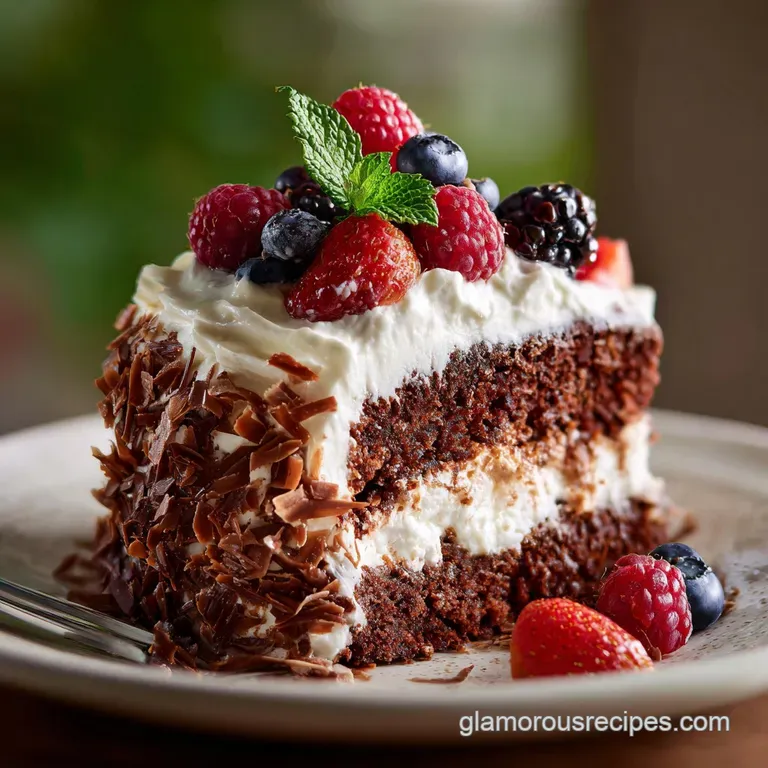
- Time: Active 30 minutes, Passive 35 minutes, Total 1 hours 5 mins
- Flavor/Texture Hook: Silky chocolate crumb with a crunchy, caramelized coconut pecan finish
- Perfect for: Sacred family gatherings, holiday traditions, or a weekend comfort food project
- The Secret to My Homemade German Chocolate Cake
- Why This Classic Recipe Succeeds
- Decoding the Key Cake Components
- Essential Ingredients and Smart Swaps
- Tools for a Flawless Bake
- Steps for This Layered Dessert
- Fixing Common Layer Cake Problems
- Scaling This Cake for Crowds
- Debunking Old Fashioned Baking Myths
- Storing and Freezing Your Cake
- Perfect Pairings for This Dessert
- Recipe FAQs
- 📝 Recipe Card
The Secret to My Homemade German Chocolate Cake
I still remember the scent of my grandmother’s kitchen on a humid Sunday afternoon in Georgia. There was always a cast iron skillet on the stove, but the real magic happened when she pulled out that yellow box of Baker's chocolate.
The sound of her rhythmic whisking against a copper pot meant only one thing: the custard was thickening. That specific aroma of toasted pecans hitting warm butter is a scent I’ve spent years trying to replicate, and it’s finally here in this recipe.
Growing up, this wasn't just a dessert; it was a sacred centerpiece of our family traditions. I’ll be honest, my first few attempts as a teenager were total disasters. One time, the layers were so dry they practically crumbled into sand, and another time, the frosting was so runny it looked like the cake was melting into a puddle.
But through those mistakes, I learned the little tricks - like the importance of room temperature buttermilk and why you absolutely cannot skip blooming the chocolate - that make this homemade german chocolate cake better than anything you'll find in a bakery.
Why This Classic Recipe Succeeds
- The Bloom Effect: Dissolving the German chocolate in hot coffee "blooms" the cocoa solids, intensifying the chocolate notes without adding a distinct coffee flavor.
- Structural Aeration: By whipping the egg whites separately and folding them into the batter, we create tiny air pockets that counteract the weight of the heavy frosting.
- Chemical Leavening: The reaction between the acidic buttermilk and the baking soda creates immediate lift, ensuring the 3 layer german chocolate cake doesn't turn out like a lead weight.
- Starch Gelatinization: Using evaporated milk in the frosting allows the egg yolks to thicken into a stable custard at a lower temperature, preventing a scrambled egg texture.
| Preparation Method | Total Time | Texture Outcome | Best For |
|---|---|---|---|
| Stovetop Custard | 12 minutes | Thick, spreadable, velvety | Authentic, traditional presentation |
| Microwave Custard | 6 minutes | Slightly thinner, glossy | Quick weeknight cravings |
| Oven Toasted Nuts | 8 minutes | Deeply nutty, shatter crisp | Maximum flavor contrast |
While most people focus only on the chocolate, the real hero of an easy german chocolate cake recipe is the contrast between the tender sponge and the textured frosting. Getting that balance right requires a bit of patience with the stove, but the results are worth every second of whisking. If you're looking for another project that hits that sweet spot of chewy and chocolatey, you might want to try this Lactation Cookies recipe — don't let the name fool you, they are a fantastic oatmeal chocolate chip snack for anyone.
Decoding the Key Cake Components
| Ingredient | Science Role | Pro Secret |
|---|---|---|
| German Sweet Chocolate (113g) | Provides mild, 48% cacao sweetness | Chop it into dust sized pieces so it melts instantly in the coffee. |
| Buttermilk (240ml) | Tenderizes gluten strands | Always use full fat for a richer mouthfeel and more "spring" in the crumb. |
| Egg Yolks (3 units) | Emulsifies the frosting fats | Temper them slowly into the warm milk to avoid any curdling. |
| Toasted Pecans (115g) | Adds structural crunch | Toast them until they smell like popcorn; it changes the entire flavor profile. |
A moist german chocolate cake recipe relies heavily on the quality of your fats and liquids. Using evaporated milk instead of regular milk in the frosting is non negotiable because the concentrated milk solids provide a "cooked down" flavor that mimics slow simmered caramel.
Essential Ingredients and Smart Swaps
- 113g Baker’s German’s Sweet Chocolate: The original mild chocolate that gives the cake its name. Why this? It has a unique sugar to cocoa ratio distinct from semi sweet.
- Substitute: 113g semi sweet chocolate plus 15g extra sugar.
- 120ml Hot Coffee: Extracts deep cocoa flavors. Why this? Liquid heat dissolves cocoa lumps better than water.
- Substitute: Boiling water (though you'll lose that depth).
- 312g All purpose flour: The foundation of the cake structure.
- Substitute: Cake flour (gives a finer, more delicate crumb).
- 227g Unsalted butter (softened): Provides the "cream in" volume.
- Substitute: Salted butter (just omit the 0.5 tsp salt).
- 240ml Buttermilk (room temperature): The primary tenderizer.
- Substitute: 240ml milk plus 15ml lemon juice (let sit for 10 mins).
- 240ml Evaporated milk: For the thick coconut pecan frosting recipe.
- Substitute: Heavy cream (makes a much richer, heavier custard).
- 115g Chopped pecans: Adds that essential Southern crunch.
- Substitute: Toasted walnuts (adds a slightly bitter, earthy edge).
Tools for a Flawless Bake
You don't need a professional kitchen, but a few specific items make this old fashioned german chocolate cake much easier. A stand mixer (like a KitchenAid) is a lifesaver for creaming the butter and sugar for a full 5 minutes don't skimp on that time!
You’ll also want three 23cm (9 inch) cake pans. If you only have two, you can bake in batches, but keep the remaining batter in the fridge to keep the egg whites from deflating.
A heavy bottomed saucepan is vital for the frosting. Thin pans have hot spots that will scorch your milk and ruin the custard. I also highly recommend a digital thermometer. While my grandmother did it by "feel," hitting exactly 71°C with your frosting ensures it sets perfectly every single time. It's the same precision I use when making a Chocolate Orange Cheesecake recipe to ensure the filling is silky and not overbaked.
Steps for This Layered Dessert
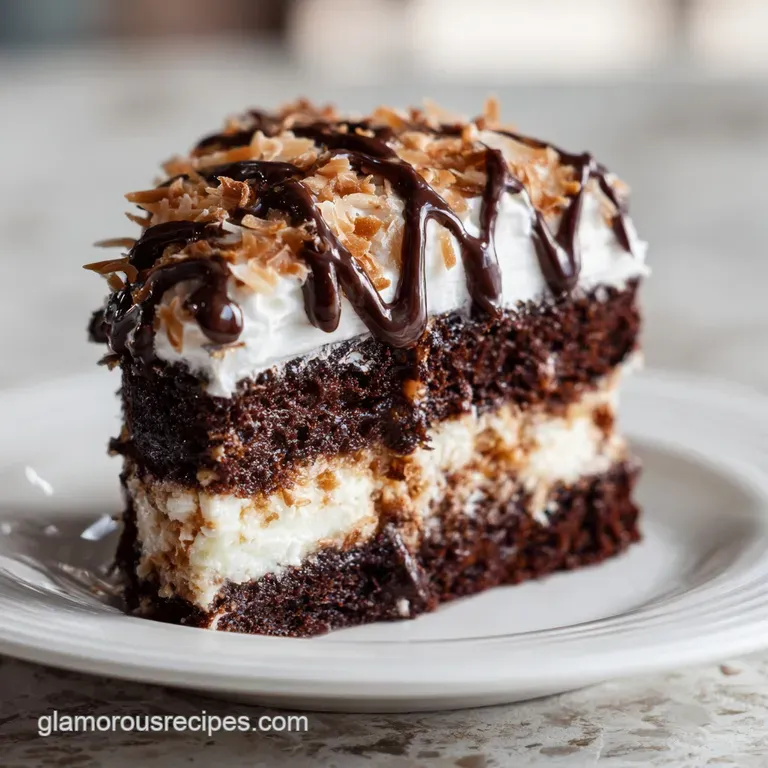
Preparing the Chocolate Foundation
- Preheat your oven to 180°C. Grease and flour three 23cm cake pans, lining the bottoms with parchment paper.
- Chop the 113g of German sweet chocolate into very fine shards.
- Pour 120ml of hot coffee over the chocolate in a small bowl. Stir until the mixture is glossy and completely liquid. Let it cool to room temperature.
Aerating the Batter
- In a large bowl, cream 227g softened butter and 400g granulated sugar. Beat for 5 minutes until the mixture looks pale and fluffy.
- Add the 4 egg yolks one at a time, beating well after each addition. Mix in the cooled chocolate liquid and 1 tsp vanilla extract.
- Whisk together 312g flour, 20g cocoa powder, 1 tsp baking soda, and 0.5 tsp salt.
Balancing the Dry and Wet Ingredients
- Add the flour mixture and 240ml buttermilk alternately to the butter mixture, beginning and ending with flour. Mix until just combined and no white streaks remain.
- In a clean bowl, beat the 4 egg whites until stiff peaks form. Gently fold the whites into the batter using a spatula until no large white clumps are visible.
Baking for Structural Integrity
- Divide the batter evenly between the three pans. Bake for 35 minutes until a toothpick inserted in the center comes out clean.
- Cool in the pans for 15 minutes, then invert onto wire racks to cool completely.
Crafting the Coconut Pecan Custard
- Combine 240ml evaporated milk, 200g sugar, 3 egg yolks, and 113g butter in a saucepan.
- Cook over medium heat, stirring constantly, until the mixture thickens and coats the back of a spoon (about 12 minutes).
- Remove from heat. Stir in 1 tsp vanilla, 130g toasted coconut, and 115g toasted pecans. Cool until spreadable.
Assembling the Masterpiece
- Place one cake layer on a plate. Spread a generous amount of frosting to the edges. Repeat with the second and third layers, frosting only the top (leaving the sides exposed is the traditional look).
Fixing Common Layer Cake Problems
Why Your Cake Sinks in the Middle
This usually happens if you open the oven door too early or if your baking soda is expired. The structure hasn't set, and the sudden drop in temperature causes the air bubbles to collapse. Always wait at least 25 minutes before peeking.
Rescuing Runny Frosting
If your frosting is sliding off the cake, it simply hasn't cooled enough. The butter and egg yolks need time to firm up. Pop the frosting in the fridge for 20 minutes and give it a good stir; it should thicken right up.
| Problem | Root Cause | Solution |
|---|---|---|
| Dry, crumbly layers | Overbaking or too much flour | Brush layers with a simple syrup; use a scale for flour. |
| Gritty frosting | Sugar didn't dissolve | Cook the custard longer over lower heat before adding coconut. |
| Cake layers sticking | No parchment paper used | Run a thin knife around the edge while warm; use parchment next time. |
Chef's Tip: To get that professional "shatter" on your pecans, toast them in a dry skillet until they are one shade darker than raw. The residual heat will finish the job without burning them.
Common Mistakes Checklist
- ✓ Using cold eggs (this breaks the emulsion of the butter and sugar).
- ✓ Over mixing after adding the flour (this develops too much gluten, making the cake tough).
- ✓ Neglecting to toast the coconut (untoasted coconut tastes like wax; toasted tastes like heaven).
- ✓ Frosting the cake while the layers are even slightly warm (the frosting will melt and slide).
- ✓ Forgetting to tap the cake pans on the counter before baking (this releases large air bubbles).
Scaling This Cake for Crowds
If you need to make this for a big Sunday dinner, you can easily double the recipe. However, when doubling, only increase the salt and spices by 1.5x to avoid an overpowering flavor. Use a larger stand mixer and bake in two batches if you don't have six pans.
For the frosting, a double batch takes longer to thicken, so be patient and don't turn up the heat, or you'll risk burning the milk.
For smaller gatherings, you can make german chocolate cupcakes recipe style. Line a muffin tin and fill the cups 3/4 full. Bake at 180°C for 18 to 22 minutes. This is a great way to serve the same flavors without the stress of stacking three layers.
Debunking Old Fashioned Baking Myths
Many people believe that German Chocolate Cake is from Germany. In reality, it was named after Samuel German, an American who developed the dark baking chocolate for the Baker's Chocolate Company in 1852. The "original" recipe didn't even appear until 1957 in a Dallas newspaper!
Another myth is that you must frost the sides of the cake. Traditionally, this cake is served "naked" on the sides to show off the beautiful chocolate layers and keep the focus on the rich topping. Frosting the sides often makes the cake cloyingly sweet and distracts from the delicate crumb.
Storing and Freezing Your Cake
This cake actually tastes better the second day as the frosting moisture seeps slightly into the layers. Keep it in an airtight container or under a cake dome at room temperature for up to 2 days.
If your kitchen is very warm, store it in the fridge for up to 5 days, but let it sit at room temperature for 30 minutes before serving so the butter softens.
To freeze, wrap individual unfrosted cake layers in plastic wrap and then foil; they’ll stay fresh for 3 months. You can also freeze the assembled cake! Flash freeze it for 1 hour until the frosting is hard, then wrap tightly. When you're ready to eat, thaw it overnight in the fridge.
For a zero waste tip, if you have leftover frosting, it is incredible stirred into morning oatmeal or spread onto graham crackers.
Perfect Pairings for This Dessert
Because this cake is so rich, I love serving it with a side of tart raspberries or a sharp, cold glass of milk. If you're hosting a full Sunday dinner, it pairs beautifully after a meal of fried chicken or pot roast classic comfort foods that match the soul of this recipe.
Right then, you're ready to tackle the best german chocolate cake recipe you've ever tasted. It’s a bit of a labor of love, but the first time you see those three layers standing tall on your table, you’ll know why it’s a legend.
Trust me on this one don't rush the custard, watch your oven temps, and get ready for the best kitchen aroma ever. Let's crack on!
Decision Shortcut: If you want a more intense chocolate hit, add 1 tsp of espresso powder to the flour mixture. If you want a smoother texture, pulse the toasted coconut in a food processor for 5 seconds before adding it to the frosting.
If you want a sturdier cake for transport, replace half the butter in the cake batter with vegetable oil.
Recipe FAQs
What's the difference between chocolate cake and German chocolate cake?
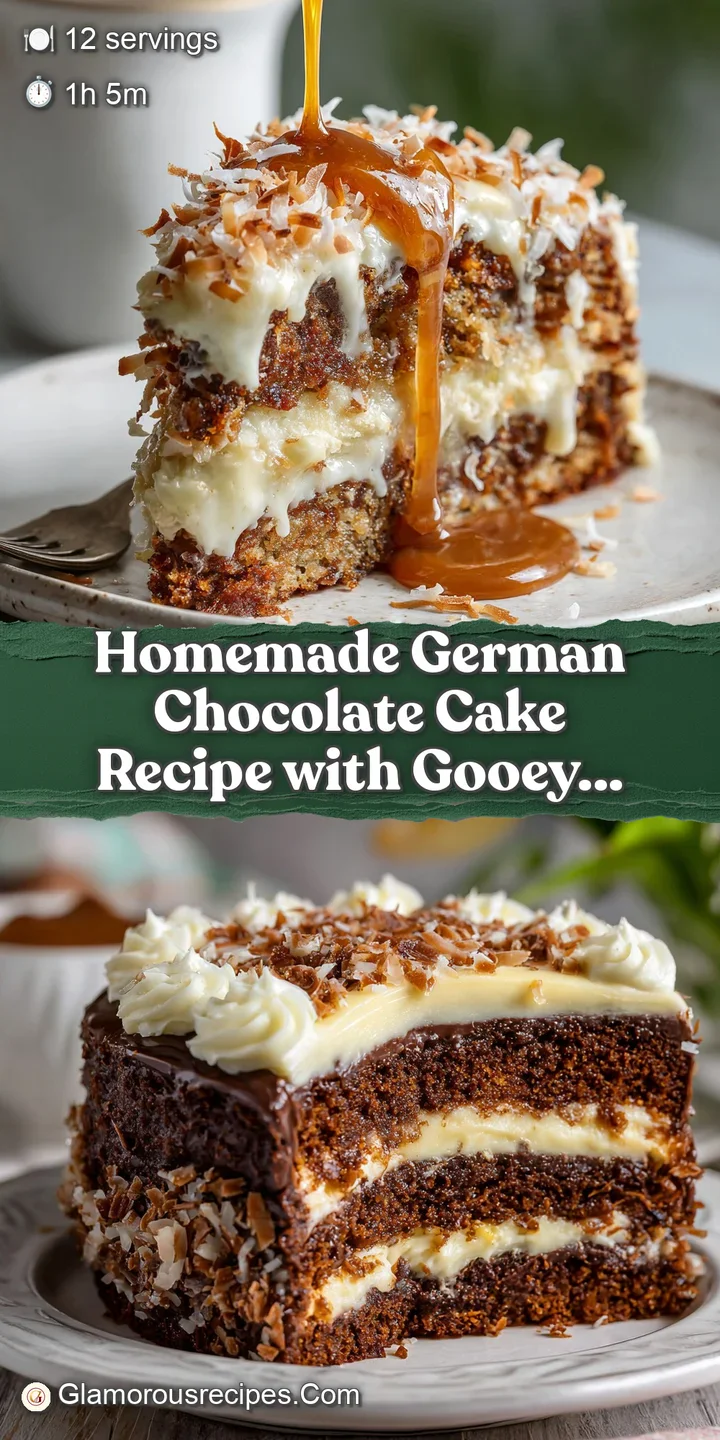
German Chocolate Cake is distinctly different due to its topping. Regular chocolate cake relies on standard cocoa powder or melted chocolate for flavor, but German Chocolate is defined by its signature warm, gooey custard frosting made with evaporated milk, pecans, and coconut.
What are the ingredients for German chocolate cake?
The cake requires flour, cocoa, baking soda, butter, sugar, eggs, buttermilk, and melted German’s Sweet Chocolate bloomed in hot coffee. The topping demands evaporated milk, sugar, egg yolks, butter, pecans, and flaked coconut for that necessary texture contrast.
What makes German chocolate different from regular chocolate?
German's Sweet Chocolate has a higher sugar content than standard semi sweet chocolate. Baker’s Chocolate named it after Samuel German, who developed this specific formulation; its mild cocoa flavor balances the intense sweetness of the traditional frosting.
What is the 1234 cake rule?
No, the 1-2-3-4 cake rule does not apply to German Chocolate Cake. That rule is a simple ratio for a basic butter cake (1 cup sugar, 2 cups flour, 3 eggs, 4 spoons leavening/liquid), whereas this recipe relies on acidic buttermilk and careful egg separation for structure.
How do I ensure my coconut pecan frosting sets up correctly and isn't runny?
Cook the mixture until it coats the back of a spoon and reaches 71°C. The custard requires proper time on the stove for the egg yolks to thicken stably; if it’s too thin, continue simmering on low heat before cooling.
Should I use cake flour or all-purpose flour for the layers?
Use all-purpose flour for sturdiness, but cake flour yields a more delicate crumb. Cake flour has lower protein, resulting in less gluten formation, which is desirable for this tender cake style; if you enjoyed mastering the airy texture in our whole grain pancake mix recipe, you will appreciate using cake flour here for softness.
How far in advance can I make the cake layers?
Wrap cooled layers tightly and store them at cool room temperature for up to 2 days. For longer storage, freeze the unfrosted layers wrapped securely; this technique of careful wrapping is similar to how we preserve dough structure for our Rosca de Reyes recipe to prevent freezer burn.
Homemade German Chocolate Cake
Ingredients:
Instructions:
Nutrition Facts:
| Calories | 728 kcal |
|---|---|
| Protein | 8.7 g |
| Fat | 40.3 g |
| Carbs | 86.2 g |
| Fiber | 4.1 g |
| Sugar | 64.8 g |
| Sodium | 245 mg |
