Leftover Prime Rib Hash Recipe | Restaurant-Quality Brunch
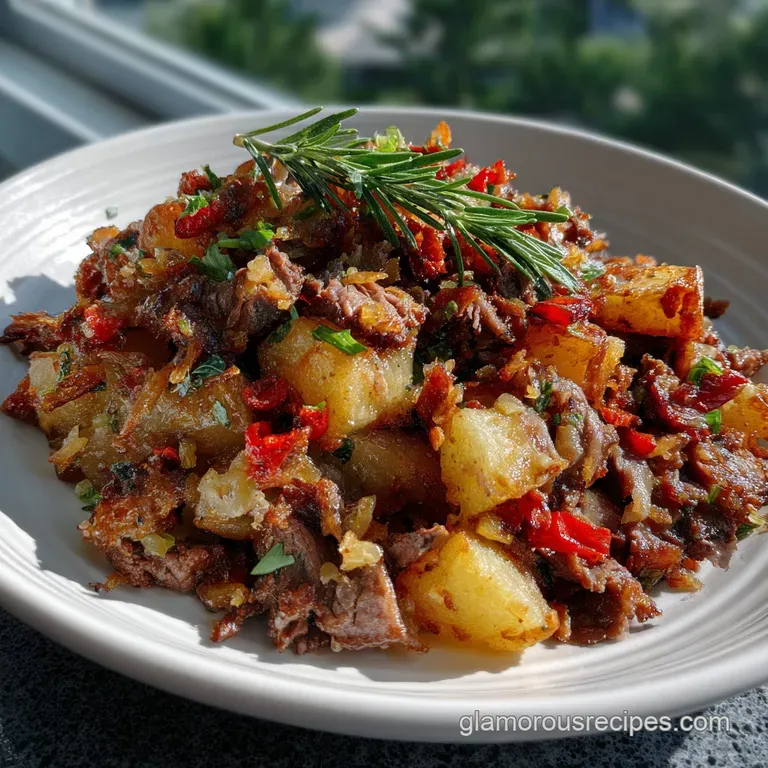
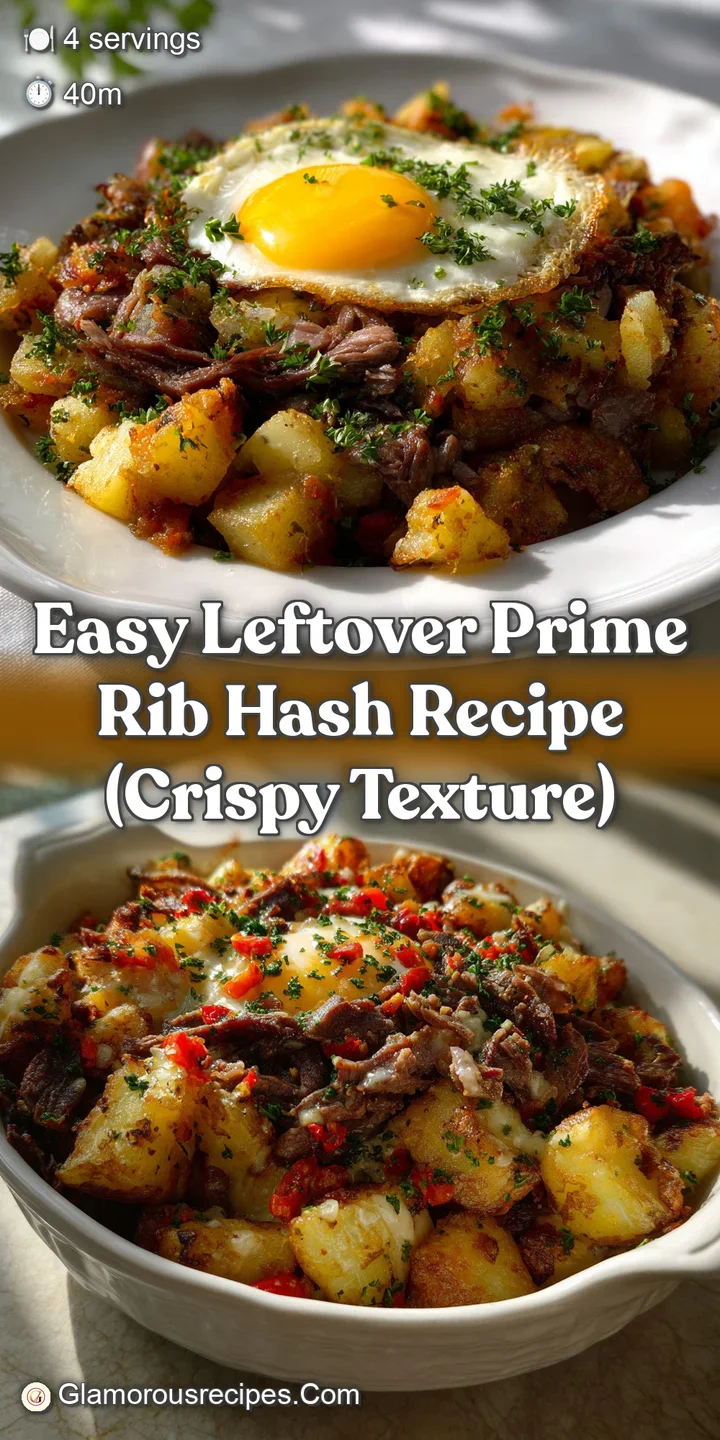
- Effort/Time: Low-effort, 40 minute total turnaround.
- Flavor Hook: Rich, buttery beef paired with crispy, gold-standard potatoes.
- Perfect for: Post-holiday brunches or high-protein weekend recovery meals.
- Master the Ultimate Leftover Prime Rib Hash Recipe
- The Science of Texture: Why This Method Works
- Efficiency and Energy: Understanding the Culinary Specs
- The Alchemy of Umami: Selecting High-Quality Elements
- Essential Kitchen Arsenal for Heat Retention
- Precision Execution: A Step-by-Step Thermal Protocol
- Diagnosing Texture Failures: Troubleshooting Your Morning Hash
- Flavor Architecture: Creative Substitutions and Regional Variations
- ⚗️ The Scaling Lab: The Physics of Quantity
- Preservation Science: Proper Storage and Reheating Protocols
- The Final Presentation: Enhancing the Brunch Experience
- Recipe FAQs
- 📝 Recipe Card
Master the Ultimate Leftover Prime Rib Hash Recipe
There is nothing more gut-wrenching than staring at a $100 standing rib roast the morning after and realizing you might ruin it by turning it into a rubbery, gray mess. We’ve all been there: tossing prime meat into a lukewarm pan only to have it steam instead of sear, resulting in a soggy pile of disappointment that tastes like regret.
It’s a literal waste of one of the finest cuts of beef you’ll ever buy, and the emotional toll of "ruining the good stuff" is real.
I’ll admit, I spent years destroying my Leftover Prime Rib Hash Recipe because I was impatient. I used to crowd the pan with cold meat and raw potatoes, thinking they’d magically crisp up together. Instead, I ended up with a starchy, bland mash that had zero structural integrity.
I had to stop treating this like a "dump and stir" meal and start treating it like the technical exercise it actually is.
The secret to a world class Leftover Prime Rib Hash Recipe isn't a "secret sauce" it's the physics of surface area and the science of moisture control. By focusing on the Maillard reaction that chemical dance between amino acids and reducing sugars we create a mahogany colored crust on the beef while keeping the interior velvety.
This recipe ensures every bite has a "shattering" potato exterior and a tender, melt-in-your mouth beef center that honors the original roast.
The Science of Texture: Why This Method Works
- Evaporative Cooling Management: Searing potatoes in a Lodge Cast Iron Skillet before adding aromatics prevents steam buildup, ensuring the starch granules undergo proper gelatinization without becoming mushy.
- Maillard Reaction Optimization: Maintaining a surface temperature above 300°F (150°C) allows the Leftover Prime Rib Hash Recipe to develop complex, savory flavor compounds that weren't present in the original roast.
- Protein Preservation: Adding the diced beef at the very end prevents over denaturation of the proteins, which would otherwise result in a dry, stringy texture.
- Lipid Flavor Interaction: Using a combination of extra virgin olive oil and Kerrygold Unsalted Butter provides both a high smoke point for searing and a rich, emulsified finish for the palate.
Efficiency and Energy: Understanding the Culinary Specs
When you're tackling a Leftover Prime Rib Hash Recipe, precision in timing is the difference between a crisp finish and a soggy failure. This protocol is designed for maximum thermal efficiency.
| Metric | Value |
|---|---|
| Prep Time | 15 minutes |
| Cook Time | 25 minutes |
| Total Time | 40 minutes |
| Yield | 4 servings |
| Beef Temperature | Target 125°F (internal) |
| Potato Size | 1/2 inch uniform cubes |
The Alchemy of Umami: Selecting high-quality Elements
Ingredient Chemistry Breakdown
| Ingredient | Chemical/Physical Role (Science) | The Pro Secret (Why This Matters) |
|---|---|---|
| Yukon Gold Potatoes | Medium starch/moisture balance | Holds shape during searing while developing a creamy interior. |
| Leftover Prime Rib | High fat-to-protein ratio | Rendered fat provides the primary flavor vehicle for the entire dish. |
| Yellow Onion | Sugar caramelization | Provides the sweet counter balance to the heavy, savory beef fats. |
| Worcestershire Sauce | Acidic catalyst and fermented umami | The vinegar breaks down surface proteins while anchovy extracts boost savory depth. |
- 1.5 lbs Yukon Gold potatoes, diced into 1/2 inch cubesWhy this? Medium starch potatoes provide the best structural integrity for over high heat searing.
- 2 tbsp extra virgin olive oil
- 1 tsp Diamond Crystal Kosher Salt
- 1/2 tsp freshly cracked black pepper
- 1 lb leftover prime rib, diced into 3/4 inch cubesWhy this? Larger cubes prevent the beef from drying out during the second cook cycle.
- 1 medium yellow onion, finely diced
- 1 red bell pepper, diced
- 3 cloves garlic, minced
- 1 tsp fresh thyme leaves, chopped
- 1 tbsp Kerrygold Unsalted Butter
- 4 large eggs
- 2 tbsp fresh parsley, chopped
- 1 tsp Lea & Perrins Worcestershire sauce
Essential Kitchen Arsenal for Heat Retention
To execute a Leftover Prime Rib Hash Recipe properly, you need tools that manage thermal mass. A thin non-stick pan will lose heat the moment the cold potatoes hit the surface, leading to "sweating" rather than searing.
- Lodge 12 inch Cast Iron Skillet: Mandatory for heat retention and achieving a uniform mahogany crust.
- Fish Turner or Sturdy Metal Spatula: Necessary to scrape the fond (browned bits) off the bottom without breaking the potato cubes.
- Chef’s Knife: Ensure a sharp edge for clean 3/4 inch cubes of beef, which prevents tearing the muscle fibers.
Precision Execution: A step-by-step Thermal Protocol
- Heat the Lodge Cast Iron Skillet over medium high heat until the oil shimmers and a drop of water dances.
- Add the 1.5 lbs of diced Yukon Gold potatoes in a single layer. Note: Crowding causes steaming.
- Sear for 10 12 minutes until the undersides are deep golden and the potatoes release easily from the pan.
- Toss in the diced onion and red bell pepper. Note: Adding these now prevents them from burning while the potatoes crisp.
- Sauté for 5 minutes until the onion edges turn translucent and the pepper aroma becomes fragrant.
- Stir in the 3 cloves of minced garlic, fresh thyme, salt, and pepper.
- Cook for 60 seconds until the garlic is aromatic but not browned.
- Fold in the 1 lb of diced prime rib and 1 tsp of Lea & Perrins Worcestershire sauce. Note: This deglazes the pan and picks up the potato fond.
- Sizzle for 3 4 minutes until the beef is heated through and the edges begin to crisp slightly.
- Push the hash to the sides, melt 1 tbsp of Kerrygold Butter in the center, and crack the 4 eggs.
- Fry for 3 minutes until the egg whites are set but the yolks remain velvety and liquid.
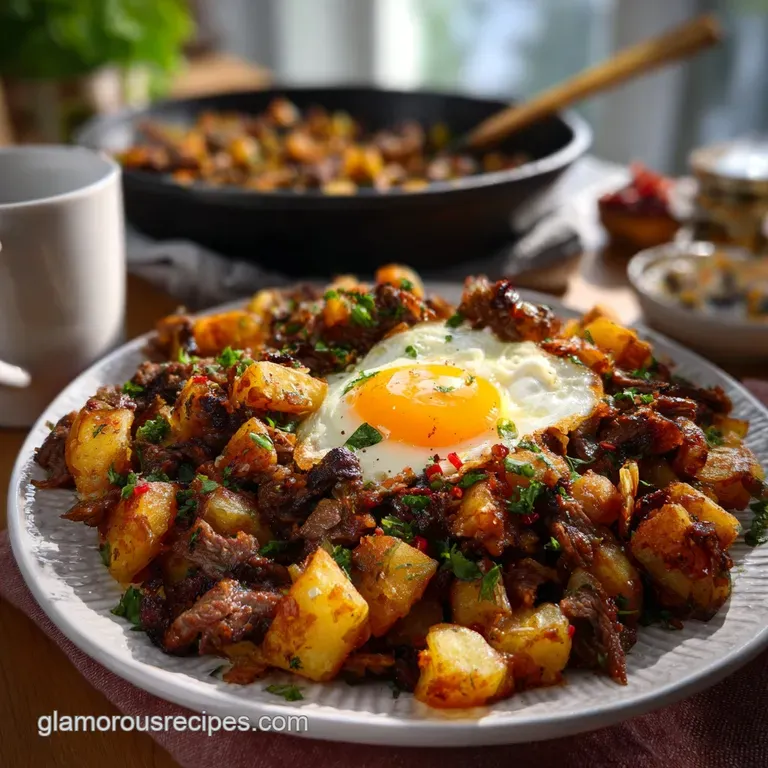
- Garnish with parsley and serve immediately while the potatoes still shatter on the fork.
Diagnosing Texture Failures: Troubleshooting Your Morning Hash
If your hash isn't hitting that perfect balance of crispy and tender, it's usually a thermal or moisture issue. If you're looking for a sweet finish to balance this savory bomb, my Peanut Butter Cookies recipe is a classic move for a post brunch treat.
Why Your Hash is Soggy
When potatoes turn into a gummy pile, it’s usually due to "amylopectin leakage." If the pan temperature drops too low, the potatoes release moisture faster than it can evaporate, essentially boiling the hash in its own juices.
| Problem | Root Cause | Solution | Pro Protocol |
|---|---|---|---|
| Soggy Potatoes | Pan crowding/low heat | Cook in two batches | Dry diced potatoes with a paper towel before searing to remove surface moisture. |
| Tough, Dry Beef | Overcooking | Add beef at the very end | Keep beef cubes larger (3/4 inch) to protect the tender center from heat. |
| Burnt Garlic | Early addition | Add garlic only after vegetables soften | Garlic has a high sugar content and burns at 320°F; add it last. |
Flavor Architecture: Creative Substitutions and Regional Variations
This Leftover Prime Rib Hash Recipe is a template. You can swap elements to change the flavor profile without breaking the structural science of the dish. For a bit of extra kick on the side, a dollop of my Homemade Red Pepper recipe works wonders against the richness of the beef.
| Original Ingredient | Substitute | Why It Works |
|---|---|---|
| Yukon Gold Potatoes | Sweet Potatoes | Higher sugar content; will caramelize faster and offer a softer texture. |
| Red Bell Pepper | Poblano Pepper | Adds a mild, earthy heat and smokiness without overwhelming the beef. |
| Fresh Thyme | Fresh Rosemary | Stronger piney notes that stand up well to heavy fats. Note: Use half the amount. |
The Southwestern Twist
Replace the thyme with 1 tsp of ground cumin and use a diced jalapeño instead of the bell pepper. Top with avocado and lime juice. This variation benefits from the high fat content of the prime rib, which carries the spice heat beautifully.
Low-Carb/Keto Swap
Replace the 1.5 lbs of potatoes with 1.5 lbs of cauliflower florets. Caution: Cauliflower has a much higher water content. You must sear them on very high heat to achieve browning before they turn mushy.
⚗️ The Scaling Lab: The Physics of Quantity
When doubling this Leftover Prime Rib Hash Recipe, you cannot simply use a larger pile of ingredients in the same skillet.
- The Evaporation Paradox: If you double the ingredients in a 12 inch pan, you triple the moisture output but keep the same surface area for evaporation. This results in a stew, not a hash. Mandatory instruction: Use two separate skillets or cook in sequential batches.
- Flavor Saturation: Scale spices and Worcestershire sauce by 1.5x, not 2x. Concentrated umami can quickly become metallic or overly salty when doubled.
- Thermal Mass & Thermodynamics: Adding 2 lbs of cold beef to a hot pan will drop the temperature by nearly 100°F instantly. This kills the sear. If doubling, take the beef out of the fridge 20 minutes early to take the chill off.
Preservation Science: Proper Storage and Reheating Protocols
Leftover Prime Rib Hash Recipe is best eaten fresh, but you can preserve it if you follow the "Moisture Recovery" rule.
- Fridge: Store in an airtight glass container for up to 3 days. The potatoes will lose their "shatter" as they absorb ambient humidity.
- Freezing: Not recommended. The cellular structure of the potatoes collapses upon thawing, resulting in a mealy texture.
- Reheating: NEVER use a microwave. It turns the beef into rubber. Reheat in a dry skillet over medium heat for 5 7 minutes. Add a teaspoon of water and cover for 60 seconds at the end to "steam soften" the beef fibers without drying them out.
The Final Presentation: Enhancing the Brunch Experience
When serving this Leftover Prime Rib Hash Recipe, the goal is to contrast the heavy, savory fats with bright, acidic notes. The rich, velvety egg yolk acts as a natural sauce, binding the crispy potatoes to the tender beef.
To elevate the presentation, serve directly from the cast iron skillet. The visual appeal of the mahogany beef against the vibrant green parsley and the bright yellow yolks is classic for a reason.
If you're feeling adventurous, a drizzle of horseradish cream (sour cream mixed with prepared horseradish and lemon juice) provides a sharp, pungent counterpoint that cuts through the lipid heavy profile of the prime rib.
Myth: You should parboil the potatoes before frying. Truth: Parboiling increases internal moisture. For a Hash Recipe, starting with raw potatoes in a hot, oiled skillet creates a superior crust and a fluffier interior due to the rapid evaporation of surface starch.
Myth: You should salt the potatoes immediately. Truth: Salt is hygroscopic; it draws moisture out. If you salt too early, the potatoes will "weat" in the pan, preventing a crisp sear. Salt only once the crust has begun to form.
Don't discard the fat trimmings from your prime rib. Transform: Render them down in a small saucepan to make beef tallow. Science: Tallow has a higher smoke point than butter and carries the "essence" of beef, making it a superior cooking fat for future roasted vegetables or even a savory crust for a Sugar Cookie Recipe if you're experimenting with savory bakes.
Enjoy your Leftover Prime Rib Hash Recipe—it’s the best way to make the holiday magic last one more morning. Let’s crack on!
Recipe FAQs
how to make hash from leftover prime rib?
Dice beef and potatoes, sear potatoes first until golden. Add beef last for only 3-4 minutes to heat through and develop slight crispness. The key is separating the cooking times for starch and protein.
how to make leftover corned beef hash?
Myth: Canned hash requires an egg. Reality: While eggs improve texture, canned hash is already fully cooked; frying in fat develops the desired Maillard crust on the meat and potatoes.
how to cook leftover prime rib?
Sear diced cubes in hot fat until edges caramelize. Minimize cook time, aiming only to bring internal temperature up to 125°F while maximizing surface browning via the Maillard reaction. If you enjoyed mastering this quick searing principle, see how the same high heat logic applies when making a Classic Rum Punch: The Admirals Classic Balanced Pitcher Recipe base.
what do with leftover prime rib?
Hash, tacos, or thin sliced hot beef sandwiches are excellent uses. Hash allows for maximum flavor enhancement through searing the beef fat, creating superior textural contrast against soft accompaniments like eggs.
Can I skip rendering the beef fat before hashing?
Rapid Fire:Yes, but flavor complexity will decrease significantly.
What temperature is best for frying the eggs atop the hash?
Medium low heat ensures gentle setting of whites and runny yolks. Cooking too hot causes the albumen (egg white) proteins to seize too quickly, preventing the desired liquid center. If you enjoyed controlling the precise setting temperature here, apply the same sensory caution when balancing sweetness and acid in our Lemon Drop Drink: The Perfectly Balanced Classic Martini Recipe.
Should I use beef tallow or oil for the initial potato sear?
Beef tallow delivers richer flavor but oil offers better consistency control. Tallow, if sourced from a low-quality roast, might contain off-flavors that get amplified by high heat, whereas a neutral oil provides a clean sear base.
Easy Prime Rib Hash Recipe
Ingredients:
Instructions:
Nutrition Facts:
| Calories | 658 calories |
|---|---|
| Protein | 37g |
| Fat | 42g |
| Carbs | 34g |
| Fiber | 5g |
| Sugar | 3g |
| Sodium | 740mg |
