Easy Chicken Pot Pie Noodle Skillet: One-Pan Magic
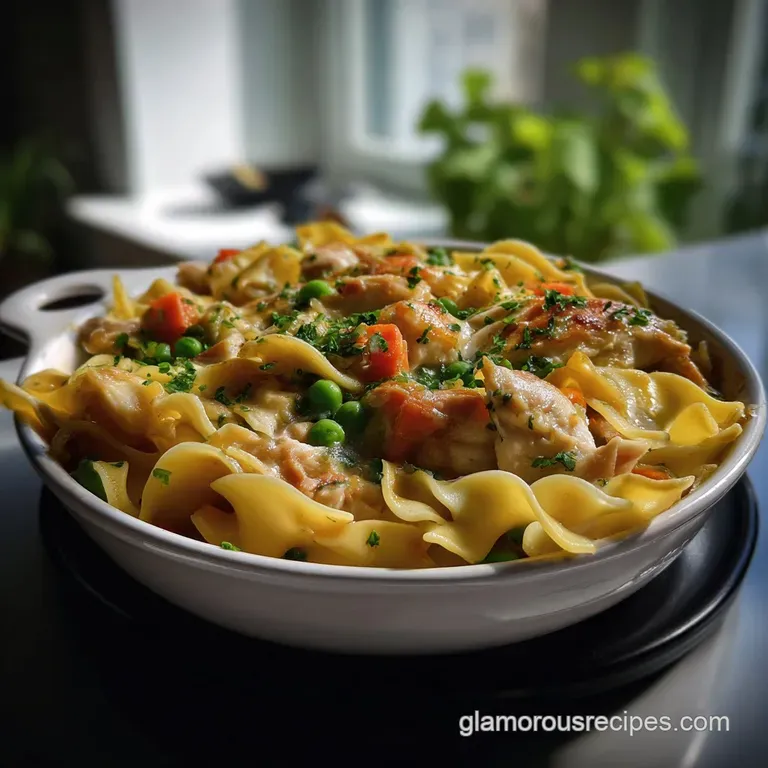
- Effort/Time: Low-effort, one-pan cleanup / 35 minutes total
- Flavor Hook: Sizzling butter, earthy dried thyme, and umami-rich chicken broth
- Perfect for: High-protein weeknight fuel, grab-and-go meal prep, and cold-weather comfort
- Masterclass: The Technical Guide to Easy Chicken Pot Pie Noodle Skillet
- Why This One-Pan Method Works
- The Science Behind the Ingredients in This Easy Chicken Pot Pie Noodle Skillet
- Ingredients & Simple Substitutions
- Step-by-Step Instructions for the Easy Chicken Pot Pie Noodle Skillet
- Expert Tips and Common Mistakes to Avoid
- Common Myths about the Stovetop Chicken Pot Pie
- Storage and Freezing Guidelines for the Noodle Skillet
- Serving Suggestions for a Complete Meal
- Recipe FAQs
- 📝 Recipe Card
Masterclass: The Technical Guide to Easy Chicken Pot Pie Noodle Skillet
Why Your Weeknights Need This Easy Chicken Pot Pie Noodle Skillet
The sizzle of carrots and onions hitting a hot Lodge Cast Iron Skillet is the ultimate sensory reset after a chaotic workday. We’ve all been there: craving the comfort of a pot pie but staring at a clock that says you have exactly 40 minutes before the "hangry" phase hits.
I used to struggle with traditional pies where the bottom crust turned into a soggy, doughy mess that ruined the entire experience.
Trust me, I’ve burned enough roux and overboiled enough noodles to know that the secret isn't in the pastry, but in the precision of the stovetop simmer. This Easy Chicken Pot Pie Noodle Skillet solves the "crust fail" dilemma by swapping high maintenance dough for tender, wide egg noodles that soak up the sauce like a sponge.
We’re using a scientific approach to layering flavors starting with a Maillard driven vegetable sauté and ending with a controlled starch thickening process that ensures your sauce never breaks or turns watery.
Why This One-Pan Method Works
- Starch Gelatinization: As the Barilla Wide Egg Noodles simmer directly in the Swanson Low-Sodium Chicken Broth, they release amylose and amylopectin molecules into the liquid. These starch granules swell and burst at approximately 175°F, creating a structural network that naturally thickens the gravy from within.
- Lipid Emulsification: Adding Kerrygold Unsalted Butter and Horizon Organic Heavy Cream creates a stable emulsion where fat droplets are suspended in the broth. The all-purpose flour acts as a bridge, preventing the fats from separating and ensuring a uniform, glossy mouthfeel.
- Controlled Evaporation: Cooking in an open surface Le Creuset Braiser allows for rapid steam escape, concentrating the chicken's umami and the carrot's natural sugars through a gentle reduction.
The Science Behind the Ingredients in This Easy Chicken Pot Pie Noodle Skillet
The Science Behind All-Purpose Flour
- What It Does
- Acts as the primary thickening agent (stabilizer) for the savory pot pie gravy.
- The Chemistry
- Through the process of a "blond roux," flour proteins and starches coat the butter fats; when the 4 cups of chicken broth are added, the starch granules undergo gelatinization, trapping water molecules in a semi solid matrix.
- Why This Matters
- This prevents the "pool of liquid" effect often found in poor stovetop recipes, ensuring the sauce clings to every 8 oz of dry wide egg noodles.
The Science Behind Yellow Onions and Carrots
- What They Do
- Provide the aromatic foundation and a "mirepoix" flavor profile.
- The Chemistry
- Sautéing 1 cup of yellow onions and 1 cup of carrots in 2 tbsp of unsalted butter triggers the Maillard reaction, converting amino acids and reducing sugars into complex, savory compounds.
- Why This Matters
- This creates depth and a subtle sweetness that balances the saltiness of the 2.5 cups of cooked chicken, mimicking a slow roasted flavor in under 20 minutes.
The Science Behind Heavy Cream
- What It Does
- Introduces high fat milk solids to create a "velvety" texture.
- The Chemistry
- The 1/2 cup of heavy cream contains approximately 36% milkfat, which coats the tongue and tempers the sharpness of the 3 cloves of minced garlic and 1 tsp of dried thyme.
- Why This Matters
- It provides the "shatter proof" creaminess that defines a Masterclass level Chicken Pot Pie Noodle Skillet, preventing the sauce from feeling thin or "tinny."
The Science Behind Wide Egg Noodles
- What They Do
- Serve as the structural carbohydrate and sauce delivery vehicle.
- The Chemistry
- Unlike standard pasta, the 8 oz of dry wide egg noodles have a higher protein-to-starch ratio due to the egg solids, which allows them to maintain a "toothsome" (al dente) bite even when simmered in liquid.
- Why This Matters
- This prevents the noodles from turning into mushy fragments, providing the "chew" necessary to satisfy the textural expectations of a classic pot pie.
Ingredients & Simple Substitutions
| Original Ingredient | Substitute | Why It Works |
|---|---|---|
| 2 tbsp Unsalted Butter | Avocado Oil | High smoke point; loses the dairy richness but maintains the fat-to-flour ratio. |
| 1/2 cup Heavy Cream | Full Fat Coconut Milk | Similar fat content. Note: Adds a subtle nutty note; better for dairy-free needs. |
| 8 oz Wide Egg Noodles | gluten-free Rotini | Sturdy enough for simmering. Note: GF pasta releases more starch; may need extra broth. |
| 2.5 cups Cooked Chicken | Shredded Turkey | Nearly identical protein structure and moisture content; perfect for post holiday use. |
| 1 tsp Dried Thyme | Fresh Rosemary (1/2 tsp) | Stronger essential oils; provides a more pine like, woody aromatic profile. |
If you find yourself with extra chicken, you can also use it in The Best Chicken Salad Recipe: Tender, Tangy & Crunchy for your lunch tomorrow. Both recipes prioritize that "shredded" texture that holds onto dressings and sauces so well.
step-by-step Instructions for the Easy Chicken Pot Pie Noodle Skillet
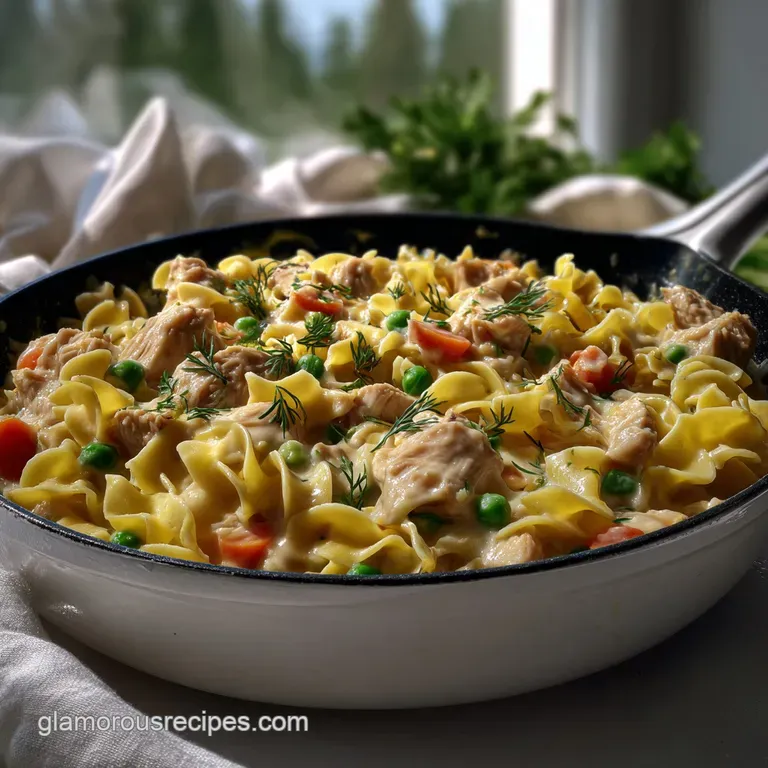
Sautéing the Aromatics for Maximum Flavor
Melt the 2 tbsp unsalted butter in a large skillet.Note: Using a Lodge Cast Iron Skillet provides superior heat retention, ensuring the 1 cup of onions and 1 cup of carrots soften evenly without scorching.
Add the 1 cup yellow onion, 1 cup carrots, and 1/2 cup celery.Note: This is the "sweating" phase where cellular walls break down, releasing aromatic precursors into the fat.
Stir in the 3 cloves of minced garlic and 1 tsp dried thyme.Note: Garlic contains allicin, which is heat sensitive; sautéing for only 60 seconds prevents bitter carbonization.
How to Thicken Your Savory Pot Pie Gravy
Whisk in the 1/4 cup all-purpose flour.Note: Coating the vegetables in flour before adding liquid prevents clumps and ensures a smooth, homogeneous Noodle Skillet base.
Slowly pour in the 4 cups of chicken broth while stirring.Note: Adding liquid incrementally allows the starch to hydrate gradually, preventing the protein network from seizing.
Bring the mixture to a gentle simmer.Note: You must reach the boiling point (212°F) briefly to fully activate the thickening power of the flour's starch granules.
Simmering the Noodles and Chicken to Perfection
Add the 8 oz dry wide egg noodles directly to the pan.Note: Cooking the noodles in the broth rather than water infuses the pasta with flavor and retains the starch needed for the sauce.
Reduce heat and simmer for 8 10 minutes. Note: Stir occasionally to ensure the Pot Pie Noodle Skillet doesn't stick to the bottom of the pan as the liquid reduces.
Fold in the 2.5 cups cooked chicken and 1 cup thawed frozen peas.Note: Since the chicken is already cooked, we only need to bring it to a safe internal temperature (165°F) without over denaturing the proteins.
Final Garnishes for a Gourmet Touch
Stir in the 1/2 cup heavy cream and 1/4 cup fresh Italian parsley.Note: Adding cream at the end prevents it from curdling under prolonged over high heat exposure.
Season with salt and freshly cracked black pepper to taste.Note: Black pepper contains piperine, which provides a sharp contrast to the velvety lipids in the cream sauce.
Remove from heat when the sauce coats the back of a spoon.Note: The residual heat will continue to thicken the Chicken Pot Pie Noodle Skillet as it rests for 2 3 minutes.
Expert Tips and Common Mistakes to Avoid
| Problem | Why It Happens | The Fix | Pro Protocol |
|---|---|---|---|
| Broken/Oily Sauce | Temperature was too high after adding cream. | Whisk in a teaspoon of warm broth to re-emulsify. | Use a ThermoPro Digital Thermometer to ensure the sauce stays below 190°F after dairy is added. |
| Mushy Noodles | Noodles were boiled past the "al dente" stage. | Check noodles 2 minutes before the package instructions suggest. | Terminate heat when noodles have a slight "snap" in the center; they will finish via carryover cooking. |
| Bland Flavor | Lack of acidity or salt to brighten the fats. | Add a squeeze of lemon juice or a dash of Grey Poupon Dijon Mustard. | Salt in stages: once for the veggies, and once at the final tasting to layer the seasoning. |
Chef's Tip: To deepen the color and flavor of your Easy Chicken Pot Pie Noodle Skillet, grate 1/2 tsp of fresh nutmeg into the cream. The compounds in nutmeg enhance the dairy notes and provide a professional, "hidden" complexity that mimics a classic Béchamel.
Common Myths about the Stovetop Chicken Pot Pie
Myth: You must cook the noodles separately to avoid a "starchy" taste. Truth: Cooking 8 oz of wide egg noodles in the sauce is actually the "secret" to a cohesive dish.
The starch released acts as a natural thickener, creating a much silkier texture than plain water boiled pasta ever could.
Myth: Frozen peas make the skillet watery. Truth: If you thaw the 1 cup of frozen peas and pat them dry before adding them at the very end, they retain their "pop" and vibrant green color without leaching excess moisture into the gravy.
Myth: Rotisserie chicken is "cheating" and lacks flavor. Truth: Rotisserie chicken often has deeper flavor due to the slow roasting process and skin-on seasoning. It provides 2.5 cups of perfectly seasoned protein that would take hours to replicate at home.
Storage and Freezing Guidelines for the Noodle Skillet
Reheating Your Easy Chicken Pot Pie Noodle Skillet
The Easy Chicken Pot Pie Noodle Skillet can be stored in an airtight container in the fridge for up to 3 4 days. Because the noodles will continue to absorb liquid as they sit, the sauce will thicken significantly.
When reheating, add 2 3 tablespoons of chicken broth or milk per serving to loosen the sauce. Microwave on medium power in 60 second intervals, stirring in between to ensure even heat distribution without "breaking" the cream.
Tips for Freezing Individual Portions
Yes, you can freeze this recipe for up to 2 months. However, be aware that dairy based sauces can sometimes "grain" after freezing. 1. Cool the skillet completely to room temperature. 2. Portion into freezer safe bags, removing as much air as possible. 3. To serve, thaw overnight in the fridge. 4.
Reheat slowly on the stovetop, adding a splash of broth to restore the velvety texture.
If you're into meal prepping comfort food, this pairs excellently with a side of Quick and Easy Pizza Dough shaped into garlic knots to soak up any extra gravy.
Serving Suggestions for a Complete Meal
For a balanced dinner, pair this Pot Pie Noodle Skillet with a crisp, acidic side. A simple arugula salad with a lemon vinaigrette cuts through the richness of the 1/2 cup heavy cream and 2 tbsp butter perfectly.
If you're hosting a cozy gathering, start the evening with a Classic Green Tea Shot for a fun, peach flavored appetizer vibe before diving into the savory main course. The contrast between the sweet, chilled shot and the warm, herbaceous Chicken Pot Pie Noodle Skillet makes for a memorable dining experience.
This Easy Chicken Pot Pie Noodle Skillet is more than just a quick meal; it's a technical triumph over the common pitfalls of comfort food. By understanding the science of the roux and the starch of the noodles, you've transformed a basic "pasta night" into a masterclass in flavor architecture.
Enjoy the sizzle, the aroma, and most importantly, the fact that you only have one pan to wash.

Recipe FAQs
Can I use raw chicken instead of cooked?
No, always use pre-cooked, shredded chicken. Adding raw poultry increases the required simmering time substantially, risking overcooked noodles and an unstable sauce base. This skillet relies on residual heat for final thickening. For alternatives, consider our Chicken Casserole Ritz: The Ultimate Creamy, Crispy Bake which handles raw components differently.
Is frozen vegetable mix acceptable?
Yes, absolutely for convenience. Frozen vegetables release significant water content upon thawing during the initial sauté phase. You must compensate for this moisture by reducing initial broth volume slightly or simmering longer before adding cream.
What thickener works best if I don't have cornstarch?
Use a small slurry made from flour or potato starch. Cornstarch provides a glossy, fast setting gel, whereas flour yields a matte finish and requires more heat to eliminate the raw starch flavor. Starch slurry prevents the sauce from breaking during final stirring.
- Use 1 part starch to 2 parts cold water
- Whisk aggressively into simmering liquid
- Avoid adding starch directly to hot fat
Can I substitute egg noodles for standard pasta?
Egg noodles cook faster than dry pasta. Their higher protein and fat content absorb liquid more rapidly, leading to a mushy texture if simmered for the full duration specified for dried varieties. Adjust the cooking time down by about 4 minutes.
Myth: I must use heavy cream for richness.
Myth: You must use heavy cream for richness. Reality: Half and-half or evaporated milk offers sufficient fat content for emulsion stability here. Heavy cream simply increases the risk of curdling when subjected to rapid temperature changes.
Should I use fresh or dried herbs?
Fresh herbs provide brighter aromatic impact. Dried herbs concentrate flavor but lack the volatile essential oils released by fresh thyme and parsley. If using dried, reduce the quantity to one-third of the fresh measurement.
What cheese choice yields the best melt?
Gruyère offers superior melt and nutty complexity. Low-moisture mozzarella stretches well but provides minimal flavor contrast to the creamy base. Gruyère’s texture emulsifies beautifully, much like the rich textures found in our French Martini Recipe: Smooth, Sweet Easy Cocktail, when used correctly.
Easy Pot Pie Noodle Skillet
Ingredients:
Instructions:
Nutrition Facts:
| Calories | 498 kcal |
|---|---|
| Protein | 33.2 g |
| Fat | 18.3 g |
| Carbs | 48.6 g |
| Fiber | 3.8 g |
| Sugar | 5.4 g |
| Sodium | 425 mg |
