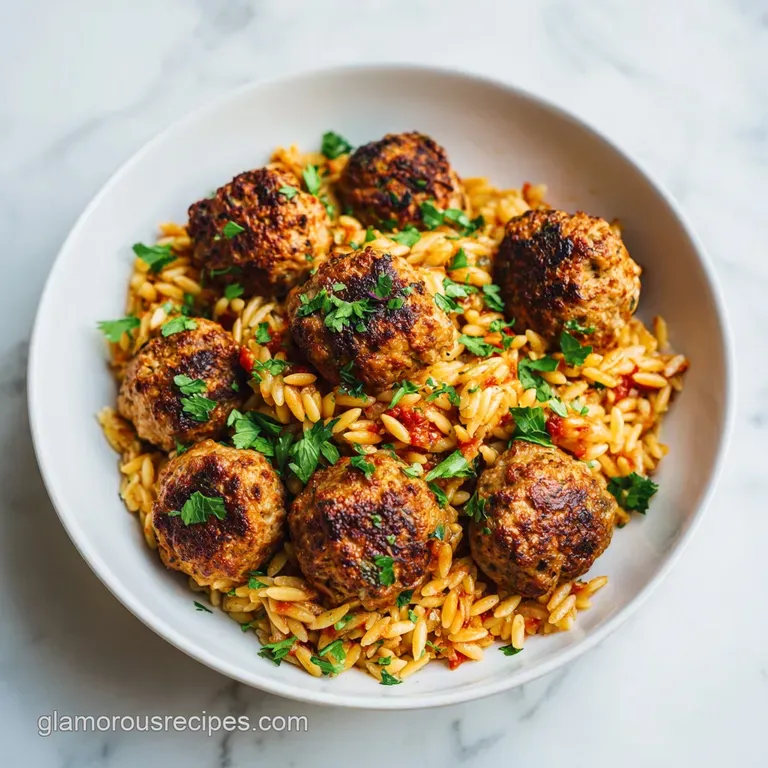
Chicken Meatballs with Orzo: One Pan Skillet
- Time: Active 20 minutes, Passive 25 minutes, Total 45 minutes
- Flavor/Texture Hook: Zesty lemon meets golden, seared chicken and buttery, tender pasta
- Perfect for: Weeknight comfort or an effortless Sunday family dinner
- The Best One Pan Chicken Meatballs with Orzo
- Science Behind This One Pot Wonder
- Ingredient Deep Dive for Quality
- Components for the Ultimate Texture
- Essential Tools for Perfect Searing
- Mastering the Meatballs and Orzo
- Troubleshooting Your Skillet Supper
- Adaptation for Different Batch Sizes
- Creative Twists for Every Palate
- Debunking Skillet Cooking Beliefs
- Guidelines for Best Leftover Quality
- Finishing Touches for Restaurant Vibes
- High in Sodium
- Recipe FAQs
- 📝 Recipe Card
The Best One Pan Chicken Meatballs with Orzo
The first time I attempted this, I was staring at a half empty fridge on a rainy Tuesday, feeling absolutely defeated by the thought of doing more than one dish. I had a pack of ground chicken that was dangerously close to its "use by" date and a bag of orzo tucked in the back of the pantry.
As the first batch of meatballs hit the hot olive oil, that distinctive sizzle filled the kitchen, and the smell of toasted garlic started to lift my mood. It was one of those rare kitchen "accidents" that turned into a sacred family staple.
We've all been there, right? You want something that feels like a big, warm hug but you don't want to spend an hour scrubbing pans afterward. This dish is exactly that. When you toast the orzo in the leftover chicken fat and butter, it takes on this nutty, golden quality that you just can't get by boiling it in plain water.
It’s a total shift in how you’ll think about pasta.
I used to make the mistake of overworking the meat, resulting in something closer to a golf ball than a dinner. But once I started folding in the ricotta, everything changed. Now, I share this with every friend who complains about dry chicken.
It’s the kind of meal that brings everyone to the table fast, usually led by the aroma of fresh oregano and lemon zest wafting through the house.
Science Behind This One Pot Wonder
Protein Buffer: The ricotta cheese acts as a moisture reservoir, preventing the chicken proteins from bonding too tightly and becoming rubbery.
Starch Suspension: Simmering orzo directly in the broth releases natural starches that emulsify with the butter and lemon juice, creating a naturally velvety sauce without heavy cream.
Maillard Synergy: Searing the meatballs first creates a "fond" (browned bits) on the pan, which provides the primary savory base for the pasta to absorb.
| Meatball Thickness | Internal Temp | Rest Time | Visual Cue |
|---|---|---|---|
| 1.5 inches | 165°F | 5 minutes | Juices run clear, surface is golden brown |
| 1 inch | 165°F | 3 minutes | Firm to the touch with a slight spring |
| 2 inches | 165°F | 7 minutes | Deep brown crust, center is opaque |
Right then, let's talk about why these specific numbers matter. If you pull the chicken at exactly 165°F, it stays juicy. Go much further, and you're in the "dry zone." The resting period is just as vital because it allows the fibers to relax and soak back up those flavorful liquids.
Ingredient Deep Dive for Quality
| Ingredient | Science Role | Pro Secret |
|---|---|---|
| Ground Chicken | Primary Protein | Mix thigh and breast meat for the best fat to flavor ratio. |
| Whole Milk Ricotta | Texture Tenderizer | Drain any excess whey first to keep the meatballs from falling apart. |
| Dry Orzo | Starch Base | Toast it until it smells like popcorn before adding your liquid. |
| Parmesan Cheese | Umami Booster | Use freshly grated to ensure it melts smoothly into the meat. |
Choosing the right components is half the battle. If you're looking for another crispy favorite, my Baked Chicken Wings Recipe uses a similar logic of over high heat browning to build deep flavor without a deep fryer. For this skillet meal, the Parmesan isn't just for salt; it creates a structural lattice that helps the chicken hold its shape.
Components for the Ultimate Texture
- 1 lb ground chicken (breast or thigh): Why this? Lean protein that absorbs aromatics much better than beef.
- Substitute: Ground turkey (add 1 tsp extra olive oil for moisture).
- 0.5 cup whole milk ricotta cheese: Why this? The secret to a soft, melt in-your mouth meatball interior.
- Substitute: Plain Greek yogurt (gives a tangier finish).
- 0.5 cup panko breadcrumbs: Why this? Larger surface area than fine crumbs for a lighter texture.
- Substitute: Crushed saltine crackers for a nostalgic, salty twist.
- 0.25 cup freshly grated Parmesan cheese: Why this? Adds a sharp, salty kick and helps with browning.
- Substitute: Pecorino Romano for a bolder, funkier profile.
- 1 large egg, beaten: Why this? The essential glue that binds our meat and cheese together.
- Substitute: 2 tbsp flax meal mixed with 1 tbsp water.
- 2 cloves garlic, minced: Why this? Provides the base aromatic layer that defines the dish.
- Substitute: 1 tsp garlic powder in a pinch.
- 1 tbsp fresh oregano, chopped: Why this? Earthy notes that cut through the richness of the cheese.
- Substitute: 1 tsp dried oregano (crush it in your palms first).
- 0.5 tsp kosher salt & 0.25 tsp cracked black pepper: Standard seasoning.
- 1 tbsp olive oil: For the initial sear.
- 1.5 cups dry orzo pasta: Why this? Its small shape mimics rice but carries the bite of pasta.
- Substitute: Pearled couscous (reduce broth by 0.5 cup).
- 1 small shallot, finely diced: Why this? Gentler and sweeter than a standard yellow onion.
- Substitute: The white parts of 3 green onions.
- 3 cups low sodium chicken broth: Why this? Controls the salt level while providing deep savory flavor.
- Substitute: Vegetable broth or even water with a bouillon cube.
- 2 cups fresh baby spinach, packed: Why this? Adds color and a hit of iron at the very end.
- Substitute: Chopped kale (add it 5 mins earlier to soften).
- 1 organic lemon, zest and juice: Why this? Acid is mandatory to brighten the heavy starches.
- Substitute: 1 tbsp white wine vinegar.
- 2 tbsp unsalted butter: Why this? Creates the glossy, restaurant style finish on the sauce.
- Substitute: 1 tbsp heavy cream for a different kind of richness.
Essential Tools for Perfect Searing
A heavy bottomed skillet is your best friend here. I personally swear by a 12 inch cast iron or a thick stainless steel pan. You need something that retains heat well so when you drop those meatballs in, the temperature doesn't plummet.
If the pan isn't hot enough, the meat will steam instead of searing, and you'll miss out on that beautiful golden crust.
You'll also want a microplane for the lemon zest and Parmesan. It creates a fine "snow" that distributes evenly through the meat mixture. Don't bother with the thick, pre shredded cheese from the plastic tub; it's coated in potato starch which prevents it from melding into the meatball properly.
Trust me, the extra two minutes of grating is worth it.
Chef's Tip: Freeze your butter for 10 minutes before dicing it into the sauce at the end. The cold fat creates a more stable emulsion, leading to a silkier, glossier finish that won't break or look greasy.
Mastering the Meatballs and Orzo
1. The Prep & Sear Phase
First, mix your ground chicken, ricotta, panko, Parmesan, egg, garlic, oregano, salt, and pepper in a large bowl. Use a light hand here. Gently roll them into 1.5 inch rounds you should get about 16 to 18 meatballs.
Heat your olive oil in the skillet over medium high heat. Once you see a faint shimmer, add the meatballs. You'll hear that satisfying sizzle immediately. Sear for 3 minutes per side until a golden crust forms and they release easily from the pan.
They won't be cooked through yet, and that's exactly what we want. Remove them to a plate and let them rest.
2. The Toasting & Simmering Phase
Lower the heat to medium and toss in the diced shallot. Sauté for 2 minutes until translucent. Now, add the dry orzo directly into the pan. Stir it constantly for 2 to 3 minutes until the pasta turns a light toasted brown and smells intensely nutty.
This step is non negotiable for the best flavor.
Slowly pour in the chicken broth, scraping the bottom of the pan to pick up all those savory browned bits. Bring it to a gentle simmer. Slide the meatballs back into the pan, nestling them into the liquid.
Cover the skillet and let it simmer for 10 to 12 minutes until the orzo is tender and most of the liquid has been absorbed.
3. The Finishing Touch
Remove the lid. You’ll notice the broth has thickened into a light, velvety sauce. Stir in the fresh spinach the residual heat will cause it to wilt in about 30 seconds. Finally, add the butter, lemon zest, and lemon juice. Stir gently until the butter is fully melted and the sauce looks shiny.
Serve it straight from the pan for that rustic, homey feel.
Troubleshooting Your Skillet Supper
| Problem | Root Cause | Solution |
|---|---|---|
| Meatballs falling apart | Too much moisture or loose bind | Ensure the egg is large and the panko is fresh. Chill the mix for 15 mins before rolling. |
| Orzo is crunchy | Not enough liquid or heat too high | Add 1/4 cup extra broth and cover for 3 more minutes on low heat. |
| Sauce is greasy | Butter added to a boiling pan | Turn off heat before whisking in cold butter to maintain the emulsion. |
Correcting Dry Meatball Textures
If your meatballs feel like rubber, you likely over mixed the meat. When you stir ground chicken too vigorously, the proteins cross link and toughen up. Next time, use your fingertips to "fluff" the ingredients together rather than mashing them.
Fixing Thin, Watery Sauce
Sometimes the orzo doesn't release enough starch to thicken things up. If your sauce looks thin, take the meatballs out and simmer the orzo uncovered for an extra 2 minutes. The evaporation will concentrate the starches and create that velvety coat we're after.
Common Mistakes Checklist
- ✓ Pat the chicken dry if it seems overly wet before mixing (helps searing).
- ✓ Don't skip the orzo toasting; it prevents the pasta from becoming a mushy mess.
- ✓ Use a lid that fits tightly to trap the steam needed to cook the meatballs through.
- ✓ Always zest the lemon before juicing it; it’s nearly impossible the other way around.
- ✓ Wait to add the spinach until the very end to keep it bright green and fresh.
Adaptation for Different Batch Sizes
When scaling down to two servings, use a smaller 8 inch skillet so the broth doesn't evaporate too quickly. You can still use one whole egg, but reduce the panko and ricotta by half. The cook time for the orzo remains largely the same, but keep an eye on the liquid levels starting at the 8 minute mark.
For a larger crowd (double the recipe), I recommend working in batches for the meatball searing. Overcrowding the pan will drop the temperature and cause the meat to release juices, which means you'll boil the chicken instead of browning it. Use a large Dutch oven instead of a skillet to accommodate the extra volume of broth and pasta. For more inspiration on creamy, one pan chicken meals, check out my Creamy Paprika Chicken recipe.
Creative Twists for Every Palate
Greek Chicken Meatballs with Orzo
Swap the oregano for fresh dill and add 1/2 cup of crumbled feta cheese to the meatball mixture. Instead of baby spinach, use chopped cucumbers and kalamata olives as a fresh topping after cooking. It’s a bright, Mediterranean spin that feels incredibly fresh.
Baked Chicken Meatballs with Orzo (Oven Method)
If you'd rather not stand over the stove, you can sear the meatballs and then transfer everything to a preheated oven at 375°F (190°C). Bake for 15 to 20 minutes once the broth is added.
This results in a slightly crispier top layer for the orzo, almost like a paella.
| Method | Time | Texture | Best For |
|---|---|---|---|
| Stovetop | 45 minutes | Creamy and saucy | Quick weeknight dinners |
| Oven Finish | 55 minutes | Crispy edges, firm pasta | Meal prep or hands off cooking |
| Slow Cooker | 4 hours | Extremely tender meatballs | Busy days (add orzo at the end) |
Debunking Skillet Cooking Beliefs
"Rinsing pasta makes it better." In this recipe, rinsing orzo would be a disaster. You actually want that surface starch to help thicken the sauce. If you wash it away, you'll end up with thin, watery broth instead of a silky coating.
"Chicken must be cooked until white throughout to be safe." While chicken needs to reach 165°F, it can sometimes retain a very slight pinkish hue near the center if it’s high-quality or processed in certain ways.
Use a meat thermometer rather than visual cues alone to ensure it's cooked without being overdone.
Guidelines for Best Leftover Quality
Storage: Keep leftovers in an airtight container in the fridge for up to 3 days. The orzo will continue to absorb liquid as it sits, so don't be surprised if it looks a bit thicker the next day. This is actually my favorite way to eat it the flavors have more time to meld together.
Freezing: You can freeze the cooked meatballs separately for up to 3 months. I don't recommend freezing the cooked orzo, as the texture becomes quite mushy upon thawing. Instead, freeze a batch of raw meatballs so you can have a "kit" ready for a quick dinner.
Zero Waste: Don't throw away those lemon halves! Toss them into a pot of water with any leftover oregano stems and simmer on the stove for a natural kitchen deodorizer. If you have extra spinach that's starting to wilt, blend it into a quick pesto and swirl it into the orzo for an extra punch of color.
Finishing Touches for Restaurant Vibes
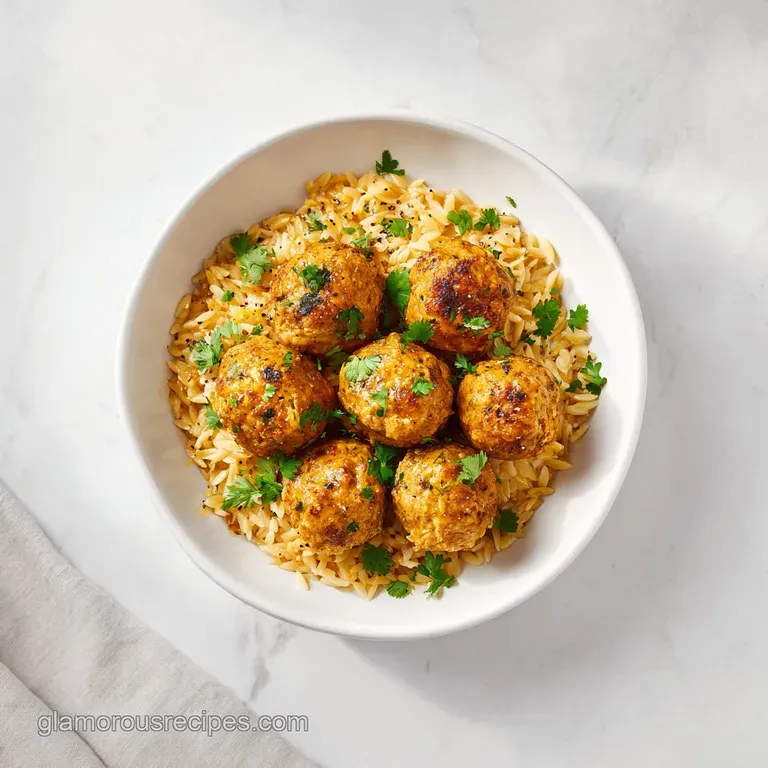
To make this look like it came from a professional kitchen, don't just dump it onto a plate. Use a wide, shallow bowl. Place a generous scoop of the orzo in the center, nestle three or four meatballs on top, and finish with a fresh crack of black pepper and a final dusting of Parmesan.
A drizzle of high-quality extra virgin olive oil right before serving adds a fruity note that complements the lemon perfectly. If you have some extra fresh oregano leaves, scatter them over the top. The contrast between the golden meat, green spinach, and bright yellow zest makes the dish visually pop.
It's comfort food that looks as good as it tastes.

High in Sodium
1120 mg mg of sodium per serving (49% of daily value)
The American Heart Association recommends limiting sodium intake to no more than 2,300mg per day for most adults. Consider even lower limits for greater benefit.
Tips to Reduce Sodium
-
Broth Swap-30%
Use no-salt added chicken broth instead of low-sodium broth. This can significantly reduce the sodium content of the dish.
-
Reduce Salt-25%
Cut the added kosher salt in half, using only 0.25 tsp. Taste and adjust after cooking; you might not need more.
-
Parmesan Quantity-15%
Reduce the amount of Parmesan cheese by half, or substitute with a lower sodium cheese option. Parmesan cheese is a significant source of sodium.
-
Ricotta Type-10%
Ensure you are using a low-sodium ricotta cheese. Some brands add a significant amount of salt during processing.
-
Herb Power
Enhance the flavor with more fresh oregano, lemon zest, and cracked black pepper. This will help compensate for the reduced salt without impacting sodium levels.
Recipe FAQs
Can I substitute turkey for ground chicken in these meatballs?
Yes, but adjust the fat content. Ground turkey is typically leaner than ground chicken, so add 1 teaspoon of olive oil to the meatball mix to ensure they remain moist during cooking.
What is the ideal internal temperature for the meatballs?
165°F (74°C) is the USDA requirement. Use a thermometer and allow the meatballs to rest for at least three minutes after removing them from the heat for best juiciness.
How to prevent the orzo from turning mushy in the skillet?
Toast the dry orzo thoroughly before adding liquid. Stirring constantly until it smells nutty builds a protective exterior layer, preventing excessive starch release during simmering.
Is it true that adding ricotta cheese makes the meatballs tough?
No, ricotta actually tenderizes them significantly. The dairy acts as a moisture reservoir, preventing the chicken proteins from tightening up too much as they cook.
How to achieve a rich, restaurant quality sauce finish without cream?
Finish off the heat with cold butter and lemon. Whisking in cold butter (mounting the sauce) creates a stable emulsion with the broth starches, giving the final dish a glossy, velvety texture.
What is the best way to serve these meatballs for a crowd?
Use a Dutch oven instead of a skillet for scaling up volume. Sear the meatballs in batches to maintain pan temperature, and consider the oven finishing method for hands off cooking of the orzo base.
What dipping sauce pairs well with the bright lemon flavor profile?
A tangy, yogurt based sauce is highly recommended. For a different flavor profile, if you enjoy tangy dips, the bright vinegar notes in the ChickfilA Sauce recipe provide a surprisingly good counterpoint.
Chicken Meatballs With Orzo
Ingredients:
Instructions:
Nutrition Facts:
| Calories | 714 kcal |
|---|---|
| Protein | 41 g |
| Fat | 31 g |
| Carbs | 66 g |
| Fiber | 3.2 g |
| Sugar | 4.1 g |
| Sodium | 1120 mg |
