Simple New Year S Eve Cocktail Idea with Champagne

- Effort/Time: 5 minutes of active preparation.
- Flavor Hook: Bright, zesty citrus with a velvety, sparkling finish.
- Perfect for: Intimate Sunday dinners or high-energy New Year's Eve gatherings.
- Master the Ultimate Simple New Year s Eve Cocktail Idea with Champagne
- The Molecular Physics of Carbonation and Acidity Balance
- Precision Metrics and Thermal Requirements for Your Celebration
- The Alchemy of Sparkle: Selecting Your Primary Elements
- Specialized Barware and Tools for Maximum Effervescence
- Executing the Perfect Pour: The Three-Phase Technical Protocol
- Why Your Drink Goes Flat: Scientific Fixes for Bubbles
- Creative Flavor Architecture and Festive Champagne Adaptations
- ⚗️ The Scaling Lab: The Physics of Quantity
- Curating the Ideal Sacred Atmosphere for Your New Year Sunday Dinner
- Recipe FAQs
- 📝 Recipe Card
Master the Ultimate Simple New Year s Eve Cocktail Idea with Champagne
There is nothing more heartbreaking than greeting your guests with a $60 bottle of sparkling wine that has been stripped of its soul by being poured into a warm, dusty glass or drowned in cheap, cloying mixers.
We have all experienced that expensive nightmare: a flat, lukewarm sip that tastes more like sugary vinegar than a celebration. When the bubbles die, the festive spirit often follows, leaving you with a tray of lackluster drinks and a sense of wasted potential.
I remember my first year hosting a New Year Sunday dinner where I tried to rush the process. I didn't chill my glassware, and I used bottled lime juice thinking it wouldn't matter. The result was a sticky, dull mess that lacked the "shatter" of a crisp carbonation.
It was a humbling lesson in bar physics; I learned that you cannot cheat the relationship between temperature and CO2 solubility. Since then, I’ve refined this Simple New Year s Eve Cocktail Idea with Champagne to ensure every glass provides that signature, sharp tingle on the tongue.
The secret to this Masterclass level drink isn't found in expensive gold flakes or "modern" gimmicks; it is found in the science of Henry’s Law and proper pH balancing. By stabilizing the base with 0.5 oz simple syrup (1:1 ratio) and 0.75 oz fresh lime juice, we create a structural foundation that supports the delicate volatile compounds in the wine.
The result is a drink that feels velvety on the palate while maintaining a mahogany hued depth from the bitters.
The Molecular Physics of Carbonation and Acidity Balance
To achieve a professional result with this Simple New Year s Eve Cocktail Idea with Champagne, you must understand how the liquid interacts with the glass. This isn't just a drink; it's a controlled chemical reaction.
- CO2 Solubility: Lower temperatures increase the liquid's ability to hold onto dissolved carbon dioxide, preventing the "gas-out" effect that leads to flat drinks.
- Brix Standardization: The 0.5 oz simple syrup provides a specific gravity that helps the champagne float momentarily before integrated stirring, creating a layered flavor profile.
- Nucleation Management: A sugar rimmed glass provides controlled nucleation sites, which creates a steady, visual stream of rising bubbles without causing an overflow.
Precision Metrics and Thermal Requirements for Your Celebration
When you're preparing this Simple New Year s Eve Cocktail Idea with Champagne, accuracy is your best friend. In my kitchen, Sunday dinners are sacred, and we treat our ingredients with the respect they deserve. This means no "eyeballing" the 0.75 oz fresh lime juice or the 0.5 oz simple syrup.
| Feature | Requirement | Why it Matters |
|---|---|---|
| Champagne Temp | 4°C to 6°C | Prevents rapid CO2 loss and "foaming over." |
| Glassware Temp | -18°C (10 mins) | Minimizes thermal shock when the liquid hits the glass. |
| Acidity pH | ~2.4 pH (Fresh Lime) | Cuts through the residual sugar in Prosecco or Champagne. |
This recipe for a Simple New Year s Eve Cocktail Idea with Champagne is optimized for a stovetopvsoven comparison while you might simmer your syrup on the stovetop, the final assembly is a cold chain process.
| Method | Benefit | Trade off |
|---|---|---|
| Stovetop (Syrup) | Total sugar dissolution, consistent brix. | Requires cooling time before use. |
| Cold Assembly | Maximum bubble retention. | Requires pre-chilled tools. |
The Alchemy of Sparkle: Selecting Your Primary Elements
For this Simple New Year s Eve Cocktail Idea with Champagne, I recommend using C&H Granulated Sugar for the rim and Angostura Orange Bitters for that essential citrus backbone. If you are looking for a Traditional New Year recipe to pair with this, the acidity in this drink perfectly cuts through the richness of savory peas.
Ingredient Chemistry Breakdown
| Ingredient | Chemical/Physical Role (Science) | The Pro Secret (Why This Matters) |
|---|---|---|
| Fresh Lime Juice | Citric acid provides "brightness" and snap | Buffers the sweetness; bottled juice lacks volatile oils. |
| Orange Bitters | Cinchona alkaloids add structural bitterness | Balances the "top notes" of the champagne. |
| Champagne/Prosecco | Autolytic yeast notes (brioche, toast) | Provides the "velvety" mouthfeel through fine bubbles. |
| Simple Syrup | Viscosity modifier and sweetener | Ensures the lime juice doesn't taste "thin" or astringent. |
- 0.75 oz fresh lime juice: Why this? Citric acid acts as a flavor catalyst, heightening the perception of fruit.
- 0.5 oz simple syrup (1:1 ratio): Why this? Provides the necessary viscosity to carry the orange bitters across the palate.
- 2 dashes orange bitters: Why this? Adds aromatic complexity that bridges the gap between lime and grape.
- 4 oz chilled Champagne or Dry Prosecco: Why this? The primary source of effervescence and the "sacred" heart of the drink.
- 1 tsp C&H Granulated Sugar: Why this? Creates a textured entry and provides nucleation for the pour.
Specialized Barware and Tools for Maximum Effervescence
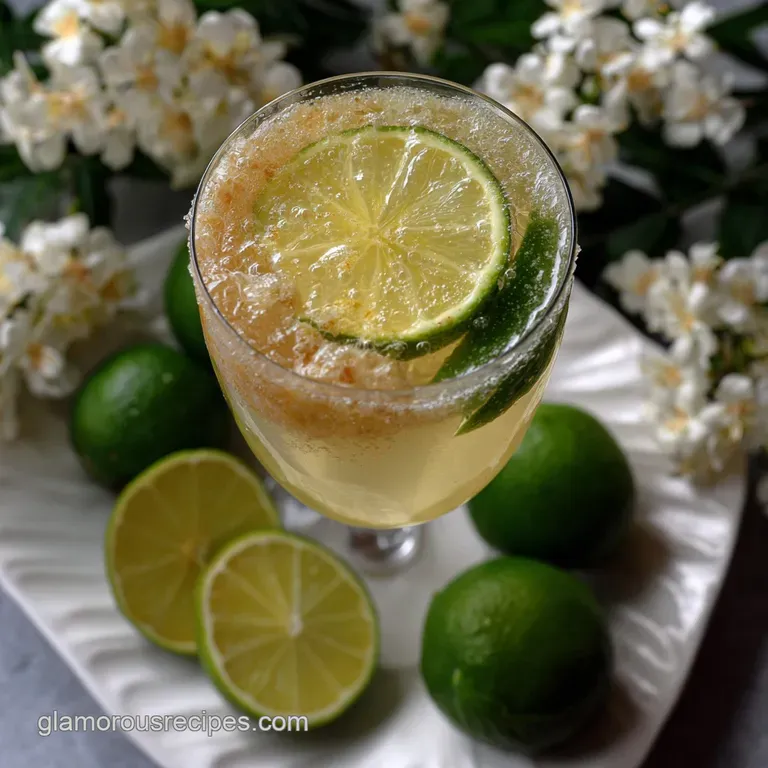
To execute this Simple New Year s Eve Cocktail Idea with Champagne properly, you need the right kit. I swear by my Riedel Vinum Champagne Flutes because the narrow mouth concentrates the aromas, much like a make-ahead New recipe relies on a deep bowl to keep flavors unified.
- Oxo Steel Jigger: For exact 0.75 oz and 0.5 oz measurements.
- Barfly Fine Mesh Strainer: Essential if you are using fresh lime to catch any stray pulp that could disrupt the bubbles.
- Long handled Bar Spoon: For a gentle, single rotation stir that doesn't "bruise" the carbonation.
Chef's Tip: Freeze your bar spoon 10 minutes before service. A warm spoon acts as a thermal heat sink, causing your 4 oz chilled Champagne to lose its fizz 20% faster upon contact.
Executing the Perfect Pour: The Three Phase Technical Protocol
When making this Simple New Year s Eve Cocktail Idea with Champagne, follow these steps precisely to maintain the integrity of the wine.
- Moisten the rim of a chilled flute with a spent lime wedge until a thin, glistening film appears.
- Press the rim into 1 tsp granulated sugar until a fine, crystalline "frost" adheres to the glass.
- Measure 0.75 oz fresh lime juice into the bottom of the glass until the liquid reaches the first measurement line.
- Add 0.5 oz simple syrup slowly until the liquids merge into a translucent, pale green base.
- Drop 2 dashes orange bitters directly into the center until the aroma shifts from sharp citrus to spicy orange.
- Tilt the glass at a 45 degree angle. Note: This reduces the "splash down" force that destroys CO2.
- Pour 4 oz chilled Champagne slowly down the interior wall until the foam rises to just below the sugar rim.
- Stir once, very gently, with a cold bar spoon until the bottom syrup is visibly integrated and the color is uniform.
- Twist a fresh lime wheel over the top until the zest oils sizzle onto the surface of the bubbles.
- Slap a sprig of fresh mint against your wrist until the sharp, cooling aroma is released, then tuck it into the glass.
Why Your Drink Goes Flat: Scientific Fixes for Bubbles
The most common issue with a Simple New Year s Eve Cocktail Idea with Champagne is the rapid loss of carbonation. This usually occurs because of "rough" glassware or high temperatures. When the liquid warms, the CO2 molecules move faster and escape the liquid matrix.
Troubleshooting the Effervescence
| Problem | Root Cause | The Fix | Pro Protocol |
|---|---|---|---|
| Flat Drink | Warm glassware or aggressive stirring. | Chill glass to -18°C; use a single lift stir. | Use a "nucleation etched" glass for steady bubbles. |
| Overly Sour | Imbalanced lime-to-syrup ratio. | Re-verify the 0.75 oz vs 0.5 oz brix balance. | Use a digital scale for 1:1 syrup (weight is more accurate). |
| Foaming Over | Pouring too fast or dusty glass. | Rinse and dry glasses; pour against the side. | Use a "long pour" technique to dissipate surface tension. |
Why Your Drink Is Too Sweet: If your Simple New Year s Eve Cocktail Idea with Champagne feels cloying, it’s likely due to "Brix Overload." If you use a "Demi Sec" champagne instead of a "Brut," the sugar content doubles.
In this case, reduce the simple syrup to 0.25 oz to compensate for the wine's internal sugar.
Creative Flavor Architecture and Festive Champagne Adaptations
While this Simple New Year s Eve Cocktail Idea with Champagne is a classic comfort food for the soul, you can adapt it to fit your Sunday dinner guests' preferences.
| Original Ingredient | Substitute | Why It Works |
|---|---|---|
| Champagne (4 oz) | Dry Prosecco (4 oz) | Higher fruitiness, lighter body. Note: Sweeter than Brut. |
| Simple Syrup (0.5 oz) | Agave Nectar (0.5 oz) | Lower glycemic index, adds a "honeyed" earthiness. |
| Lime Juice (0.75 oz) | Meyer Lemon Juice (0.75 oz) | Softer acidity, floral notes. Note: Reduces the "snap." |
Decision Shortcut: If you want a crisper, dryer finish, use 4 oz Brut Champagne and 0.5 oz lime. If you want a softer, fruitier profile, use 4 oz Prosecco and 2 dashes of peach bitters.
If you want a non-alcoholic version, use sparkling cider and increase lime to 1 oz.
For another festive option, consider serving this alongside an Elegant New Year recipe — the creaminess of the mousse is a beautiful contrast to the sharp bubbles.
⚗️ The Scaling Lab: The Physics of Quantity
When you are doubling this Simple New Year s Eve Cocktail Idea with Champagne for a larger crowd, you must account for the Evaporation Paradox.
- The CO2 Drain: Never batch the champagne. You can pre-mix the 0.75 oz lime, 0.5 oz syrup, and bitters in a carafe, but the 4 oz Champagne must be added per glass.
- Flavor Saturation: If you pre-mix the base for 10 people, scale the bitters to 1.5x (15 dashes, not 20). Concentrated aromatics become overwhelming in large volumes.
- Thermal Mass: A large pitcher of the "base mix" will stay cold longer than individual portions, but once you pour that base into 10 glasses, the surface area increases by 1000%, leading to rapid warming.
Storage & Zero Waste Philosophy: Storage: The lime and syrup base can be kept in the fridge for up to 24 hours. Never store the finished cocktail; the bubbles will vanish within 20 minutes.
Zero Waste: Don't discard the lime husks! Transform: Toss them into a jar with white vinegar for a natural, citrus scented counter cleaner. Science: The D-limonene in the peel is a powerful natural solvent and degreaser.
Curating the Ideal Sacred Atmosphere for Your New Year Sunday Dinner
Serving a Simple New Year s Eve Cocktail Idea with Champagne is about more than just the liquid in the glass; it’s about the "Sacred" hospitality of a Sunday dinner. In the South, we believe that the way you present a drink tells your guests how much you value their presence.
- Myth
- You should stir champagne vigorously to mix flavors.
- Truth
- This is a "Carbonation Killer." One gentle lift of the spoon is all that's required to integrate the 0.5 oz simple syrup without losing the "shatter" of the bubbles.
- Myth
- Cheap champagne is fine because the mixers hide the taste.
- Truth
- The 0.75 oz lime juice actually highlights the metallic notes in low-quality sparkling wine. Always buy the best "Brut" your budget allows.
Whether you are serving this alongside Festive Finger Food recipe or as a standalone toast, remember that the goal is comfort. This Simple New Year s Eve Cocktail Idea with Champagne is designed to be approachable, elegant, and timeless the perfect way to ring in the new year with those you love. Trust the science, respect the bubbles, and let the crisp, mahogany toned aromatics lead the way into your next great celebration.
Recipe FAQs
What is the ideal serving temperature for the Champagne?
4°C to 6°C. Lower temperatures maximize CO2 retention, ensuring persistent effervescence. Warmer liquid causes rapid bubble escape, flattening the drink quickly.
Should I use Prosecco or true Champagne?
Brut Champagne for dryness. Brut Champagne offers lower residual sugar, balancing the 0.5 oz simple syrup perfectly. Prosecco is fruitier but may require reducing the syrup to 0.25 oz.
Why does my cocktail taste too sour or astringent?
Simple syrup was undermeasured or omitted. The acid (citric) needs adequate sugar (sucrose) to buffer the palate, preventing the harsh bite of the lime. You must ensure the 1:1 brix ratio is present.
- Use a jigger for precise 0.75 oz lime
- Increase syrup to 0.5 oz if using dry Champagne
- Taste the base mix before adding the bubbles
Can I prepare the lime and syrup mixture ahead of time?
Yes, the base mix lasts 24 hours chilled. You can pre-mix the lime juice, simple syrup, and bitters, but never add the champagne component until moments before serving. If you mastered the controlled emulsification of cold ingredients in this cocktail, the same principle applies to creating a stable, frothy head on a Pisco Sour: The Perfect Peruvian Frothy Cocktail Recipe.
Is rimming the glass with sugar necessary for flavor?
No, it aids nucleation and texture. The sugar crystals provide controlled nucleation sites, leading to a steady stream of smaller, more visually appealing bubbles. Rough surfaces introduce aggressive, large bubbles that dissipate CO2 faster.
Myth Buster: Do I need to stir the cocktail extensively?
Myth: You should stir champagne vigorously to mix flavors. Reality: Aggressive stirring immediately strips dissolved CO2 from the liquid. Use one gentle lift to integrate the base syrup.
Should I use bottled lime juice instead of fresh?
No, fresh lime provides essential volatile oils. Bottled juice contains preservatives and lacks the aromatic terpenes found in fresh zest, resulting in a "flat" citrus note. If you enjoy precise flavor layering, see how the same technique balances flavor in our Lychee Martini Recipe: Crisp, Floral Elegant Cocktail.
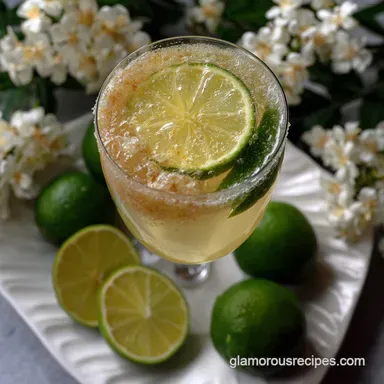
Champagne Lime Toast Cocktail
Ingredients:
Instructions:
Nutrition Facts:
| Calories | 162 kcal |
|---|---|
| Protein | 0.3 g |
| Fat | 0.1 g |
| Carbs | 17.4 g |
| Fiber | 0.2 g |
| Sugar | 14.8 g |
| Sodium | 6 mg |
